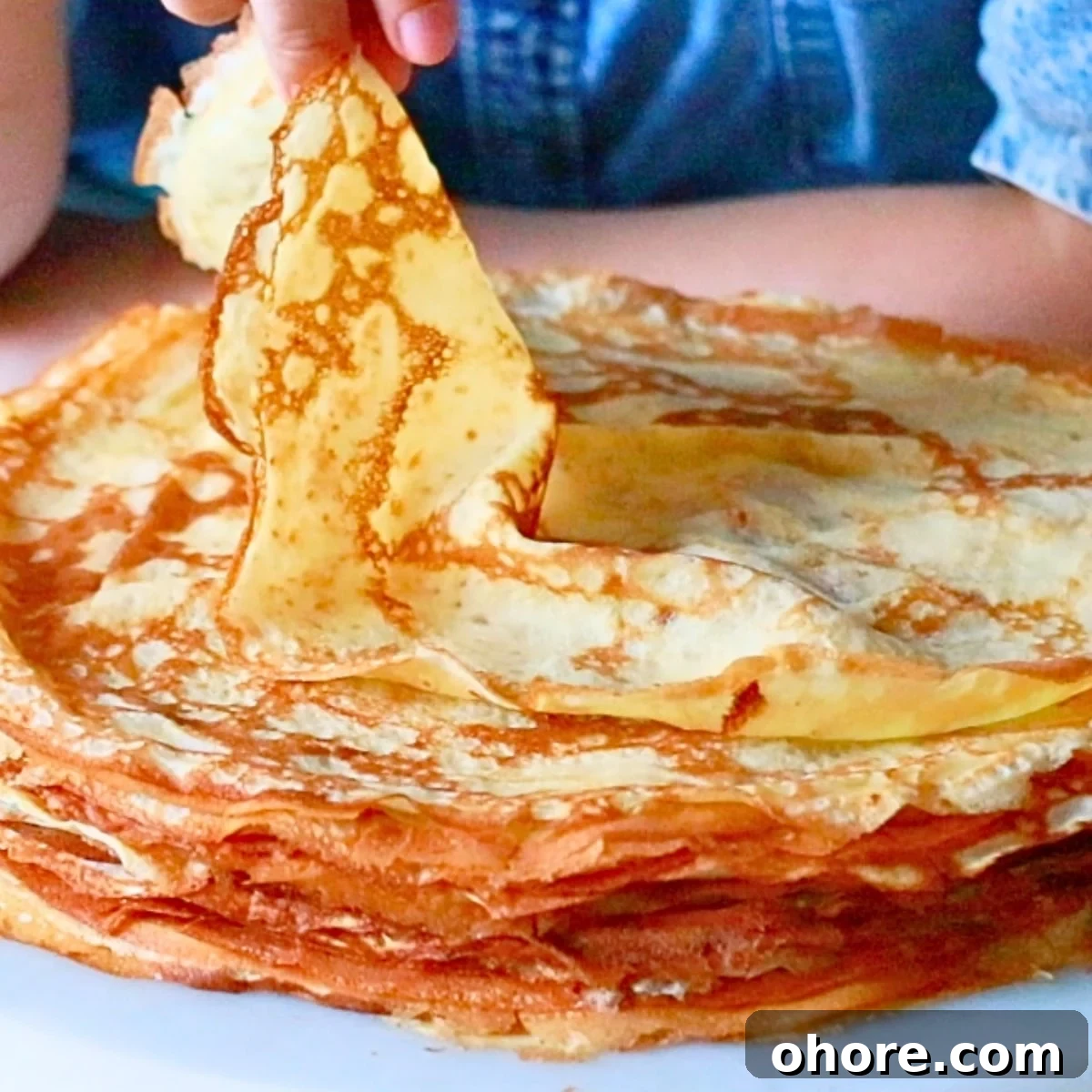
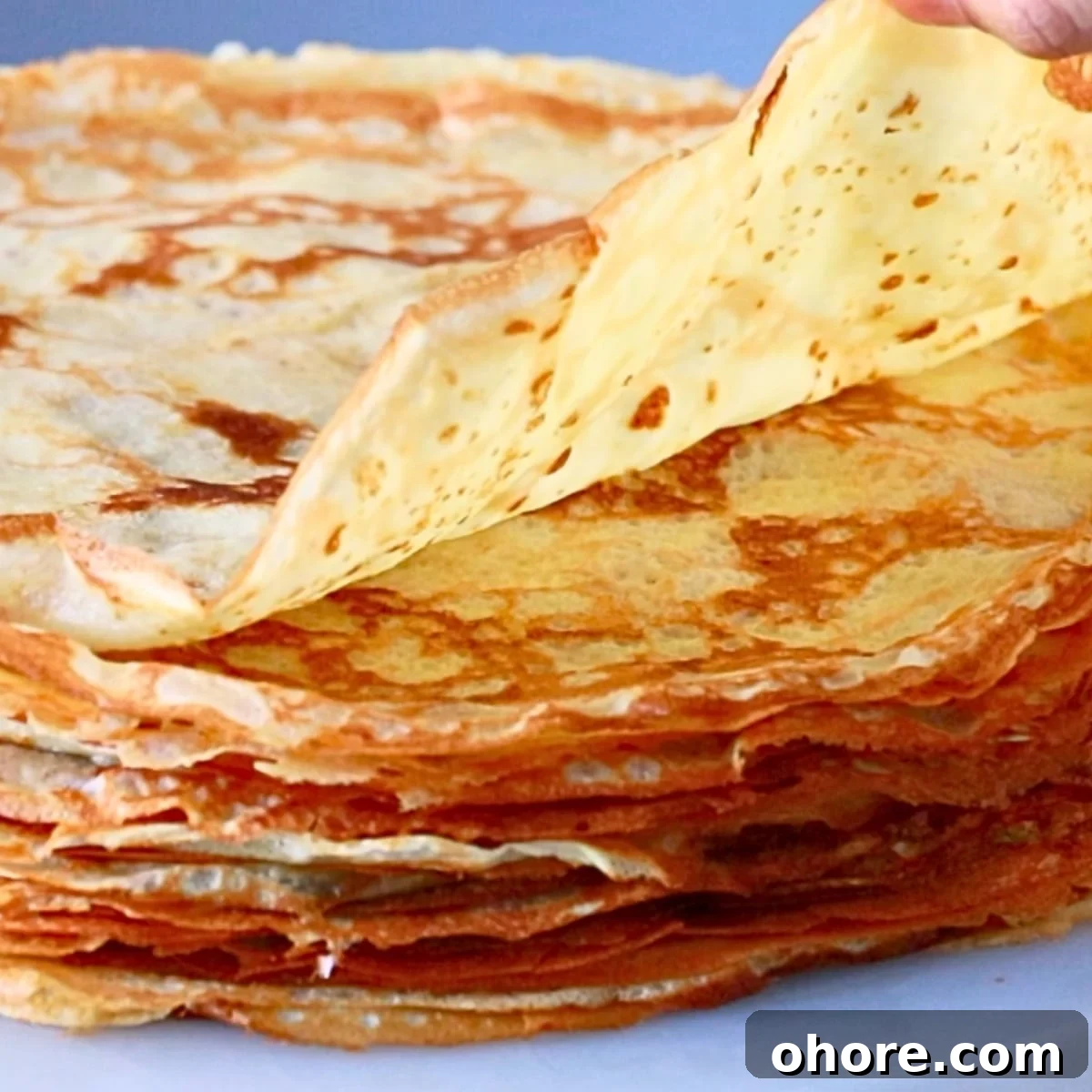
A mastery guide for making the best crepes at home! I’m sharing my techniques for tender, ultra-thin crepes with buttery, crisp edges using seven simple ingredients and no special equipment. Serve them sweet or savory—whatever you prefer.
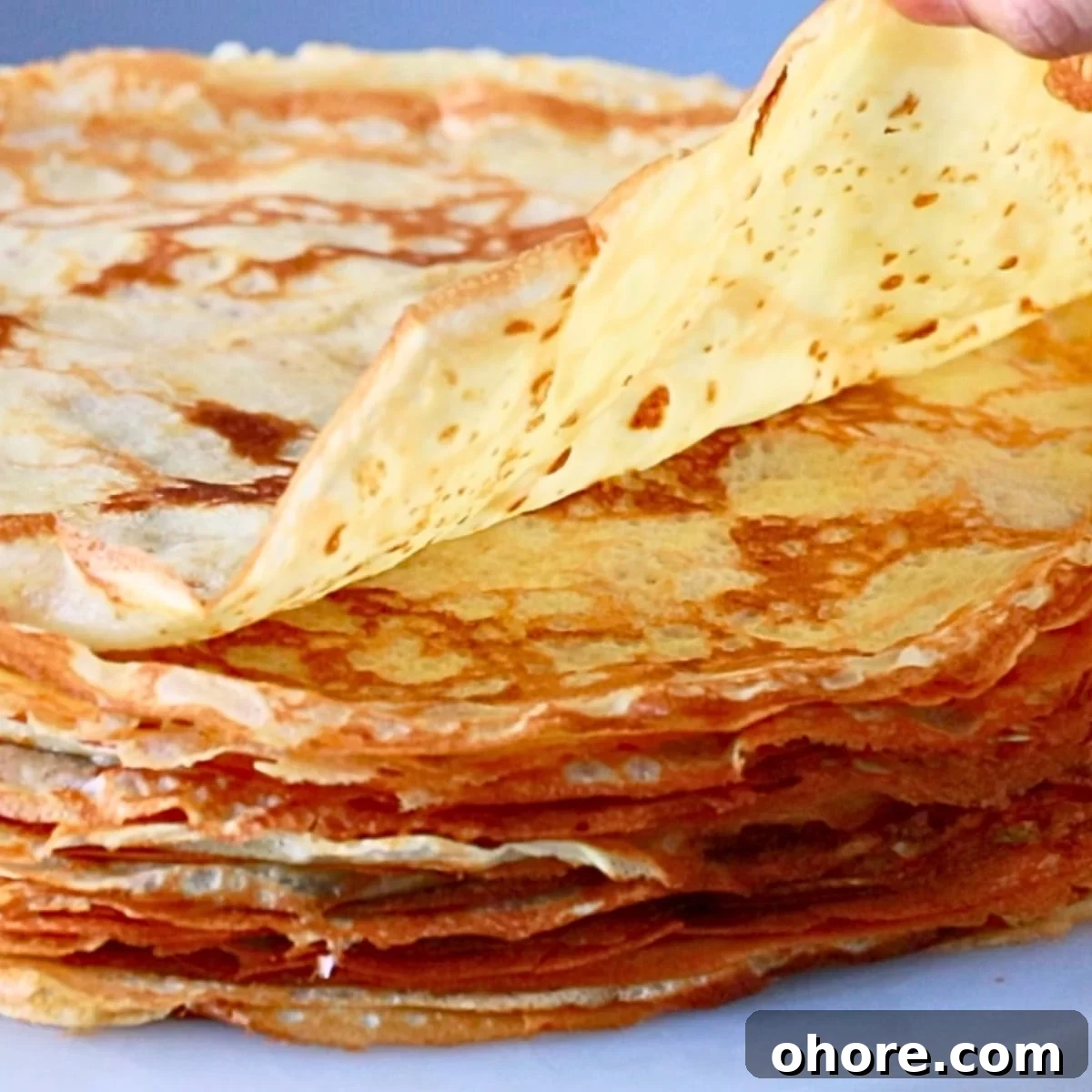
About two decades ago, when I was a student, I learned to make a vanilla crepe cake at a cooking school in Tokyo. I fell in love with the process: the buttery aroma filling the room and the satisfaction of creating a cafe-quality dessert at home. Since then, crepes have been a favorite: quick to prepare, versatile, and perfect for both weekday breakfasts and special occasions. I often set up a little crepe station in my kitchen so family members can pick their own toppings.
The basic steps are simple, but without a few key tips things can go wrong. I’ve tested and refined this method through many batches to help you avoid common problems and consistently get thin, delicate crepes.
The Common Issues
Crepe-making seems straightforward, but beginners often run into trouble. Typical issues include:
- The crepes are thick and rubbery.
- The surface burns before the crepe sets.
- The crepe sticks to the pan.
- The crepe tears while flipping.
I’ve experienced all of these and, after many attempts, identified reliable fixes. Below I share troubleshooting tips and practical techniques so you can make great crepes at home.
3 Reasons Why You’ll Love This Crepe
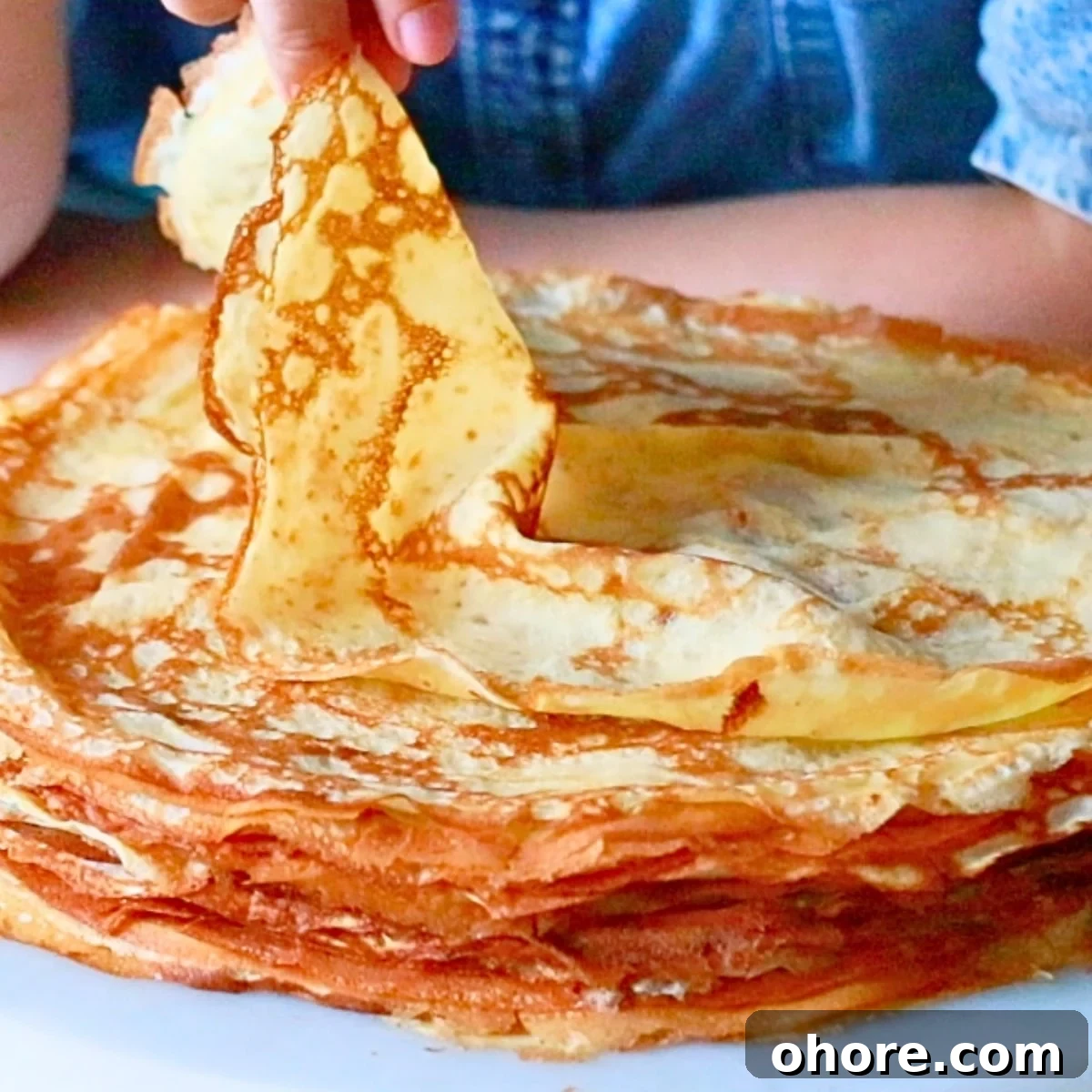
I’ve made many crepe variations over the years, from crepe cakes to crepe Suzette. This recipe is my go-to because it reliably produces thin, tender crepes with great flavor using minimal effort. Here are three reasons to try it:
Ultra Thin Crepes
These crepes are paper-thin and delicate rather than thick or rubbery. I explain how to control batter volume and spreading to achieve this texture.
Easy Steps
The batter takes under five minutes to make—just whisk the ingredients together. You don’t need to rest it in the fridge; you can cook right away, which makes this recipe perfect for busy mornings.
Simple Ingredients and Tools
You only need seven ingredients (six essential plus one optional) and a regular non-stick pan—no special crepe pan required.
What Is a Crepe?
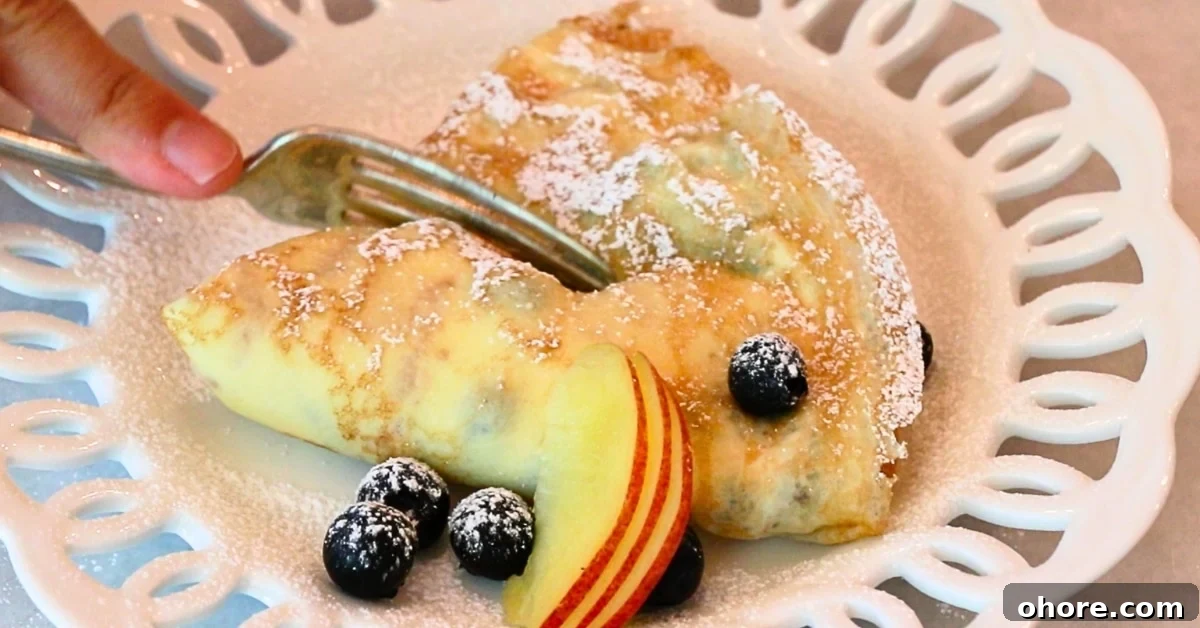
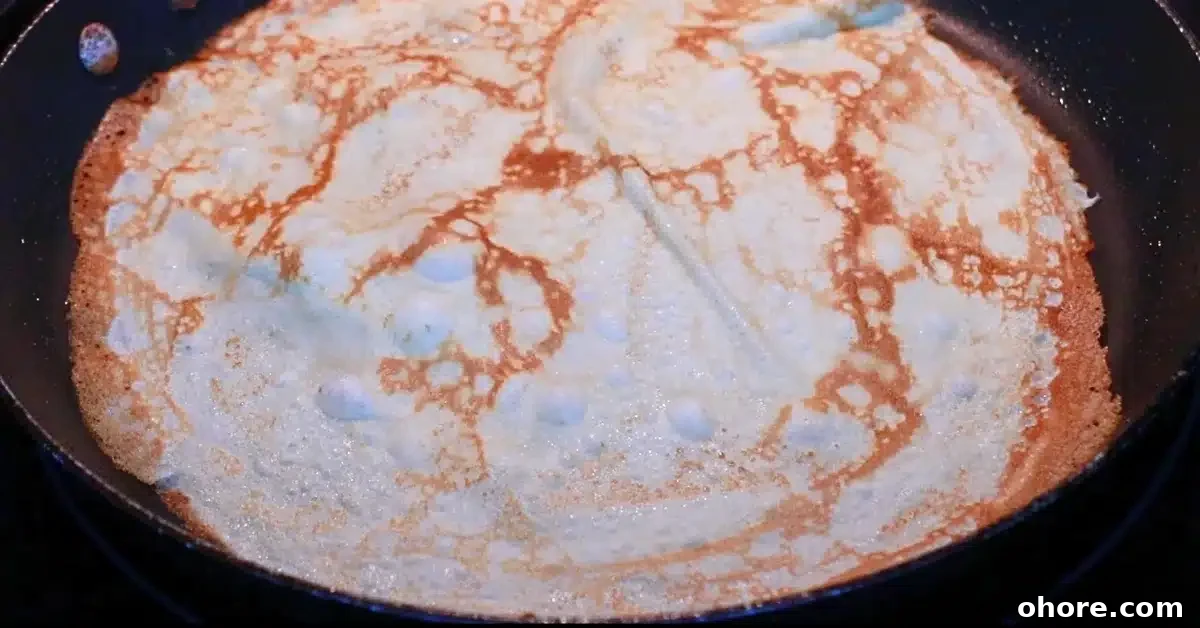
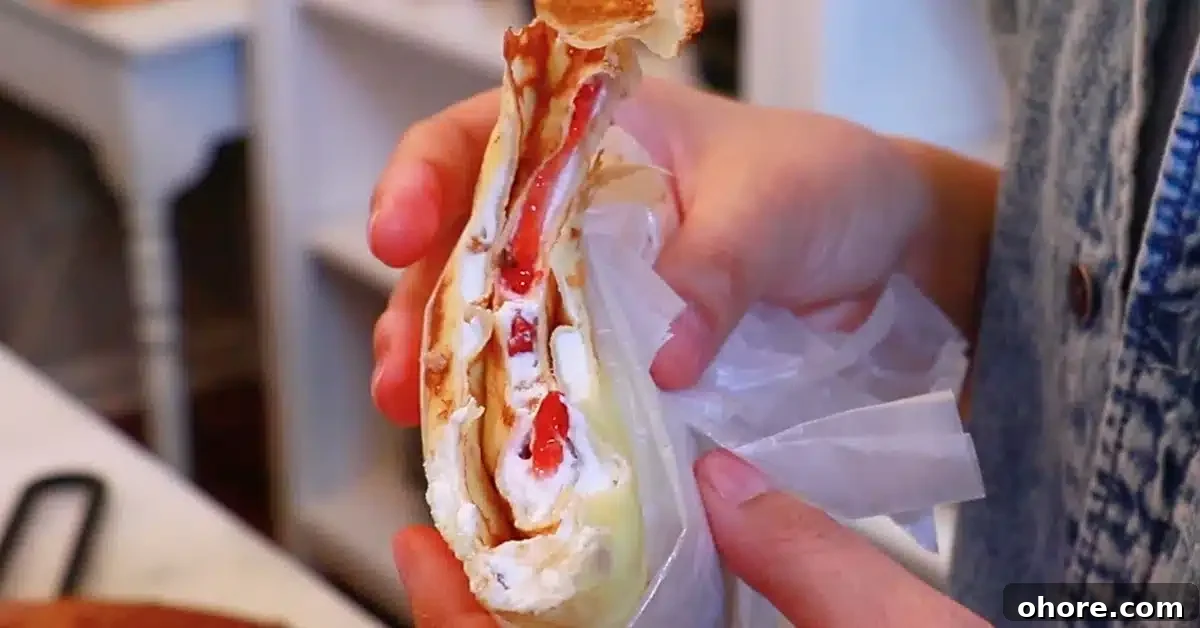
A crepe is a very thin French-style pancake made without leavening agents like baking powder or baking soda. Unlike fluffy American pancakes, crepes are paper-thin and versatile — they can be filled or topped with sweet ingredients like whipped cream, fruit, and chocolate, or savory fillings like eggs, cheese, and smoked salmon.
3 Secrets for Making Ultra-Thin Crepes
1. Use a small amount of batter
Too much batter makes a thick crepe. For a 10-inch (25 cm) pan, about 1/4 cup of batter produces a very thin crepe. Adjust the amount to your pan size.
2. Swirl the pan quickly
Pour the batter into the hot pan, then immediately lift and swirl in a circular motion so the batter spreads thinly before it sets. This is the key move to get even, lacy crepes.
3. A thin batter base
This recipe uses a relatively high proportion of milk to keep the batter thin and fluid so it spreads easily across the pan. That extra liquid is intentional and gives the classic crepe texture.
VIDEO: Watch How To Make the Crepe!
Watch the step-by-step video for a visual guide to each technique, from batter consistency to flipping.
Don’t forget to subscribe to the creator’s channel for more baking videos.
7 Ingredients To Make The Best Crepes
- All-purpose flour: Gluten helps bind the batter and form the thin crepe sheet.
- Granulated sugar: Adds moisture and encourages light caramelization. Omit for savory crepes.
- Salt: Enhances overall flavor.
- Eggs: Bind ingredients and add tenderness.
- Unsalted butter: Melted butter adds flavor and helps caramelize the surface—recommended for authentic flavor.
- Whole milk: Plenty of liquid is required to achieve a thin batter; whole milk gives the best texture.
- Dark rum (optional): A splash adds subtle depth and sophistication. Omit if you prefer.
How To Make The Crepe Batter
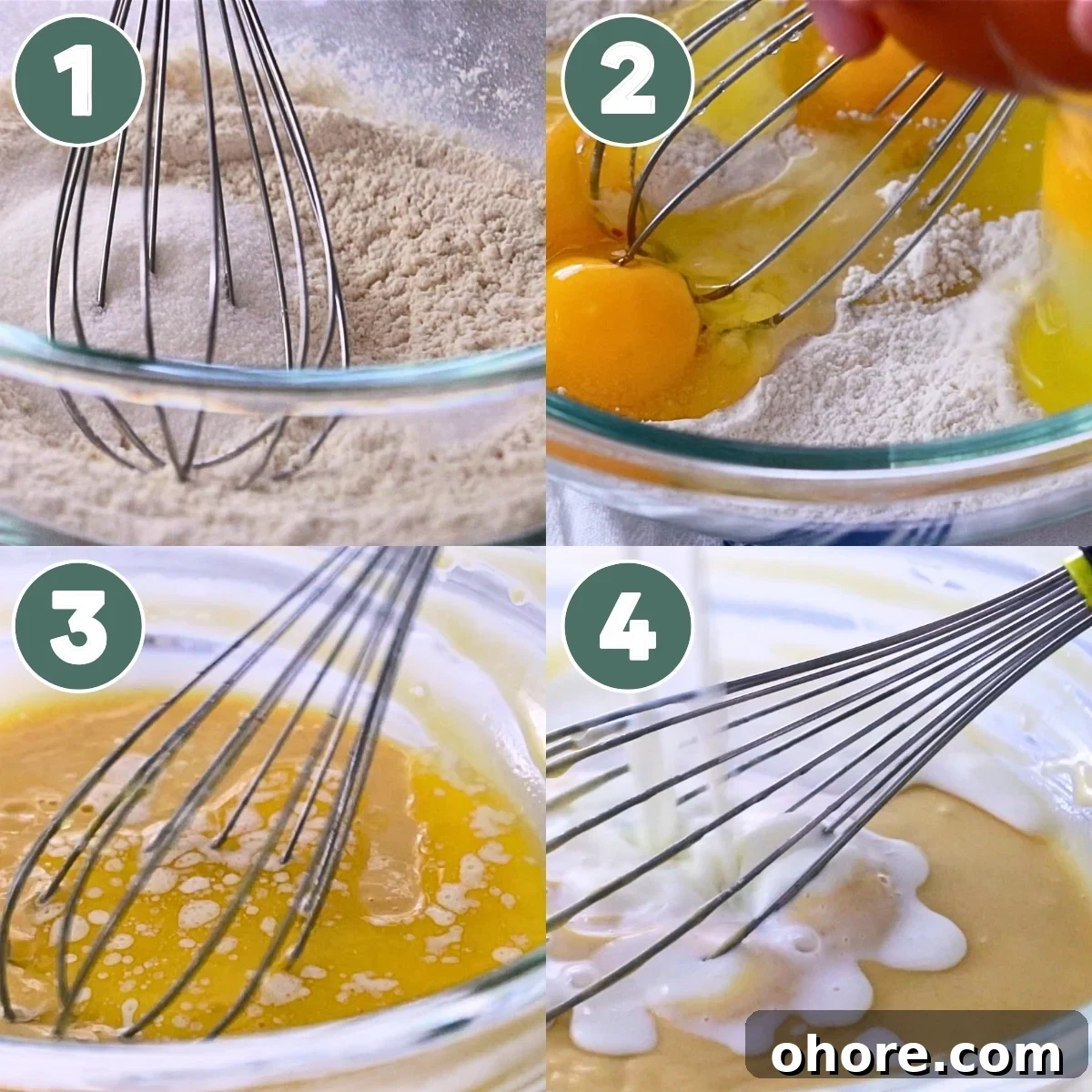
- Combine the dry ingredients: Whisk flour, sugar, and salt in a bowl.
- Add eggs: Whisk until the mixture is smooth, scraping the bowl to incorporate everything evenly.
- Add warm melted butter: Whisk until incorporated.
- Add milk: Pour in about one-third of the milk first and whisk until smooth, then add the rest and combine. Scrape the sides and bottom with a spatula to ensure even mixing.
- Add dark rum (optional): Stir in a tablespoon if using.
Aya’s Quick Tips
The batter can look a little lumpy at first; keep whisking until smooth. Thorough mixing develops enough gluten to help the crepes hold together even when very thin.
Cooking The Crepes
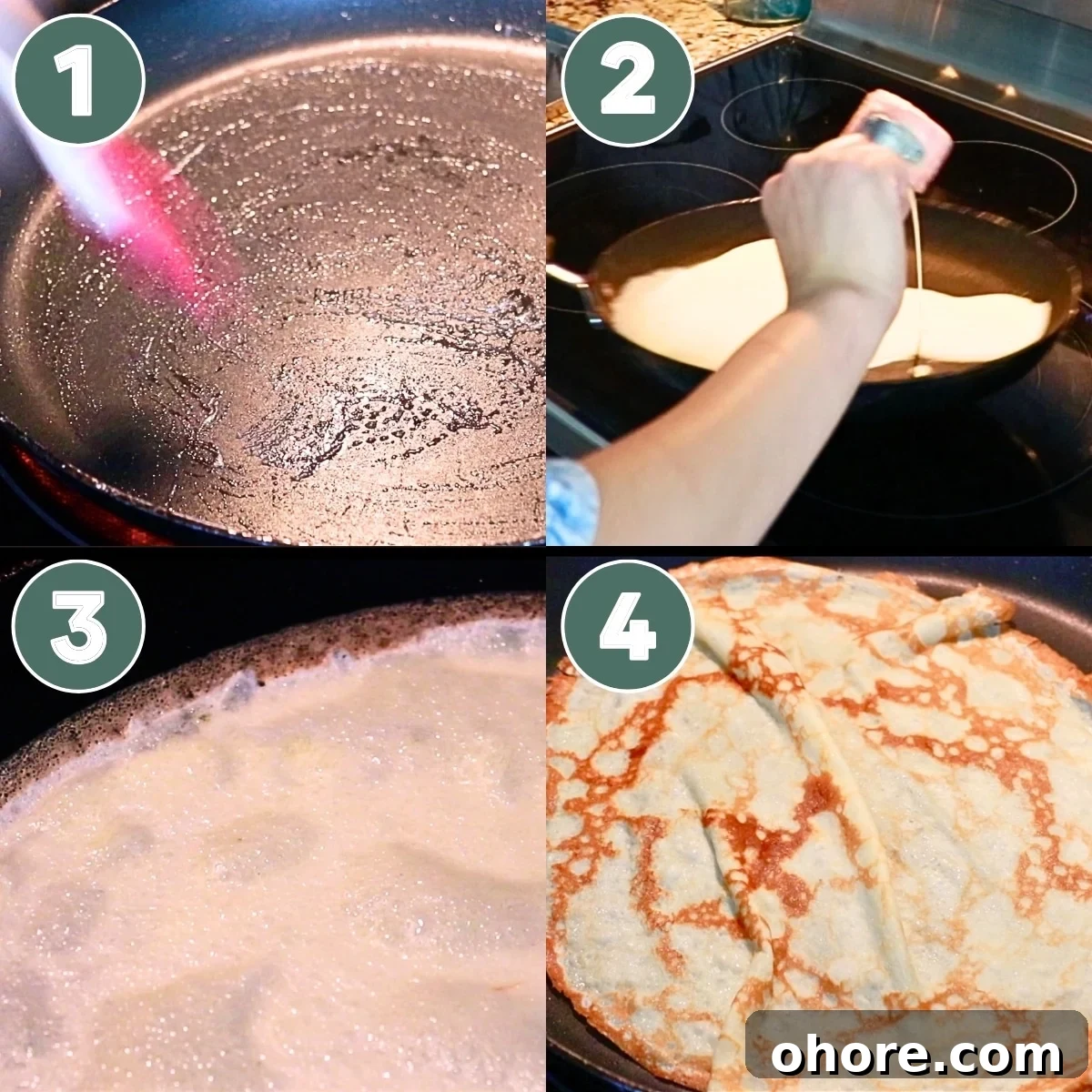
- Heat a non-stick pan over medium-low to medium. Brush a thin layer of melted butter on the pan before pouring batter.
- Spread the batter: For a 10-inch (25 cm) pan, pour about 1/4 cup of batter, then quickly lift and swirl the pan to coat the surface evenly before the batter sets.
- Cook: Rotate the pan once or twice to distribute heat. When the edges turn golden brown, prepare to flip.
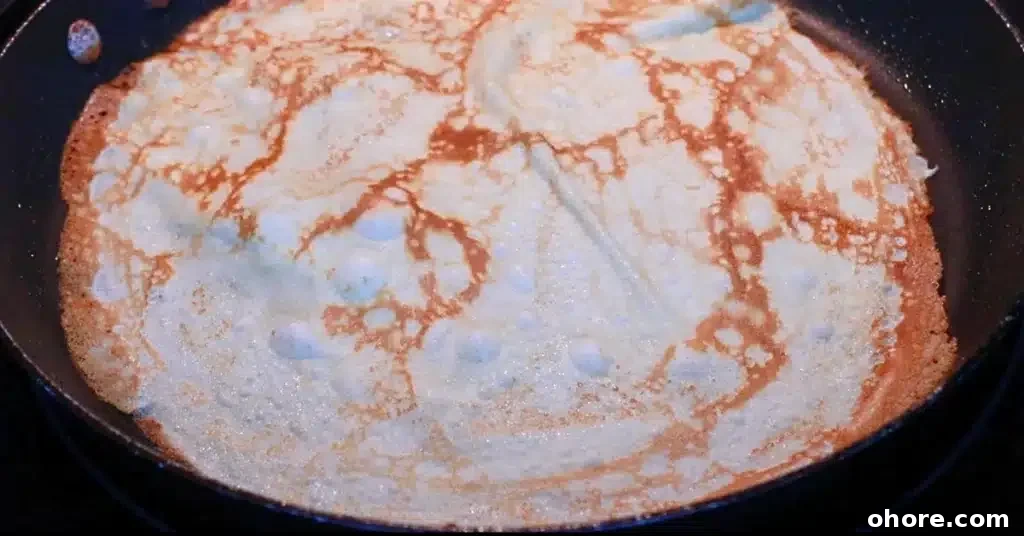
- Flip and finish: Cook the other side for 5–15 seconds, then remove and place on a cloth or paper towel. Flatten each crepe while warm to prevent wrinkling as it cools.
- Repeat: The first crepe is often a tester; you’ll get faster and neater with practice. Stir the batter occasionally—the flour tends to settle during cooking.
Aya’s Quick Tips
- Adjust batter volume to match your pan size.
- Cook each crepe through; undercooked crepes tear easily.
- Flatten warm crepes to avoid permanent wrinkles.
- Stir the batter every few crepes, as flour settles to the bottom.
- If the pan overheats, remove it briefly to cool.
- One batch makes roughly 14–17 crepes in a 10-inch pan.
The Flipping Technique
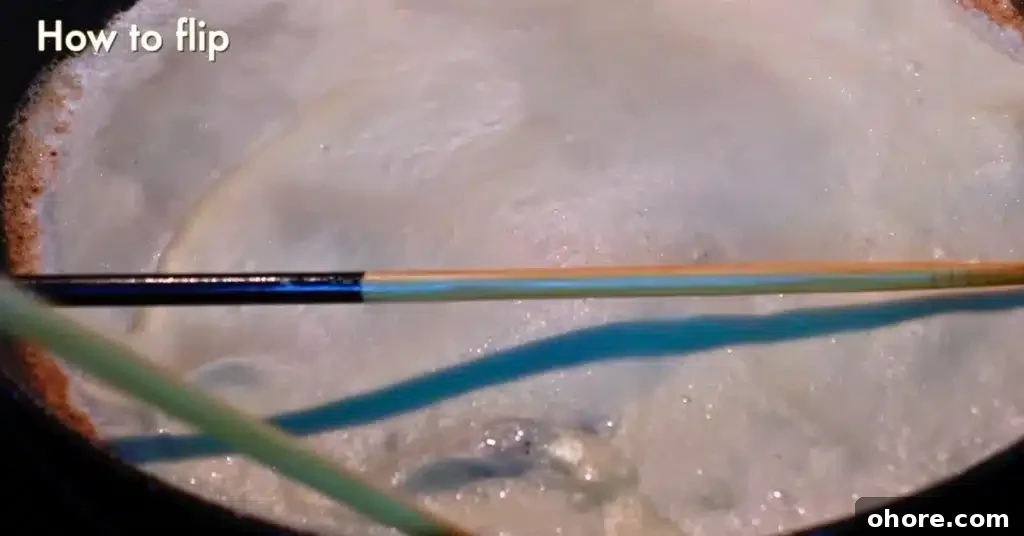
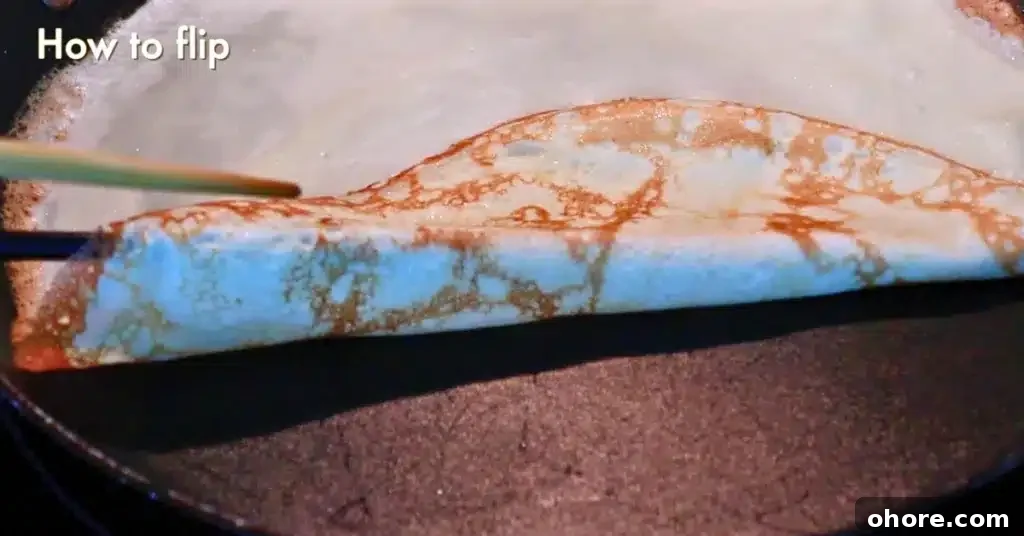
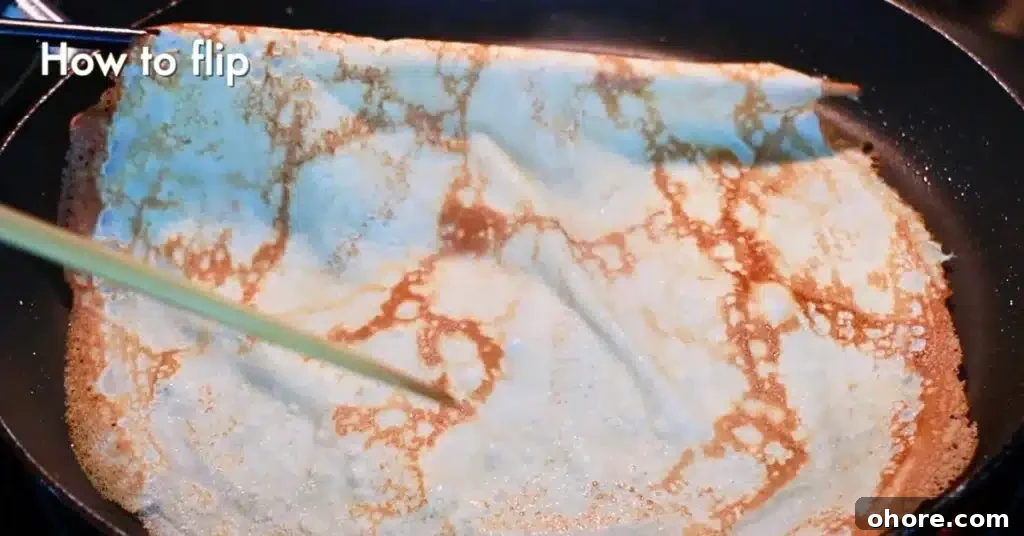
There are many flipping methods; I find two long chopsticks (or similar sticks) make it easy:
- Slide one stick about 2 inches (5 cm) from the edge to create a support.
- Use the other stick to lift the edge, then flip the crepe over.
- Rotate the support stick gently to release it without dragging the crepe.
And that’s it! Serve freshly made crepes with your favorite fillings and enjoy a fun, customizable meal with family or friends.
Tips For Storage And Making Ahead
How should I store crepes?
Place wax paper or parchment between layers to prevent sticking, then wrap tightly in plastic wrap or a zip-top bag. Store in the refrigerator for a few days or freeze for several months. For best texture, enjoy soon after making.
Can I make the batter ahead?
Yes. Two points to note:
- The flour sinks over time—stir the batter well before using.
- Cold batter firms because of the butter; warm it slightly or leave it at room temperature so it spreads thinly.
Troubleshooting Tips
Most often you poured too much batter. For a 10-inch pan, use about 1/4 cup and adjust for different pan sizes.
If the surface lacks lacy caramelization, the heat may be too low. A moderate increase in heat and a light coating of butter on the skillet help develop that classic lacy pattern.
Very high heat can cause holes, rapid setting that prevents spreading, or burning if you can’t flip quickly enough. Aim for medium to medium-low heat for controlled browning and fewer holes.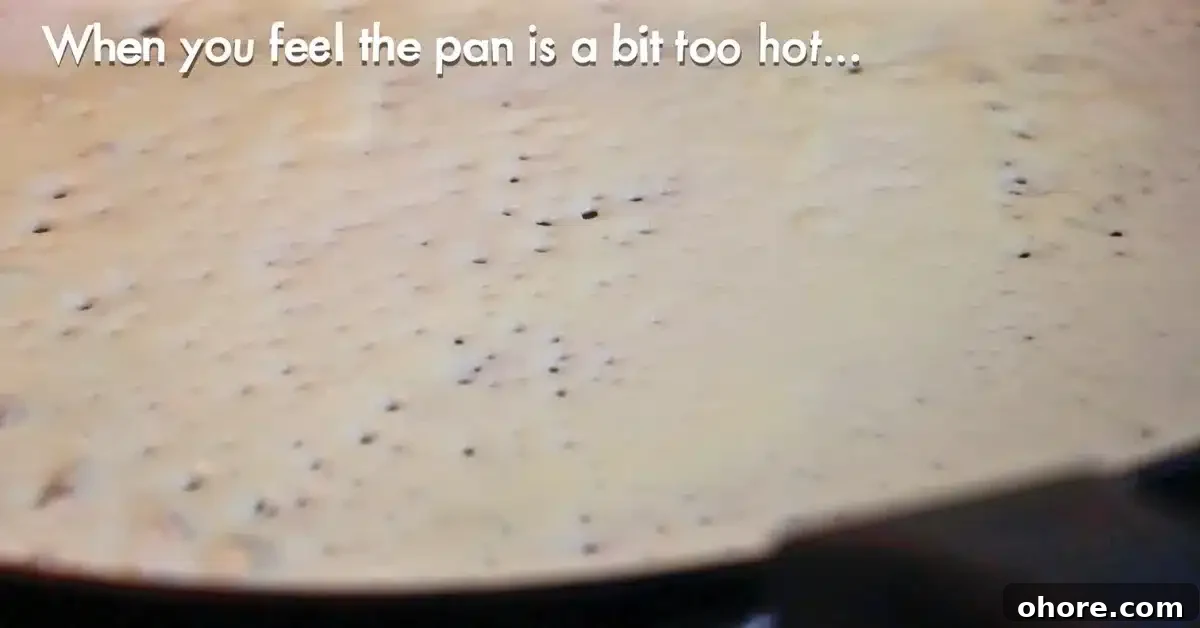
If batter runs over the pan edge, gently scrape it back with a chopstick or spatula while it’s still soft before it cooks through.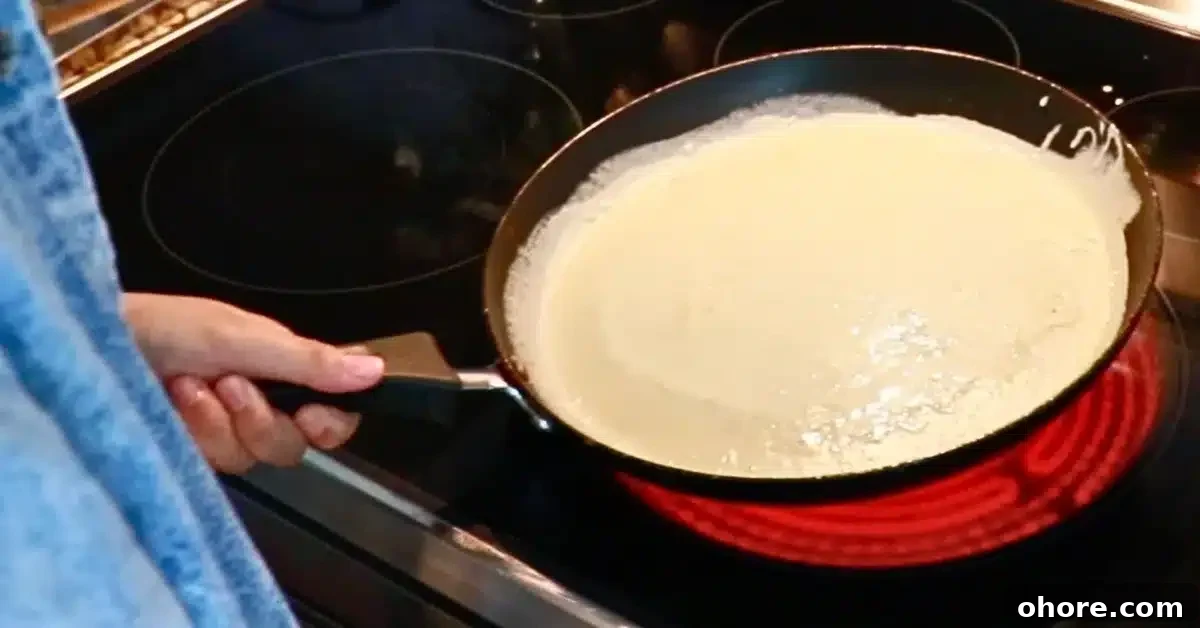
Use a good non-stick skillet and apply a thin layer of melted butter before each crepe. This prevents sticking and improves browning.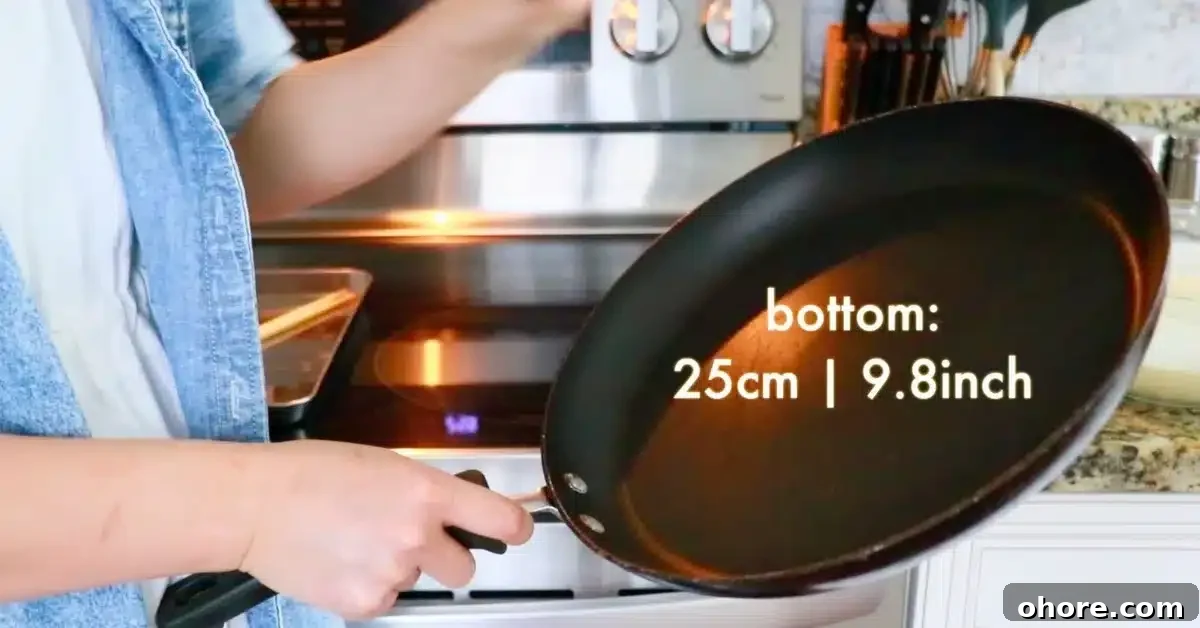
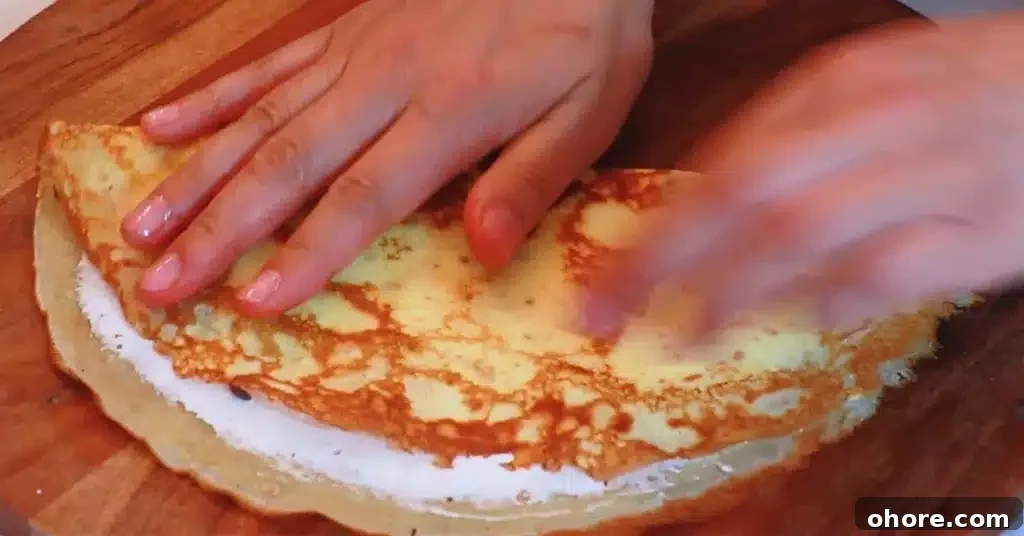
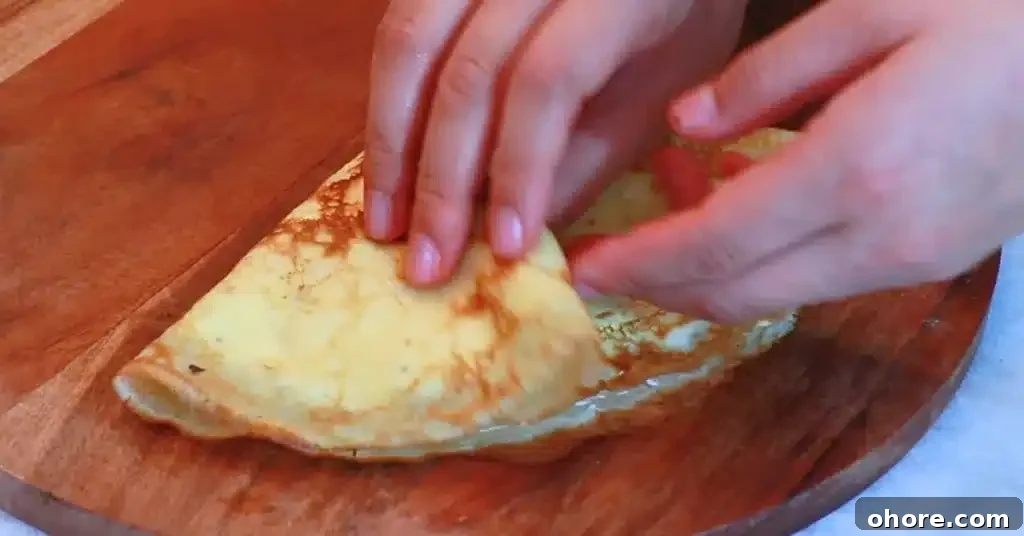
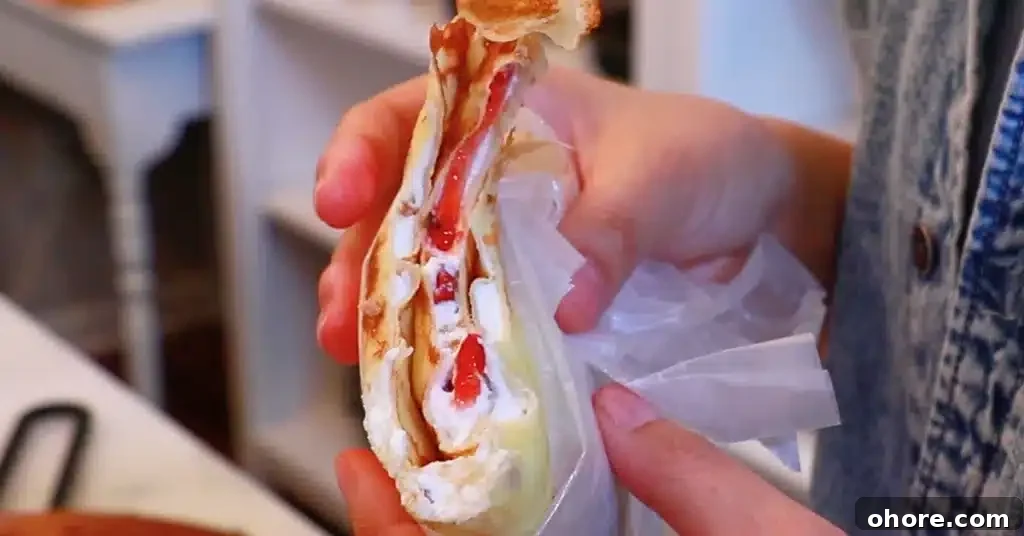
Crepe Fillings & Toppings
Set out a selection of fillings and toppings so everyone can customize their crepes. Here are ideas to inspire you.
Sweet crepe fillings
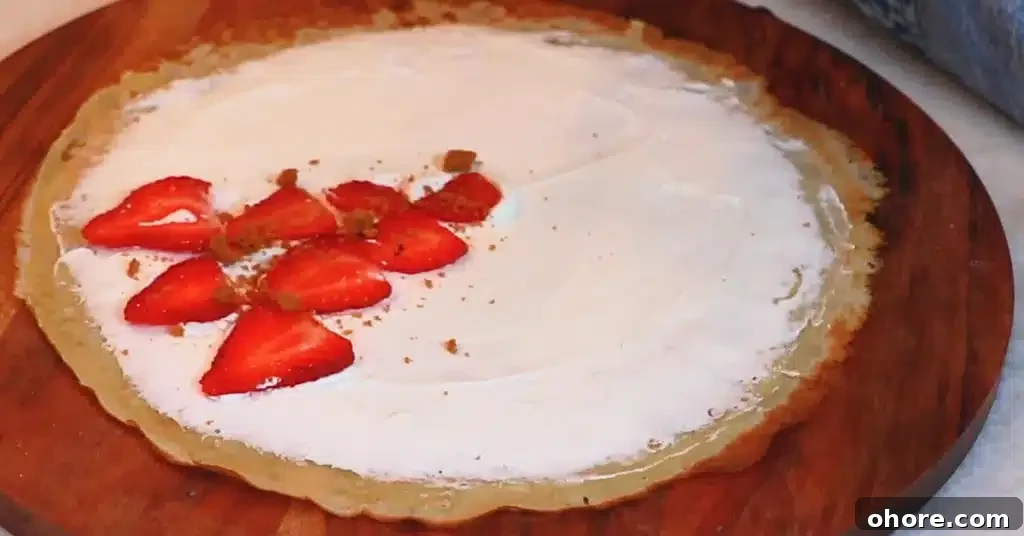
- Whipped cream: Light and fluffy—pairs beautifully with fruit.
- Jam: A thin layer of tart jam plus whipped cream and fresh fruit is wonderful.
- Pastry cream: Smooth custard is excellent with fruit or ganache.
- Chocolate ganache: Rich and velvety for chocolate lovers.
- Chocolate whipped cream
- Cream cheese whipped cream: Try with strawberry jam for a cheesecake-like flavor.
- Caramel sauce: Adds a luxurious, sweet finish.
- Nutella: Quick and indulgent.
- Mascarpone: Great for tiramisu-style crepes with espresso and cocoa.
- Sour cream or yogurt: Refreshing with fresh fruit and honey.
- Fruit puree
- Lemon curd: Bright and tangy.
- Honey or maple syrup
- Peanut butter
Sweet Crepe Toppings
- Fresh fruit: Berries, bananas, mango, kiwi, peaches—choose seasonal favorites.
- Toasted nuts: Walnuts, pecans, almonds add crunch.
- Sprinkles: Fun for celebrations.
- Chocolate chips
- Cocoa or matcha powder
- Powdered sugar: A quick decorative touch.
- Crushed toffees
- Ice cream: Add a scoop for a decadent dessert.
- Fresh mint
Savory crepe fillings
For savory crepes, omit the sugar in the batter. Popular savory fillings include:
- Eggs: Boiled, scrambled, or fried.
- Meats: Ham, bacon, sausage.
- Vegetables: Spinach, mushrooms, tomatoes, avocado, corn.
- Cheese: Cheddar, gruyère, mozzarella, ricotta, cottage cheese.
- Seafood: Shrimp, tuna, smoked salmon.
- Sauces: Ketchup, mustard, mayo, or a creamy dressing.
More Classic French Dessert Recipes
If you enjoy making crepes, you might like other classic French desserts as well.
- Vanilla Madeleines
- Cream Puffs (pâte à choux)
- Eclairs
- Crème Brûlée
- Opera Cake
Did you try the recipe?
Share your feedback in the comment section below. I’d love to hear how it went for your family or for special gatherings.
Thank you! – Aya
Best Crepes
Pin Recipe
Equipment
Method
Nutrition
Notes
Video
Ingredients
- 150 g All-purpose flour
- 50 g Granulated sugar
- 1/2 teaspoon Salt
- 200 g (4 eggs) Eggs
- 50 g Unsalted butter, melted
- 500 g (2 cups) Whole milk
- Some Melted butter for the pan
NOTE: Measuring by weight gives the most consistent results. Cup measurements are included for convenience.
Equipment
- Bowl
- Whisk
- Spatula
- Non-stick skillet (10-inch)
- Long chopsticks or two long sticks (optional)
Method
- Combine the dry ingredients: whisk flour, sugar, and salt.
- Add eggs and whisk until smooth, scraping the bowl.
- Stir in warm melted butter until combined.
- Add milk in stages, whisking until smooth; scrape the bowl with a spatula to incorporate.
- Optional: add 1 tablespoon dark rum and mix.
- Heat a non-stick pan over medium-low to medium and brush with a thin layer of melted butter.
- Lift the pan and pour about 1/4 cup batter into a 10-inch pan. Swirl quickly to coat the surface thinly.
- Turn the pan once or twice while cooking to distribute heat. When the edges brown, flip.
- Cook the second side 5–15 seconds. Remove to a cloth or paper towel and flatten while warm.
- Repeat, stirring the batter occasionally. If the pan overheats, let it cool before continuing.
Notes
Nutrition
Carbohydrates: 11g
Protein: 3g
Tried this recipe?
Let us know how it was!