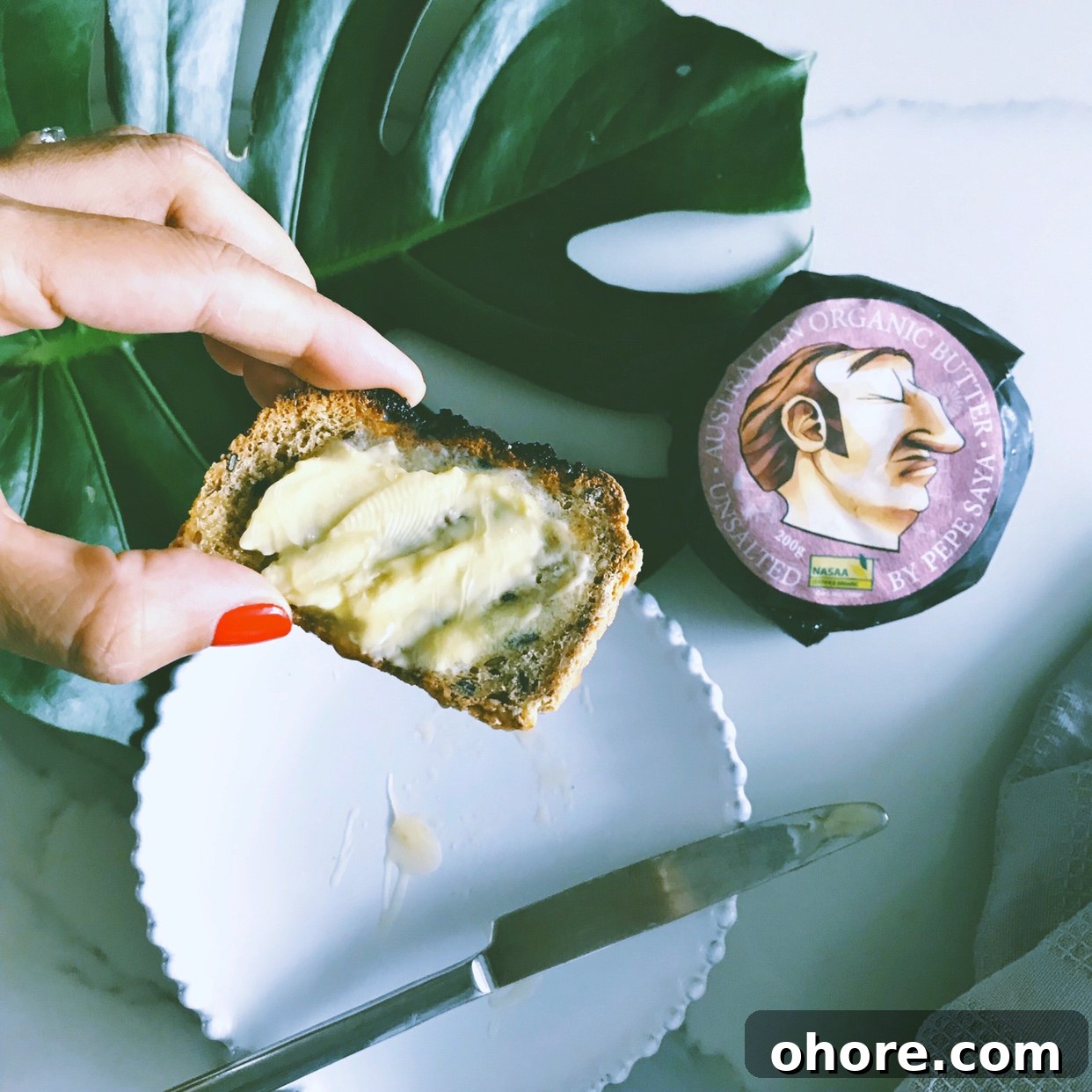
I’m a BIG advocate of good fats, and butter is one of my favorites.
If you enjoy butter, choose grass-fed varieties so you benefit from fat-soluble vitamins (A, D, E, and K), essential minerals, and a healthier fatty acid profile with every bite. For something truly special and flavorful, opt for cultured butter.
So what is cultured butter exactly?
Cultured butter is butter that has been fermented. The fermentation process introduces beneficial bacteria, making it a probiotic food.
Butter (good fat) + Fermentation (probiotics) = Gut superfood
Gut superfood = Improved digestion, a stronger gut lining, and enhanced nutrient absorption
Fermentation gives butter a mild tang and a silkier, creamier texture. Many bakers prefer cultured butter for its flavor and performance in baking.
We often hear that probiotics are good for the gut because they introduce beneficial bacteria. But butter itself also supports gut health.
Butter contains butyrate, a short-chain fatty acid that nourishes the cells lining your colon. While your gut can produce butyrate from dietary fiber, that process depends on a well-functioning microbiome. Butyrate also has anti-inflammatory properties that support gut health. Additionally, butter fat includes glycosphingolipids, compounds that help protect against certain gastrointestinal infections.
So next time you buy butter, remember:
-
Grass-fed is best
-
Cultured and grass-fed is even better
Butter has gotten a bad reputation over the years, but when chosen and used wisely it can be a nourishing, healing food.
For breakfast today I enjoyed a generous spread of cultured butter on a slice of gluten-free sourdough from The wholekitchen, lightly drizzled with raw honey. I paired it with enzyme-rich papaya and a cup of Tulsi tea to start the day calmly and nourished.