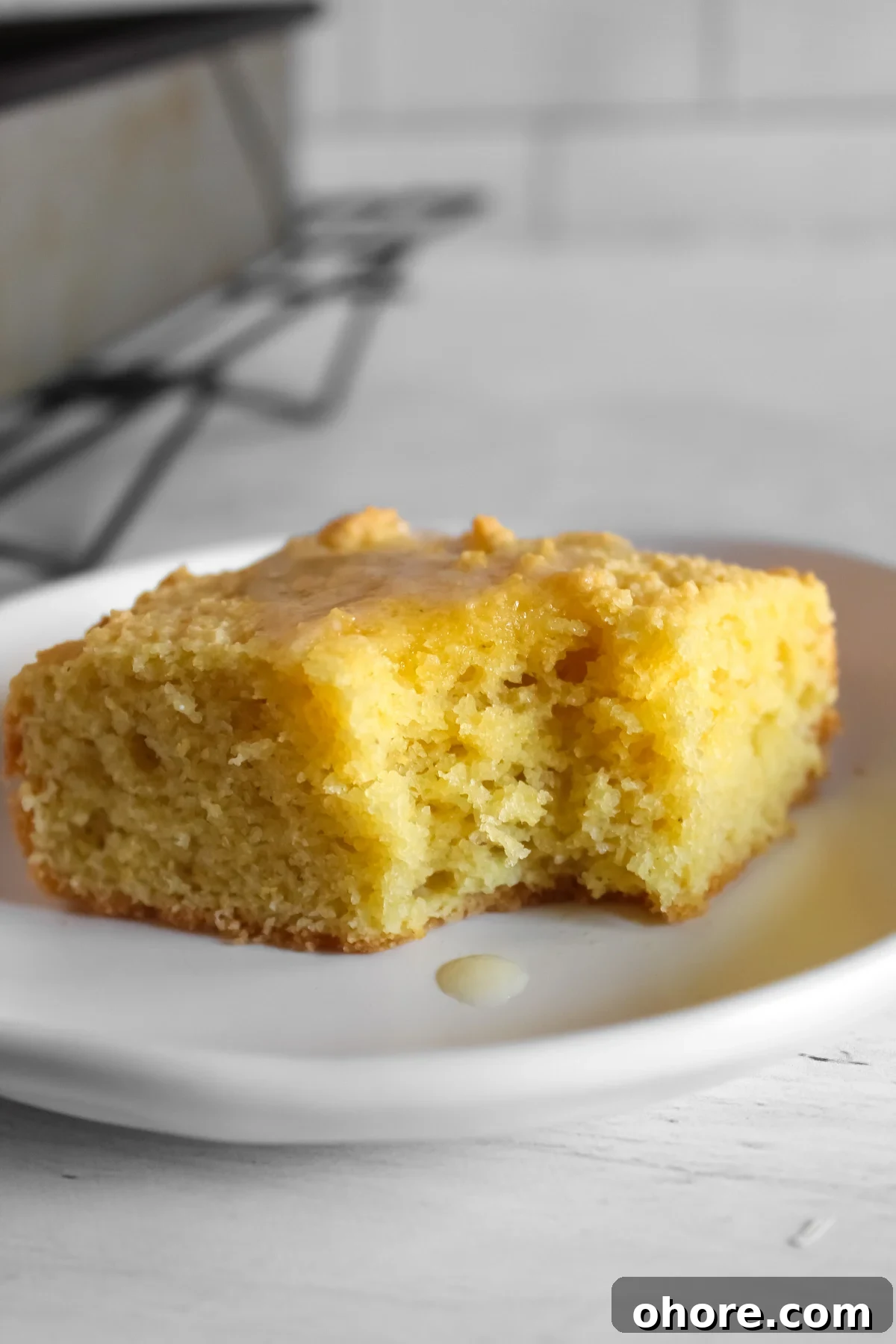
This almond flour cornbread is a superb gluten-free option when you want a comforting cornbread fix. There’s nothing like a warm slice fresh from the oven with golden edges and a tender, moist crumb. It’s the kind of side that elevates a simple bowl of chili into a satisfying meal.
Traditional cornbread recipes often rely on wheat flour for structure, and removing it can leave you with something dry, crumbly, or overly dense. This almond flour version delivers the classic cornbread texture and flavor while staying moist and light—without the heaviness or dryness common in many gluten-free versions.
Table of Contents
Whether you follow a gluten-free, low-carb, or grain-free way of eating, this recipe fits naturally into those diets. Almond flour brings healthy fats and protein to the batter, which helps keep the crumb moist and tender without relying on wheat. The result is cornbread that tastes familiar and comforting—often even better than what you expect from a gluten-free substitute.
This recipe is practical for everyday kitchens and busy schedules. It’s adaptable and pairs well with many meals. Dress it up with herbs and cheese for a savory loaf, keep it lightly sweet, or bake it as muffins for easy, grab-and-go portions.
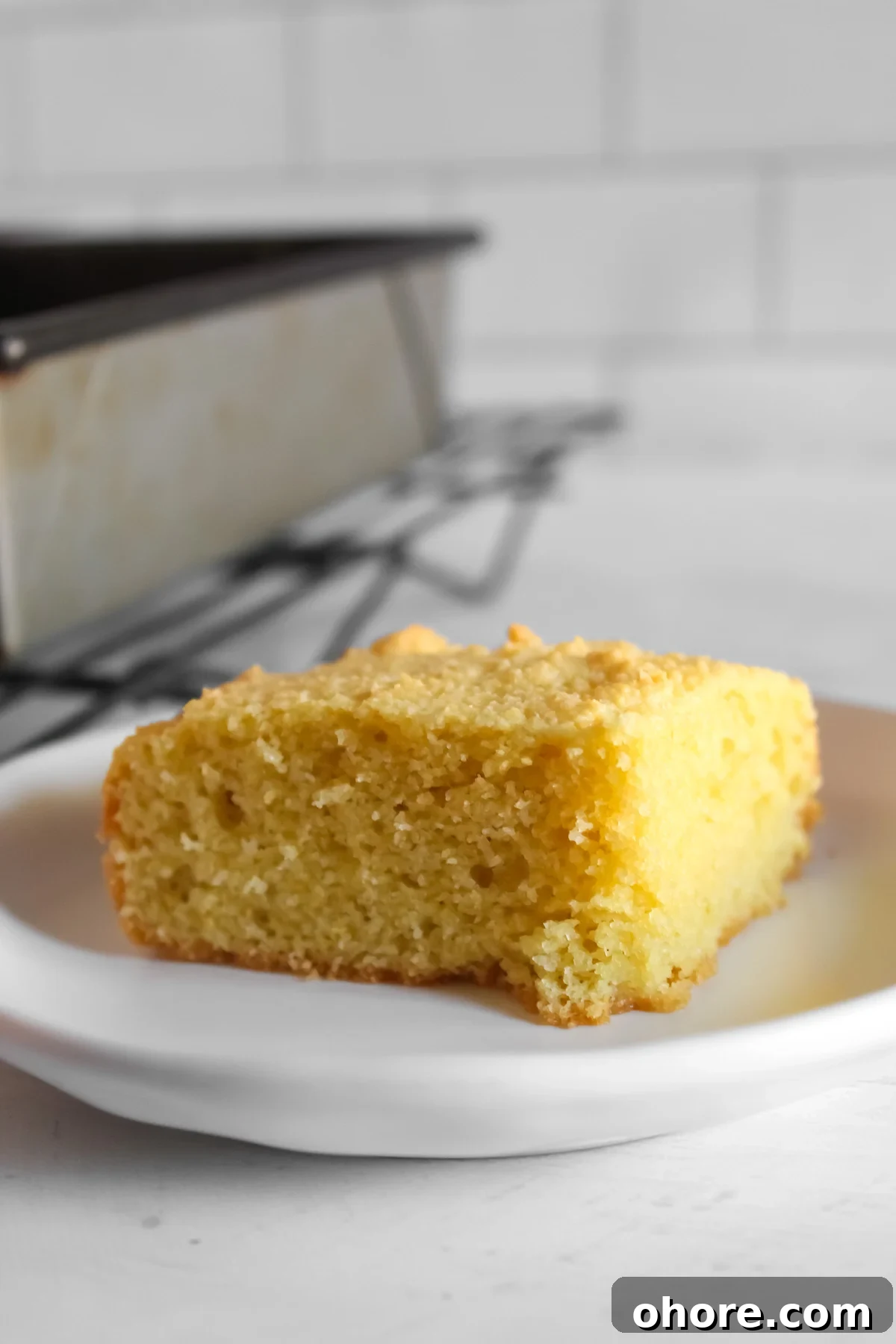
If gluten-free baking has felt intimidating, understanding the ingredients and steps makes a big difference. Read on for practical tips, ingredient notes, and a printable recipe card so you can bake this almond flour cornbread with confidence.
Nutritional Overview
Using almond flour instead of refined white flour adds nutrient density to this cornbread. Almond flour is higher in healthy fats, protein, and fiber, making it a useful option when you want a grain-free, lower-carb alternative that still tastes rich and satisfying.
Almond Flour Nutrition
In roughly 1/2 cup of almond flour, you’ll typically find:
- About 340 calories
- Approximately 12 g protein
- Around 30 g fat
- About 12 g carbohydrates
- Roughly 4 g fiber
That profile makes almond flour a strong choice for anyone seeking lower-carb or grain-free baking options.
Key Ingredients
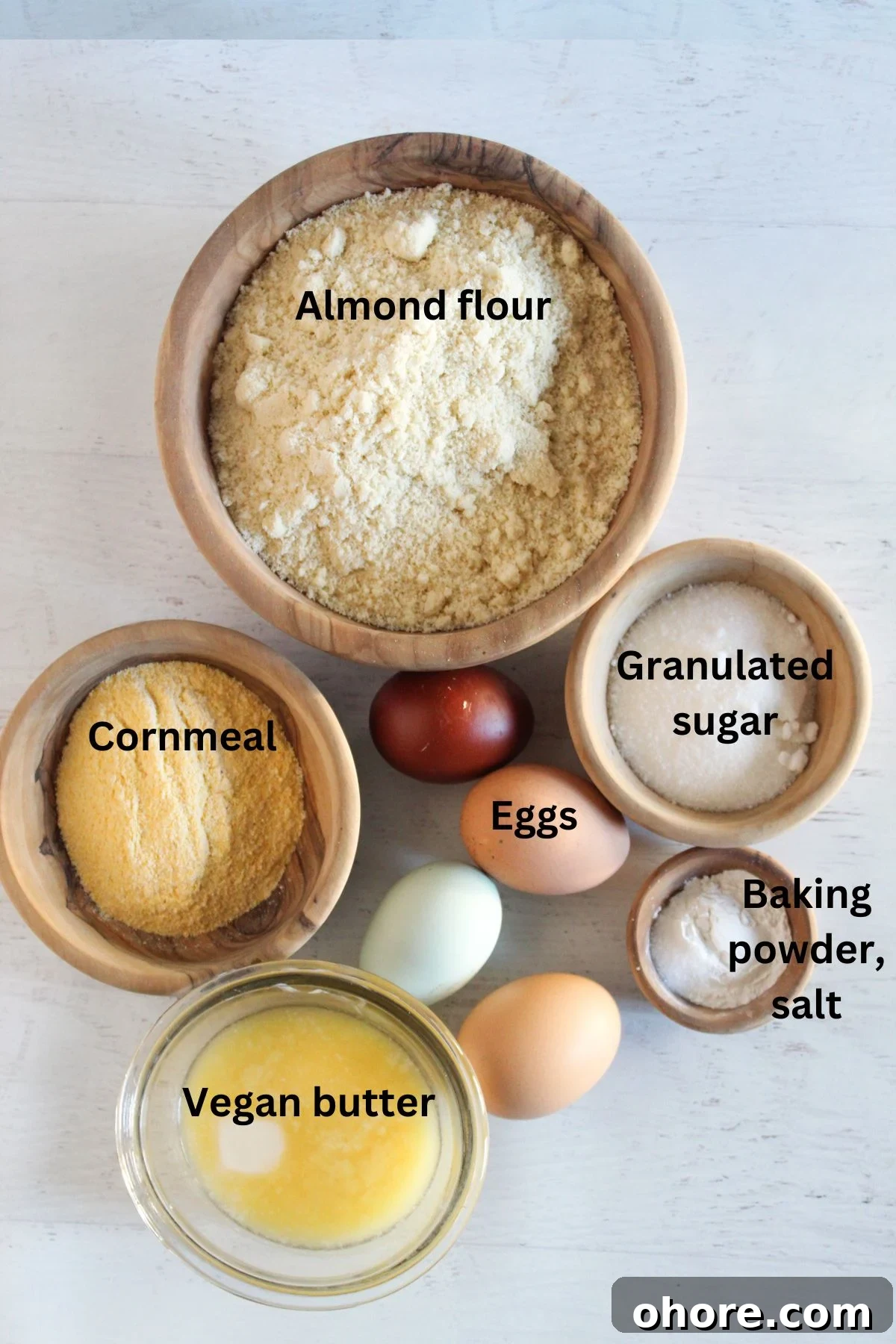
This recipe uses a short list of common ingredients, so you can make it quickly when you need a reliable side. It’s naturally paleo-friendly and gluten-free when using the ingredients listed below.
- Eggs: Provide structure and binding. Use room-temperature eggs for best results.
- Vegan butter (or regular butter): Melt and cool before mixing to create a tender crumb and buttery flavor.
- Granulated sugar: Optional for a lightly sweet cornbread; omit for an unsweetened version.
- Yellow cornmeal: Adds the classic corn flavor—different from corn flour.
- Almond flour: Use fine, blanched almond flour (not almond meal) for the best texture.
- Baking powder: Leavens the batter and keeps the cornbread light—use a gluten-free baking powder if needed.
- Salt: Balances and enhances flavor.
Quantities and full instructions are provided in the printable recipe card below.
Printable Almond Flour Cornbread Recipe Card
Ingredients
- 4 large eggs, room temperature
- ⅓ cup vegan butter, melted and cooled (76 grams)
- ¼ cup granulated sugar (50 grams)
- ⅓ cup cornmeal (53 grams)
- 2 cups almond flour (200 grams)
- 2 tsp baking powder
- ¼ tsp salt
Instructions
-
Preheat the oven to 350°F (175°C).
-
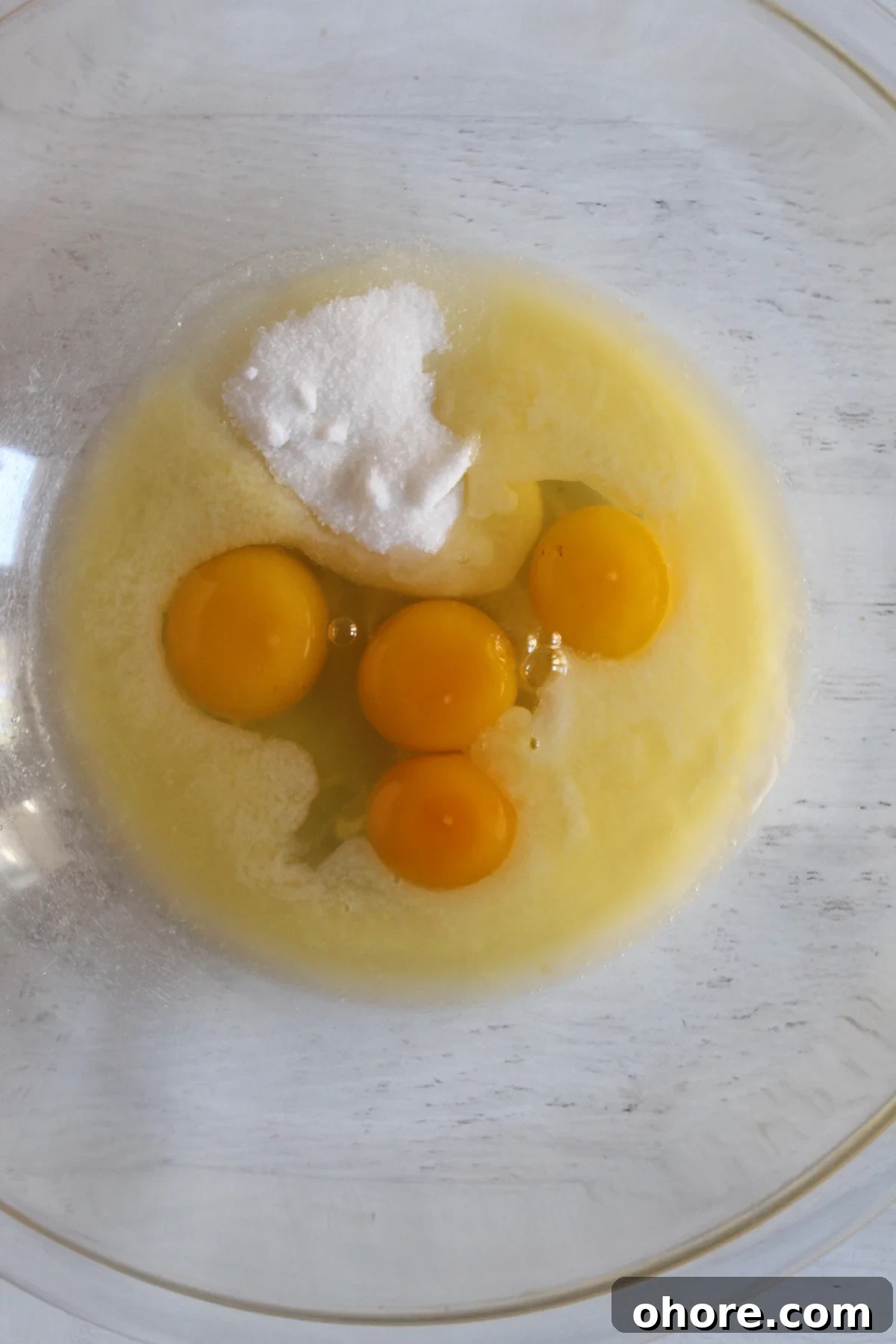
In a large bowl, whisk the eggs, melted and cooled vegan butter, and granulated sugar until fully combined.
-
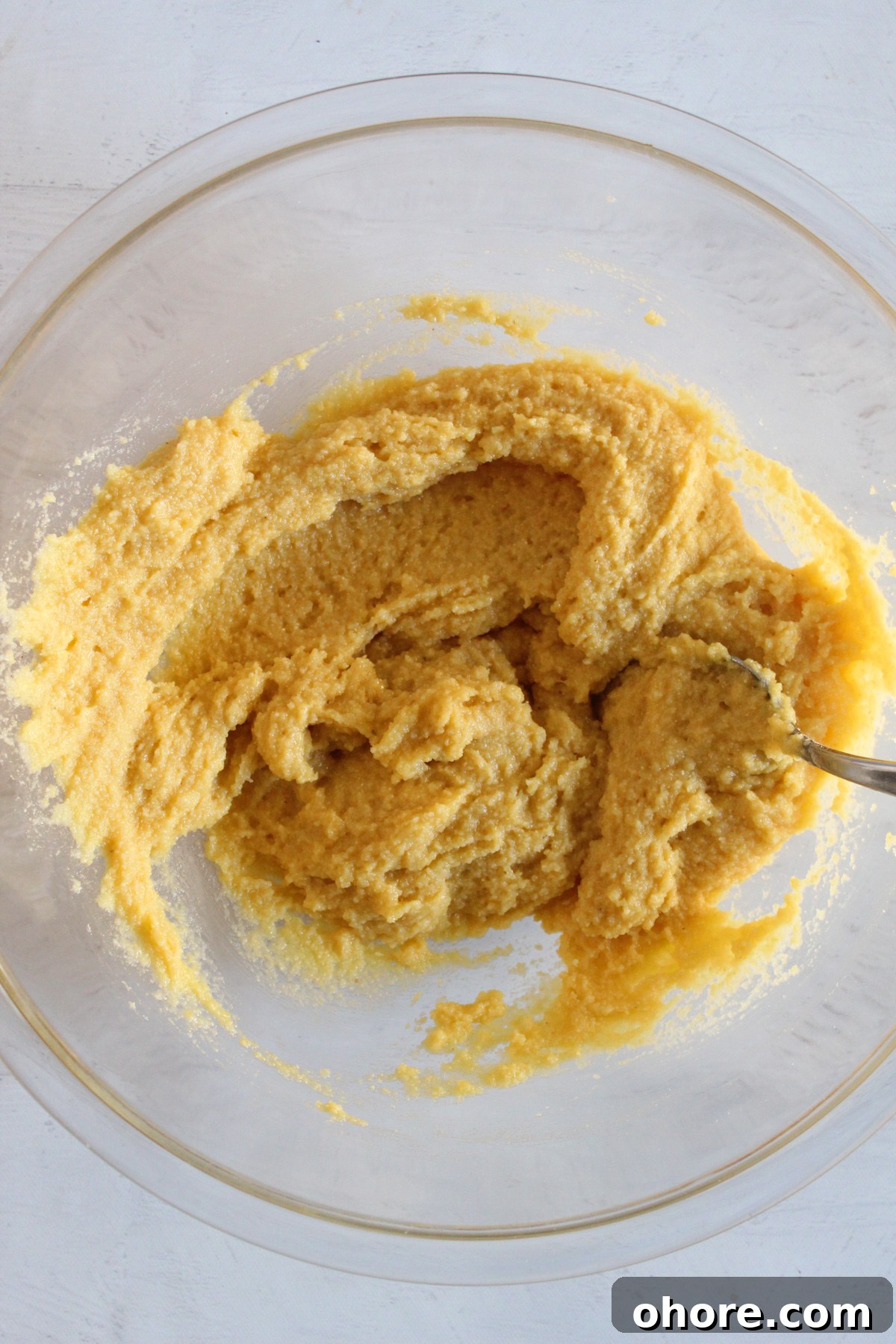
In a separate bowl, whisk together the cornmeal, almond flour, baking powder, and salt. Add the dry ingredients to the wet mixture and stir just until incorporated.
-
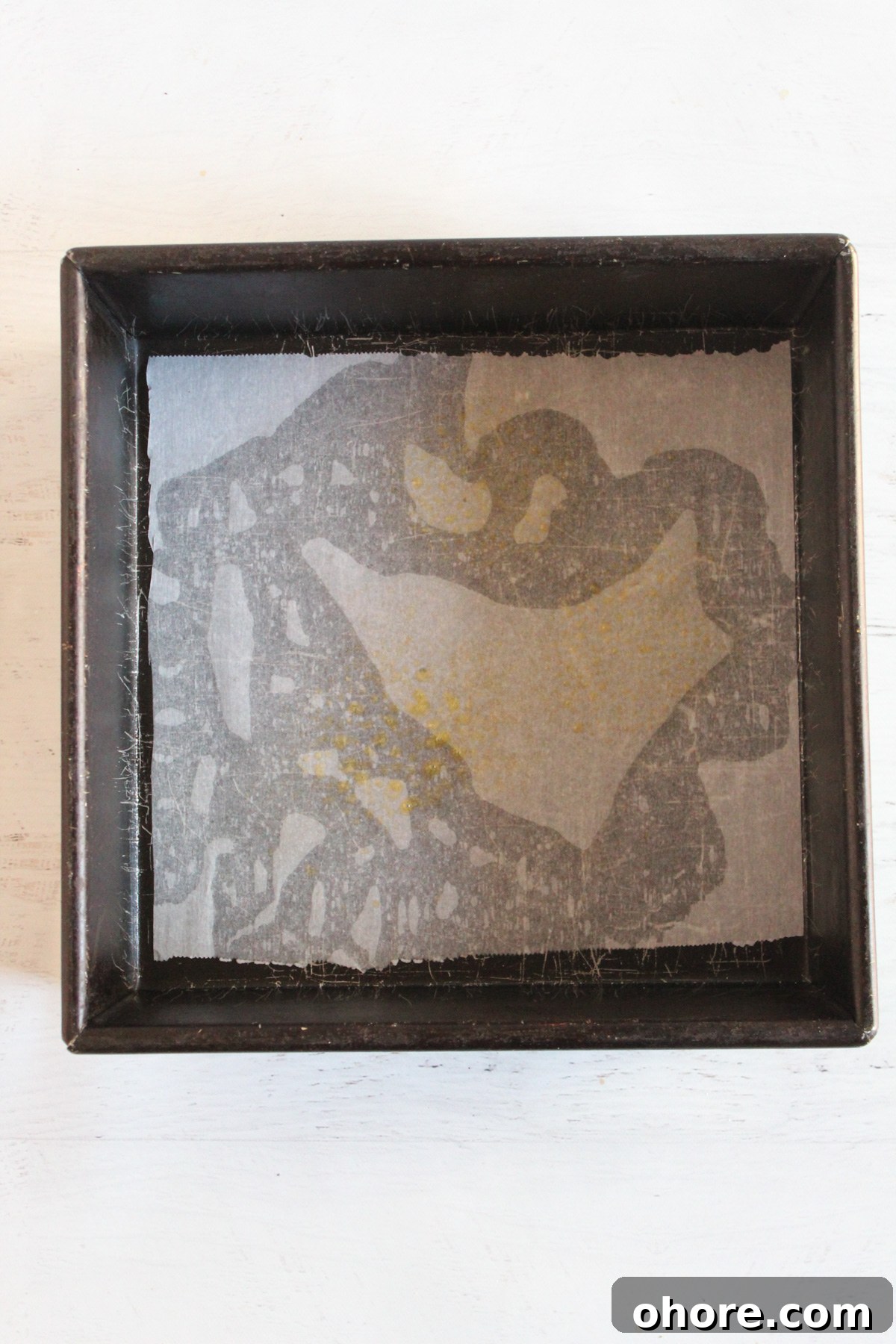
Line an 8″x8″ baking pan with parchment paper and lightly spray the paper.
-
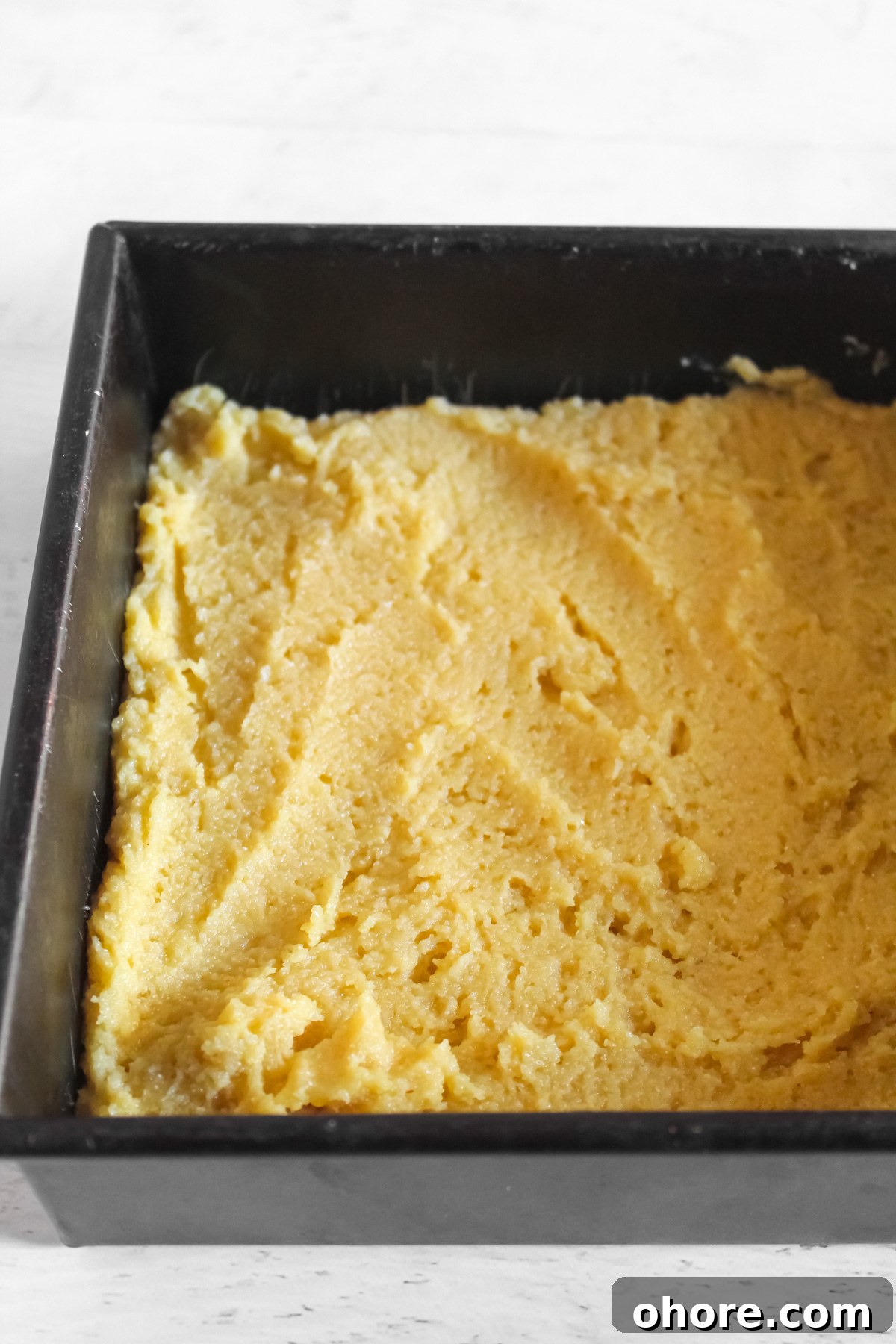
Scrape the batter into the prepared pan and smooth the top as needed.
-
Bake for about 25 minutes, or until a toothpick inserted into the center comes out clean.
-
Cool on a wire rack for 10 minutes before slicing and serving.
Notes
- Measure ingredients by weight where weight is given for the most consistent results.
- Use room-temperature ingredients to help the batter come together smoothly.
- The batter will be thick—that’s normal for this recipe.
- Store baked cornbread in an airtight container at room temperature for up to 2 days, refrigerate up to 5 days, or freeze up to 3 months.
Nutrition
Did you make and love this recipe? Leave a review and rating below!
Step-by-Step: Almond Flour Cornbread
Follow these step-by-step notes for visual guidance while you make the recipe.
Step 1
Preheat the oven to 350ºF. Line an 8″x8″ baking pan with parchment paper and lightly spray the paper.
Step 2
In a large bowl, whisk together 4 room-temperature eggs, 76 g melted butter, and 50 g granulated sugar until smooth.
Step 3
In a separate bowl combine 53 g cornmeal, 200 g almond flour, 2 tsp baking powder, and 1/4 tsp salt. Whisk together, then fold into the wet ingredients until just combined.
Step 4
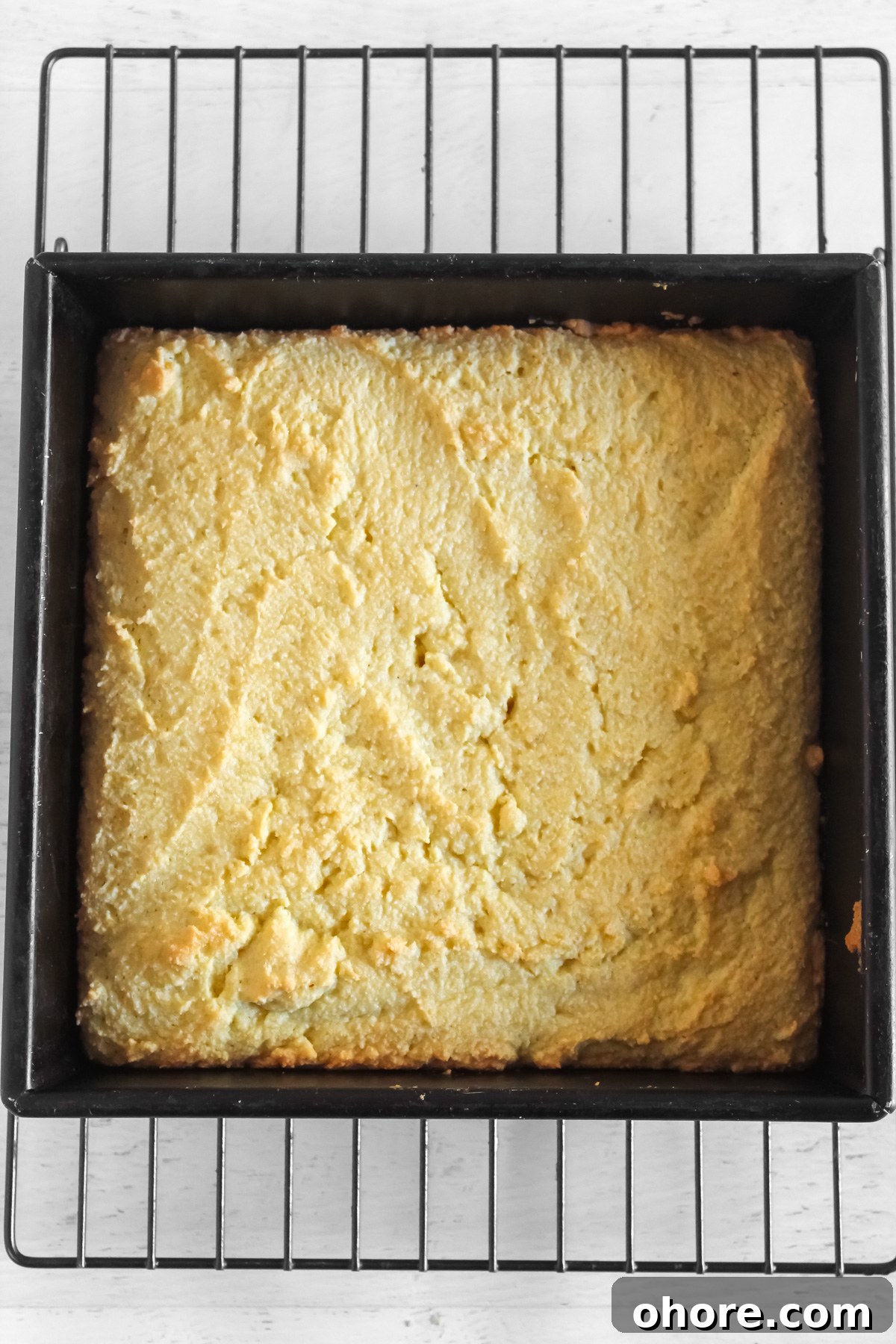
Transfer the batter to the prepared pan and bake for about 25 minutes, or until a toothpick comes out clean.
Tip: The batter will be thick; wetting your spatula slightly can make spreading easier.
Step 5
Allow the cornbread to cool on a wire rack for 10–15 minutes before slicing so it sets and yields clean slices.
Substitutions & Variations
Cornbread is versatile. Swap ingredients to match your preferences or diet while keeping the basic formula intact.
Substitutions
Sweeteners: Swap granulated sugar for coconut sugar or a 1:1 alternative for a similar texture, or omit sugar for a savory, unsweetened cornbread.
Fat: Use vegan or regular butter interchangeably, or replace with melted coconut oil for a slightly softer crumb.
Eggs: Eggs are important for structure; using an egg substitute will change the texture and isn’t recommended unless you accept a different result.
Flavor Variations
For savory cornbread, fold in shredded cheddar, diced jalapeños, bacon bits, or fresh herbs. For a sweeter loaf, add a tablespoon or two of honey, fold in fresh corn kernels, or stir in a pinch of cinnamon.
Storage Guide
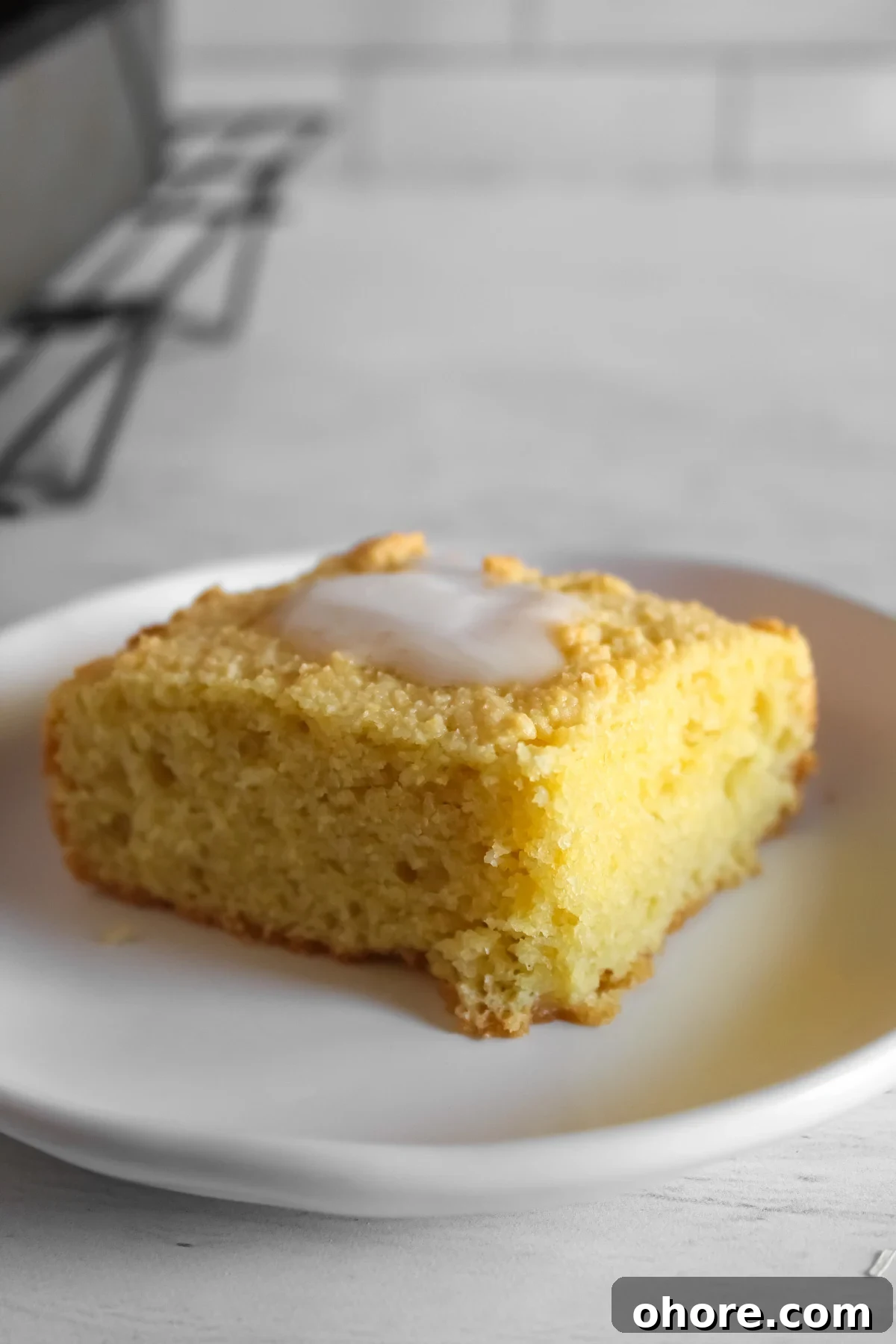
Because almond flour contains more fat and moisture than wheat flour, store this cornbread carefully to preserve texture.
At room temperature, keep in an airtight container for up to 2 days. Placing a paper towel in the container can help absorb excess moisture.
Refrigerate in an airtight container for up to 5 days. For longer storage, cool completely, slice, wrap slices individually or layer with parchment, and freeze for up to 3 months.
To reheat: Microwave 10–25 seconds depending on temperature, or warm in a 300ºF oven for 5–10 minutes.
Tips & Tricks
A few small adjustments make a big difference when baking with almond flour.
Use Room Temperature Ingredients
Bring eggs to room temperature and let melted butter cool before mixing so ingredients blend evenly.
Use Fine, Blanched Almond Flour
Choose fine, blanched almond flour rather than coarse almond meal for the best, most consistent crumb and lighter texture.
Don’t Overmix
Mix just until the dry ingredients are combined with the wet. Overmixing isn’t necessary and can affect rise.
Avoid Overbaking
Almond flour browns more quickly due to its fat content. If the top is browning too fast, loosely cover with foil. The center should feel set and a toothpick should come out clean.
Don’t Slice Too Early
Allow at least 10–15 minutes of cooling before slicing to avoid crumbly pieces and achieve clean slices.
Almond Flour Cornbread FAQs
Answers to common questions about this almond flour cornbread are below to help you succeed the first time you bake it.
Is This Recipe Keto-Friendly?
This recipe is gluten-free but not strictly keto. It has roughly 15–16 g net carbs per serving, which is lower than regular cornbread but likely too high for strict keto. You could experiment with low-carb sweeteners and adjusting cornmeal, but that will change the texture and flavor and hasn’t been tested here.
Do I Need to Add Dairy to Cornbread?
No—this recipe is dairy-free as written, using vegan butter and no milk or buttermilk. The eggs and almond flour provide the moisture and structure needed.
Can I Make This Ahead for Meal Prep?
Yes. The cornbread freezes well when sliced and wrapped, making it convenient for meal prep. Reheat slices as needed.
Why Is My Cornbread Crumbly?
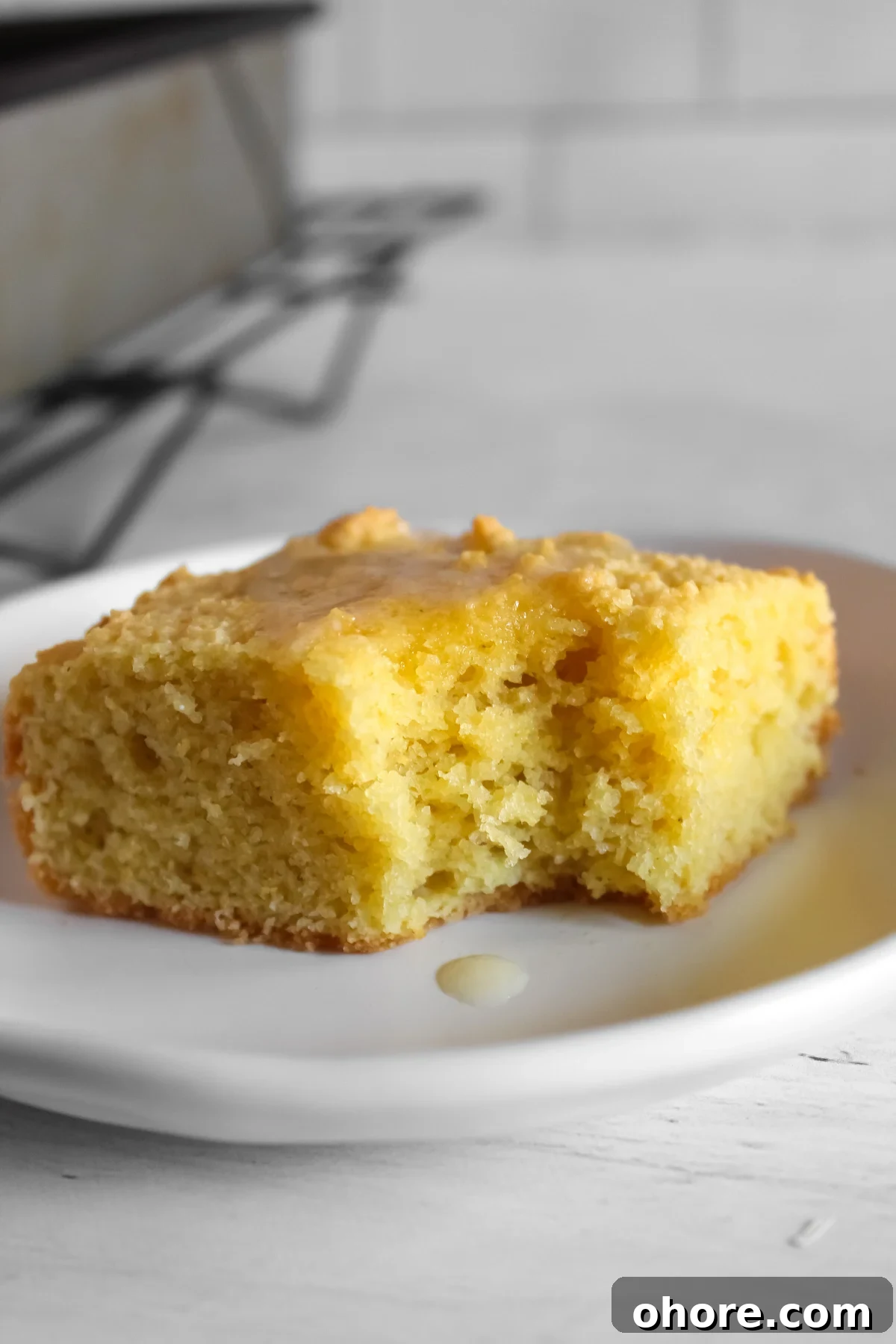
Common causes of crumbly cornbread are insufficient eggs, too much almond flour, or slicing before the loaf has set. Use the given weights where provided and allow the cornbread to cool 10–15 minutes for best results.
Cornbread: The Best Side
You’re ready to make almond flour cornbread that’s sturdy enough to serve with hearty stews and adaptable enough to customize. It’s a year-round favorite—great with summer BBQ or on the holiday table—offering a more nutrient-dense alternative to the classic.
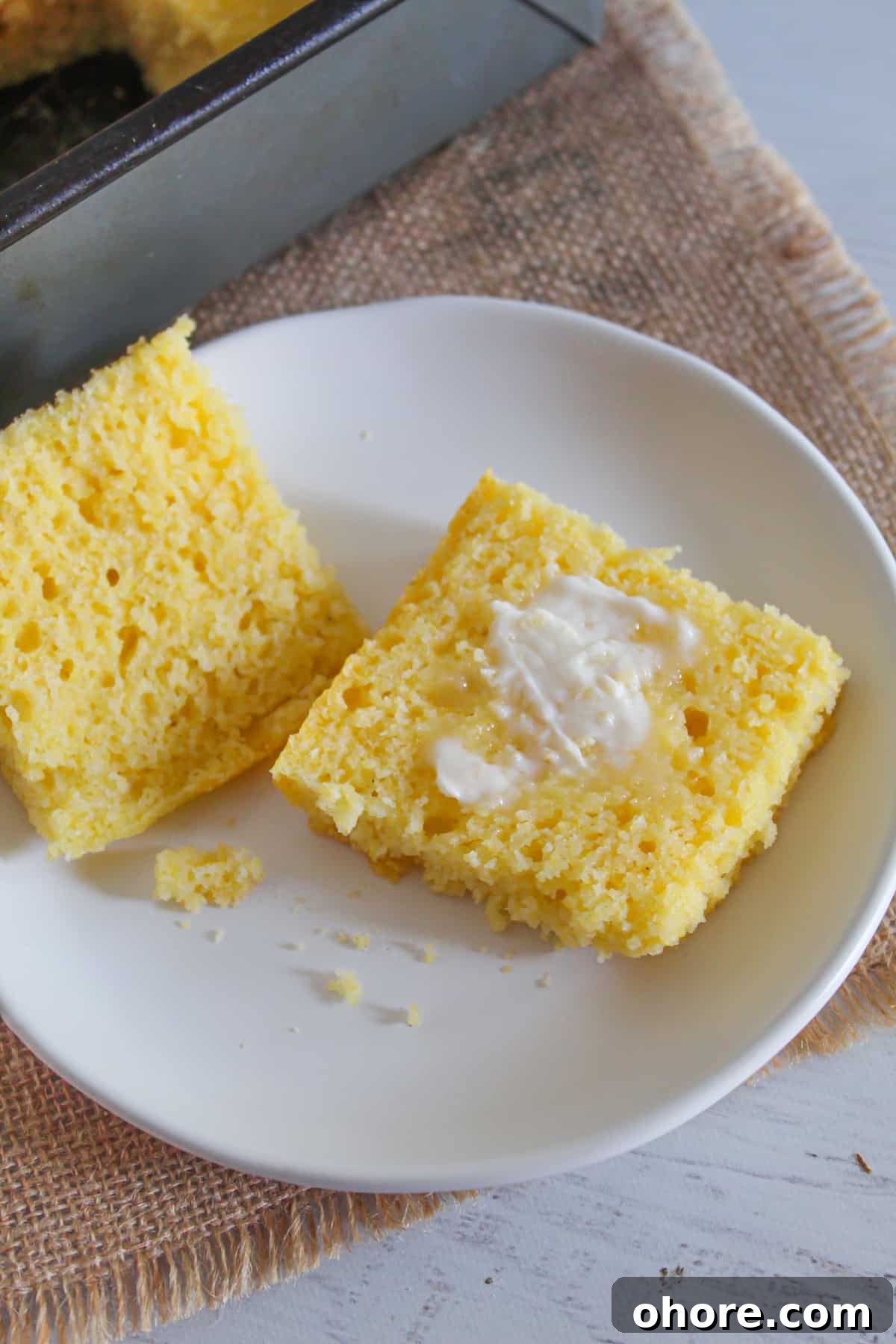
Try variations like jalapeño-cheddar, bake into muffins, or drizzle a bit of honey over a warm slice. Most of all, enjoy experimenting and sharing what you make.
Related Recipes
If you liked this quick bread, consider trying other gluten-free options like cinnamon quick bread, Irish soda bread, flourless banana bread, or dairy-free pumpkin bread.
Get Connected!
Leave a comment below to share your experience, variations, or questions. If you enjoyed the recipe, save it for later or share it with a friend.