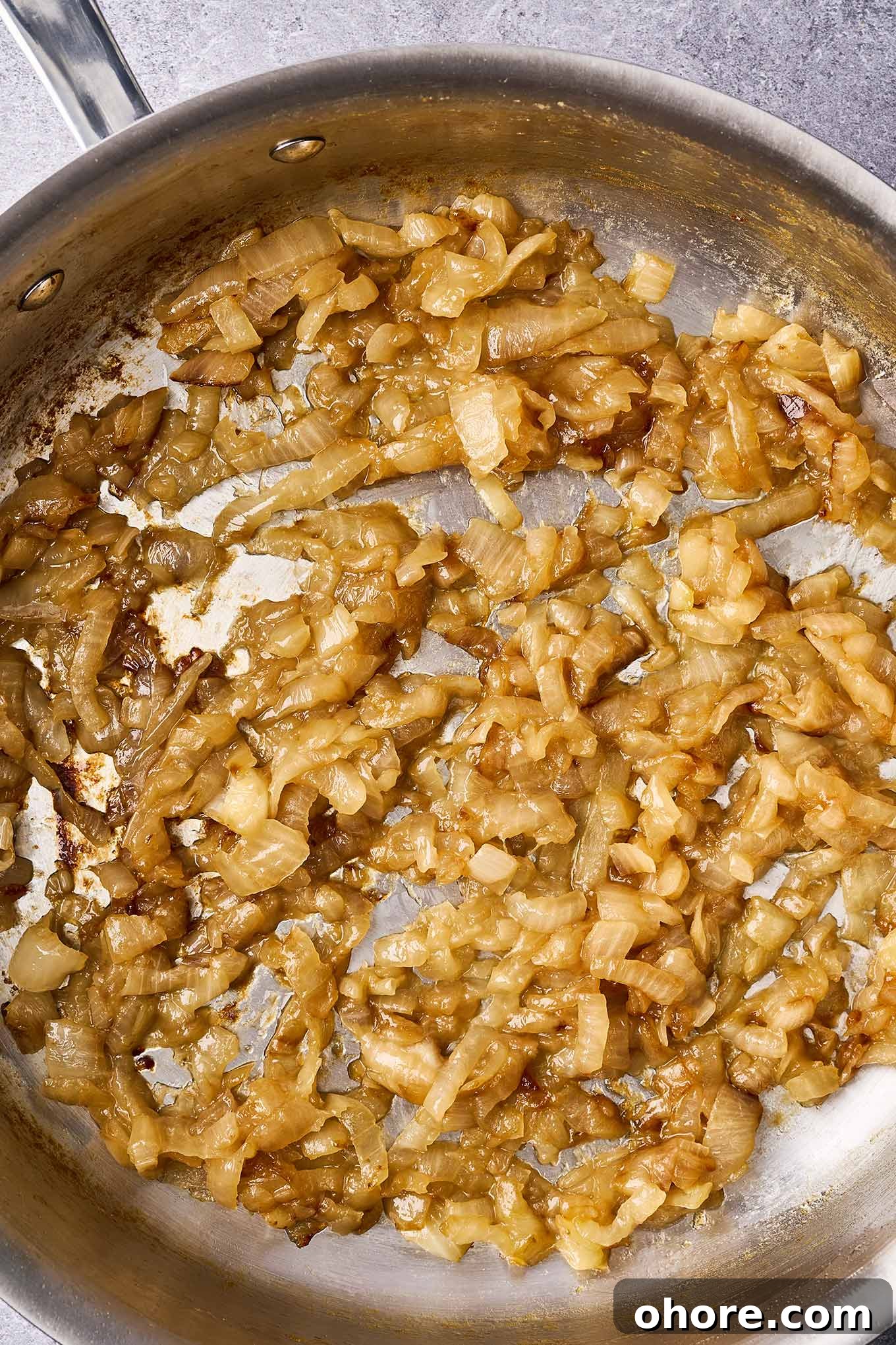
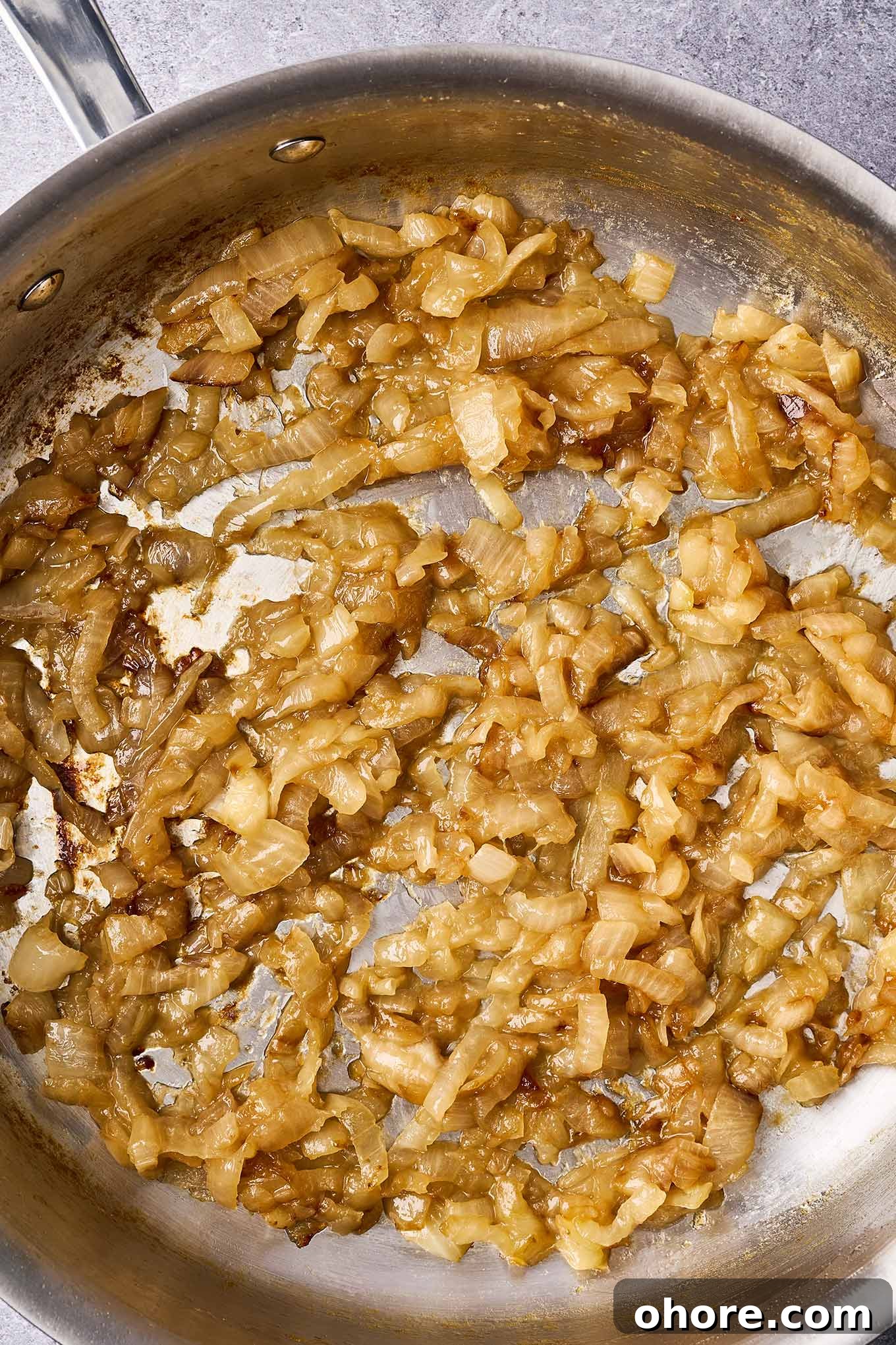
How Slow Cooking Turns Ordinary Onions Extraordinary
Caramelized onions are a versatile kitchen staple that deepen and enrich almost any dish. Cooking onions slowly brings out their natural sweetness and develops a savory, jam-like complexity that works beautifully on steaks, burgers, pasta, soups, and sandwiches.
The ingredient list is minimal: onions, a little butter, olive oil, salt, and an optional pinch of sugar. The magic is the method. Low, gentle heat allows the onions’ sugars to break down gradually, turning them golden and silky. That texture and flavor can’t be rushed—time in the pan is what creates the rich, layered taste.
Ingredient Notes and Substitutions
A few key choices make a big difference. Quantities appear in the recipe card below.
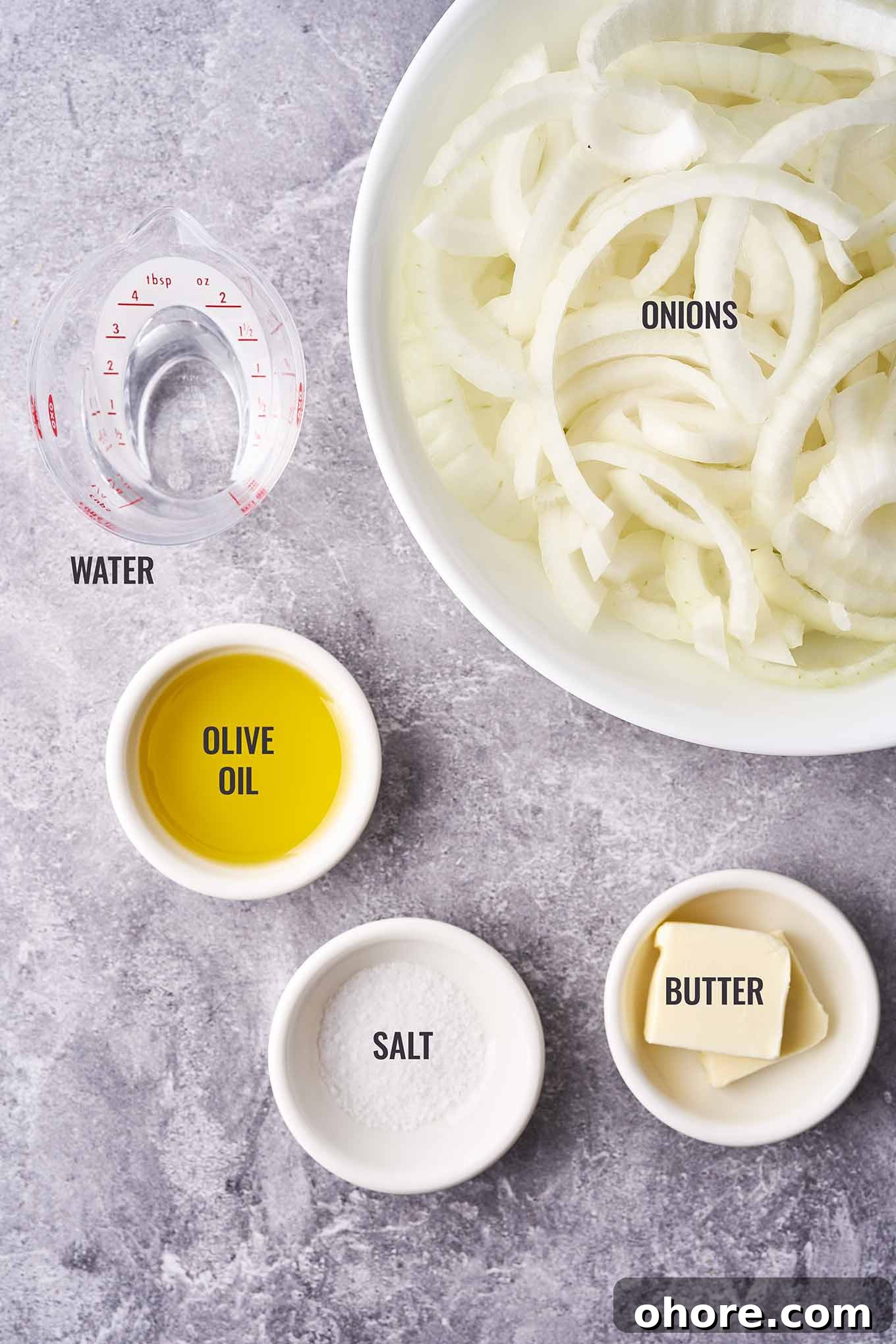
Yellow onions: Yellow onions are ideal for caramelizing because they have enough natural sugar and a balanced flavor that becomes deep and savory when cooked slowly. Sweet onions work too but are costlier. Red or white onions are sharper and can dominate a dish rather than complement it.
Butter & olive oil: Use a mix of butter and light olive oil. Butter gives rich, rounded flavor while oil raises the smoke point and helps prevent burning. A roughly equal mix yields consistent results.
Pinch of sugar: A small pinch of sugar can accelerate caramelization and enhance sweetness. Omit it if you’re using naturally sweet onions or prefer no added sugar.
A Quick Look at Preparation
How to Make Caramelized Onions
Below is a concise overview and tips; full step-by-step instructions are in the recipe card.
Heat the butter and olive oil in a wide skillet until the butter melts. Add the sliced onions, toss to coat, cover, and cook over low heat until they soften and begin to release juices. Keep the heat low and stir occasionally to ensure even softening.
As the onions cook they will transition from pale to deep amber. Stir more frequently as they start to brown and scrape up the flavorful fond from the pan. If they cling to the pan or brown too quickly, deglaze with a tablespoon or two of water, broth, or wine and continue cooking until you reach the desired texture.
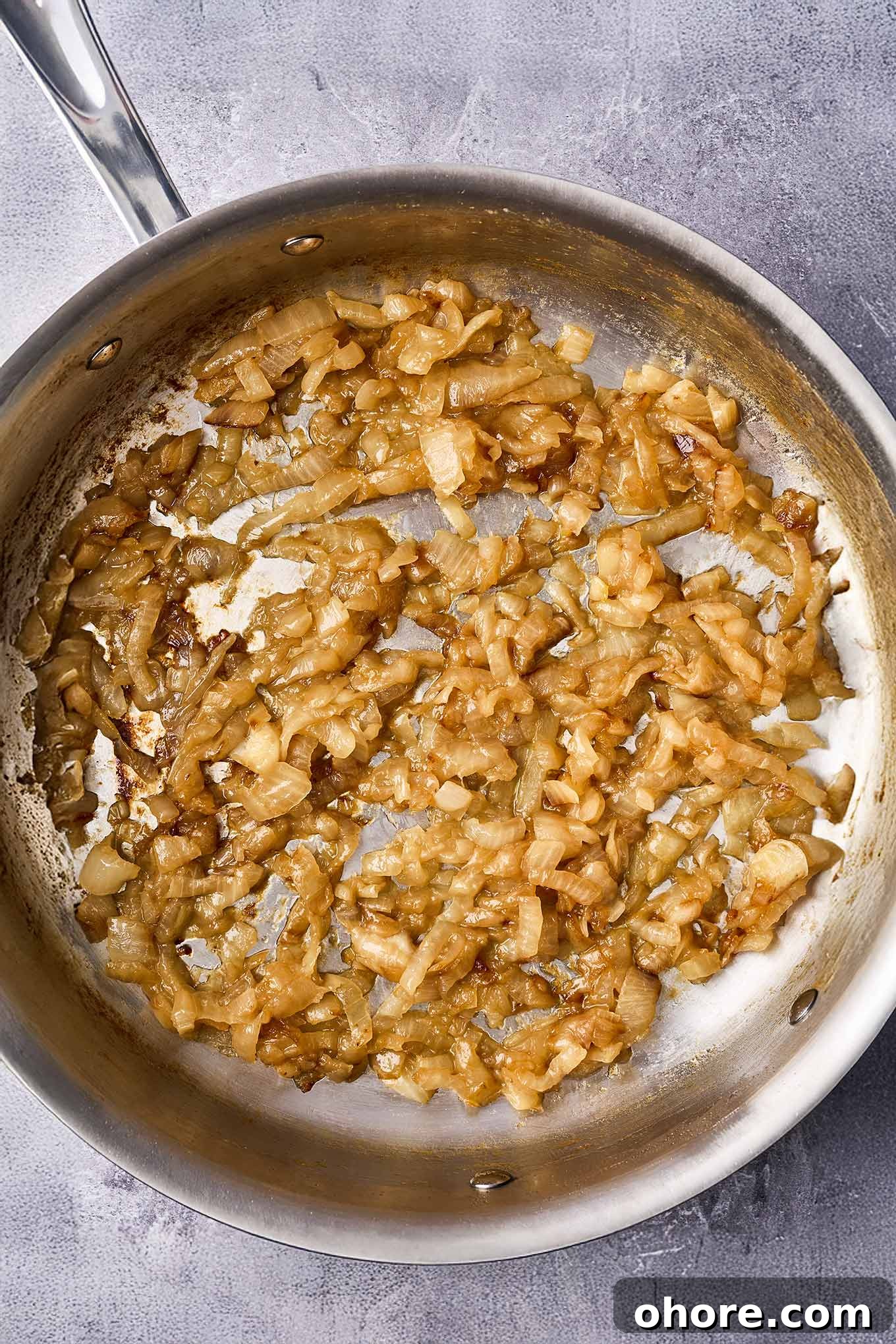
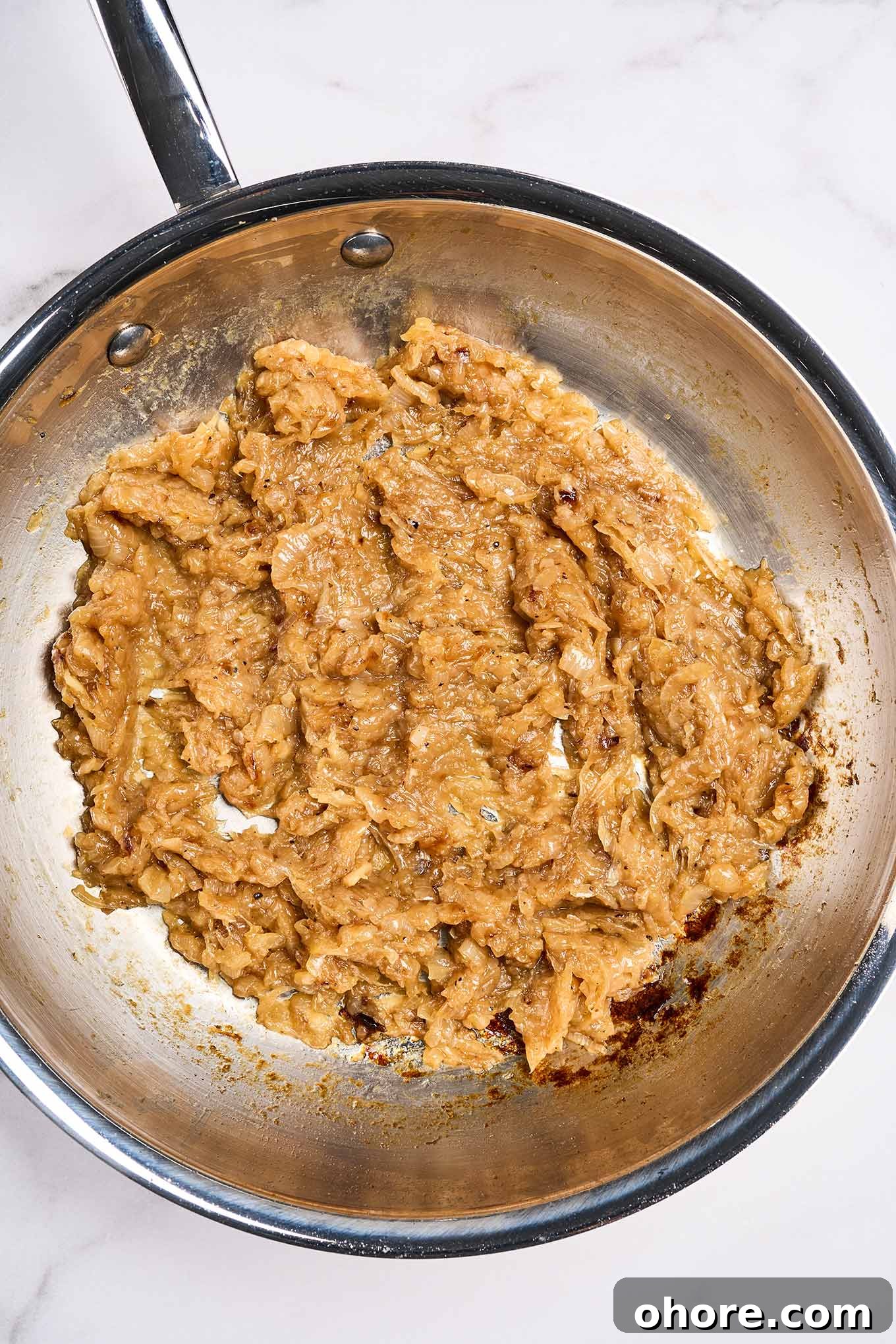
When finished the onions will have reduced significantly and turned a rich golden brown. The final texture depends on cooking time: a shorter cook leaves some texture for topping steaks or tossing with pasta; a longer cook breaks them down into a spreadable, jam-like consistency for soups and sandwiches.
Tips for Success
- Be patient: True caramelization requires low heat and time. Turning up the heat speeds browning but risks bitterness.
- Use the right pan: A wide, heavy skillet—stainless steel or cast iron—gives even browning and plenty of surface area for moisture to evaporate. Avoid nonstick for best fond development.
- Deglaze when needed: Add a tablespoon or two of liquid to loosen sticky browned bits and preserve flavor if the onions begin to cling.
Cooking with Caramelized Onions
Caramelized onions add sweet-savory depth to many dishes. Use them in pasta, fold them into a creamy blue-cheese sauce, build them into sliders, toss with sausage pasta, or layer them into French onion soup. Their rich flavor enhances sandwiches, pizzas, stews, and roasted vegetables.
Caramelized Onions (How-To Recipe)
Pin Recipe
Rate Recipe
Print Recipe
Ingredients
- 2 pounds yellow onions, halved and thinly sliced
- 1 tablespoon olive oil
- 1 tablespoon butter
- 1/2 teaspoon salt
- Pinch sugar
- Water, or other liquid (see notes)
Instructions
-
Melt the butter and olive oil together in a large skillet over medium-low heat. Add the onions, stir to coat, cover, and cook 12 to 15 minutes, stirring occasionally, until soft and translucent.
-
Uncover, raise the heat to medium, and stir in the salt and a pinch of sugar. Continue cooking uncovered, stirring often and scraping up any browned bits from the pan bottom.
-
If the onions begin to stick or brown too quickly, add water (or broth or wine) a tablespoon at a time to loosen them and prevent burning. Continue until the onions have reduced considerably and turned deep golden brown.
-
For onions that retain some texture (for burgers, steaks, and pasta), stop when they are soft but still hold shape (about 35 to 40 minutes total). For a spreadable, jam-like result (for sandwiches or soups), cook up to 10 minutes longer.
Notes
Nutrition
Nutrition information is automatically calculated and should be used as an approximation.