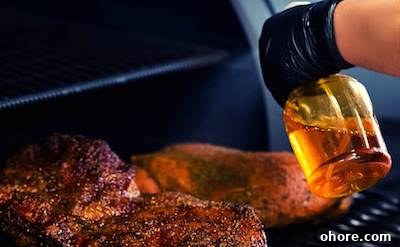
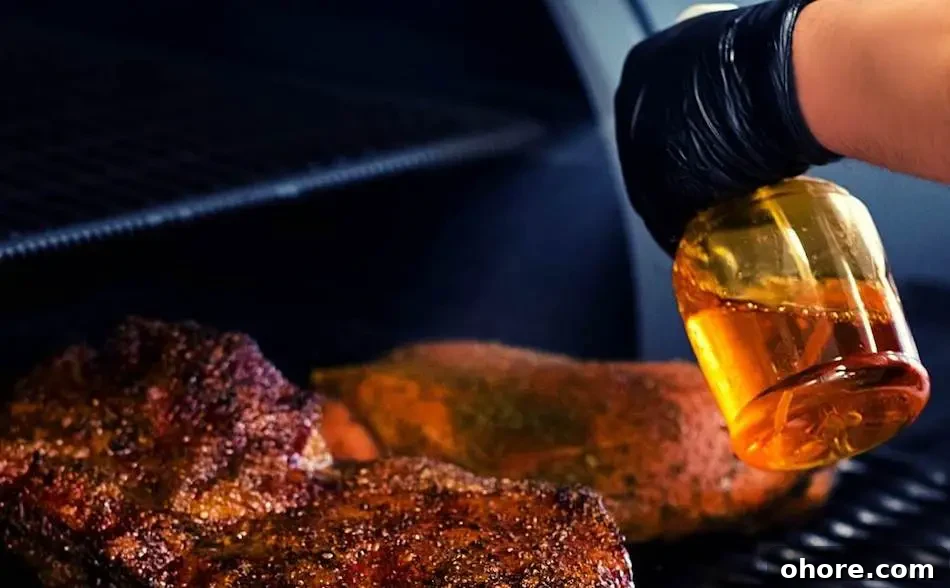
Basting, spritzing, or mopping a brisket is a common practice among pitmasters. While many people assume its sole purpose is to keep the meat moist or add flavor, there’s more to the technique. This article explains the science and benefits of basting a brisket, outlines when and how to do it, and shares practical tips and methods for consistently good results.
Basting a brisket while smoking can help prevent the meat from drying out, increase smoke absorption, support smoke-ring development, and assist in bark caramelization. It also slows the surface cooking slightly, attracting more smoke and allowing better browning. A practical approach is to begin basting after the first hour, then continue about once an hour until you wrap the brisket; once wrapped, steam helps maintain moisture. Common tools include a mop brush and bucket, a spray bottle, or a basting brush. Bone broth makes a safe mop sauce because it won’t gum up the bark the way sugary mops sometimes do.
| Benefit of Basting Brisket | How Basting Helps |
|---|---|
| Prevents meat from drying out | Adds moisture to the surface, slowing the cooking process and helping retain juiciness |
| Adds smoke flavor | Cold, wet surfaces attract more smoke, enhancing smoke penetration |
| Aids in the formation of a smoke ring | Surface moisture helps smoke particles attach and react with the meat to form a smoke ring |
| Helps to caramelize the bark | Depending on the mop sauce, basting can promote browning and caramelization of the crust |
| Replaces lost moisture | As cooking evaporates moisture, basting reintroduces some liquid to the surface |
Should I Baste Brisket or Not?
Basting offers clear advantages and is generally worth the extra attention. The cooling effect of applying liquid slows the outer surface down, giving collagen more time to break down and the meat more time to tenderize. A wet surface also attracts smoke, which enhances flavor and helps form the smoke ring. The effect on bark depends on the liquid: sweet mop sauces like apple juice or beer can caramelize and darken the crust, while neutral liquids simply maintain moisture.
Many pitmasters view basting as a trade-off: it can soften bark if overdone, but it protects against drying and improves overall mouthfeel. Because preferences vary, some favor a moistened brisket and others chase a tougher, drier bark—both approaches can yield excellent results when managed deliberately.
Better Smoke Ring
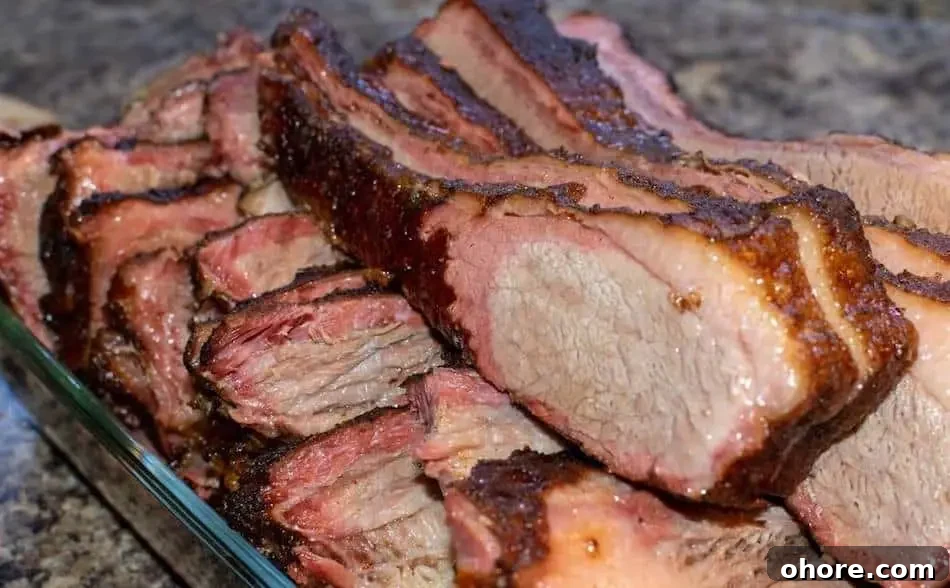
Basting helps develop a more pronounced smoke ring. By keeping the surface moist, smoke particles adhere more readily and stimulate the chemical reactions that create the characteristic pink ring just beneath the crust. The smoke ring remains a visual sign of a low-and-slow cook, prized by many barbecue enthusiasts.
Better Bark
Developing a desirable bark requires a balance between moisture and dry heat. Too much surface moisture will soften the crust; too little moisture risks drying the meat. Mopping with sweet liquids can enhance browning and create deeper caramelization, while neutral liquids like broths preserve juiciness without building sticky layers. Mastering brisket bark is about timing and moderation.
Should I Baste Brisket?
Ultimately, basting is a stylistic choice. Pitmasters use different routines: some mop frequently to keep meat tender, others minimize intervention to develop a firmer bark. In practice, most choose moisture over extreme crust hardness. If you want a firmer bark without frequent mopping, finishing in a hot oven or holding the brisket unwrapped for a period can help.
When to Baste Brisket?
Start basting after the first hour of cooking, then repeat about once an hour until you wrap the brisket. The initial hour typically leaves the meat naturally moist; after that, a crust begins to form and periodic mopping cools the surface, slows cooking, helps the rub set, and replaces evaporated moisture. Once wrapped in foil or butcher paper, internal steam maintains juiciness and further mopping is unnecessary.
| Brisket Total Cook Time | Start Time | Begin Spritzing | Wrap Brisket | Finish in Oven | Done Time (203°F) | Holding Time In Dry Cooler (1-4 hours) |
| 12 hours | 6pm | 9pm | 12am | 12am | 6am | Between 7am – 10am |
| 15 hours | 5pm | 8pm | 11pm | 11pm | 8am | Between 9am – 12pm |
| 18 hours | 2pm | 5pm | 8pm | 8pm | 8am | Between 9am- 12pm |
How to Baste a Brisket
A mop brush and bucket are the traditional tools for basting. Some cooks prefer a spray bottle for light spritzes, while others use a silicone or natural-bristle basting brush. A mop brush allows you to apply more liquid without disturbing the rub as much as a heavy pour might. Common methods include:
- Mop brush and bucket: Prepare a mop sauce and apply it with the mop, covering the surface evenly.
- Spritzing: Use a spray bottle for lighter, more frequent applications—good for thin liquids like water, apple juice, or vinegar mixes.
- Basting brush: Offers control and is useful for thicker sauces or targeted application.
- Injection: A meat injector sends marinade into the interior, adding moisture and flavor deep within the meat.
- Dry rubs: While not a liquid baste, a well-applied rub forms flavor and crust and can be combined with periodic mopping.
Baste Brisket With Bone Broth
Bone broth is a reliable, non-sugary mop option that won’t glaze or stick to the bark like some sweet mops. To make bone broth, simmer bones in a slow cooker or stockpot with water, a splash of apple cider vinegar, and aromatics for 24 hours or longer. The resulting liquid adds moisture and subtle savory notes without overwhelming the bark.
Basting Brisket With Beer
Beer is a widely used basting liquid. It’s primarily a thinning agent to add moisture, not a strong flavor contributor. Because beer contains sugars and proteins, it can cling to the surface and slightly affect bark development, so use intentionally depending on the finish you want.
Basting Brisket With Butter
A mop with an oil or butter base can help seal moisture and enrich flavor. Fats carry flavor and help with browning; a light butter or oil-based mop can add depth while protecting the surface from drying out. Use sparingly to avoid softening the bark too much.
Baste Brisket With Apple Cider Vinegar
Apple cider vinegar is one of the most common spritzes and mop ingredients. Mixed with water or alcohol, it helps with bark formation and can slightly break down the outer proteins to help the rub adhere. A vinegar-based spritz also brightens flavor and keeps the surface lively during long cooks.
Basting, Spritzing or Mopping Brisket?
These three methods all add moisture but differ in application. Spritzing uses a spray bottle and thin liquids like apple juice or vinegar mixes for frequent, light applications. Mopping uses a mop brush to apply larger quantities without disrupting the rub, and is suited to thicker or chunkier sauces. Basting with a brush falls between the two in volume and control. Choose the method that matches your desired bark, moisture level, and frequency of attention.
My Favorite Brisket Tools
Here are reliable tools I recommend for smoking brisket. These are commonly used by hobbyists and competitive cooks alike and represent practical investment choices when you want more consistent results:
- Meat injector: Useful for injecting marinades to add flavor and moisture to the interior.
- Mop brush and bucket: Traditional for applying mop sauces evenly over large cuts.
- Butcher paper: Wrapping in unwaxed, food-grade butcher paper helps preserve bark while speeding through the stall.
- Brisket rubs: Quality rubs or homemade blends help form a flavorful crust; keep a few pre-made blends on hand when needed.
- Meat thermometer: A two-probe thermometer is essential for monitoring smoker and meat temps throughout a long cook.
- Instant-read thermometer: Fast, accurate spot checks across the brisket ensure consistent doneness.
- Advanced controllers: For serious smokers, multi-channel Bluetooth/Wi‑Fi devices can log temps and help automate airflow for steadier cooks.