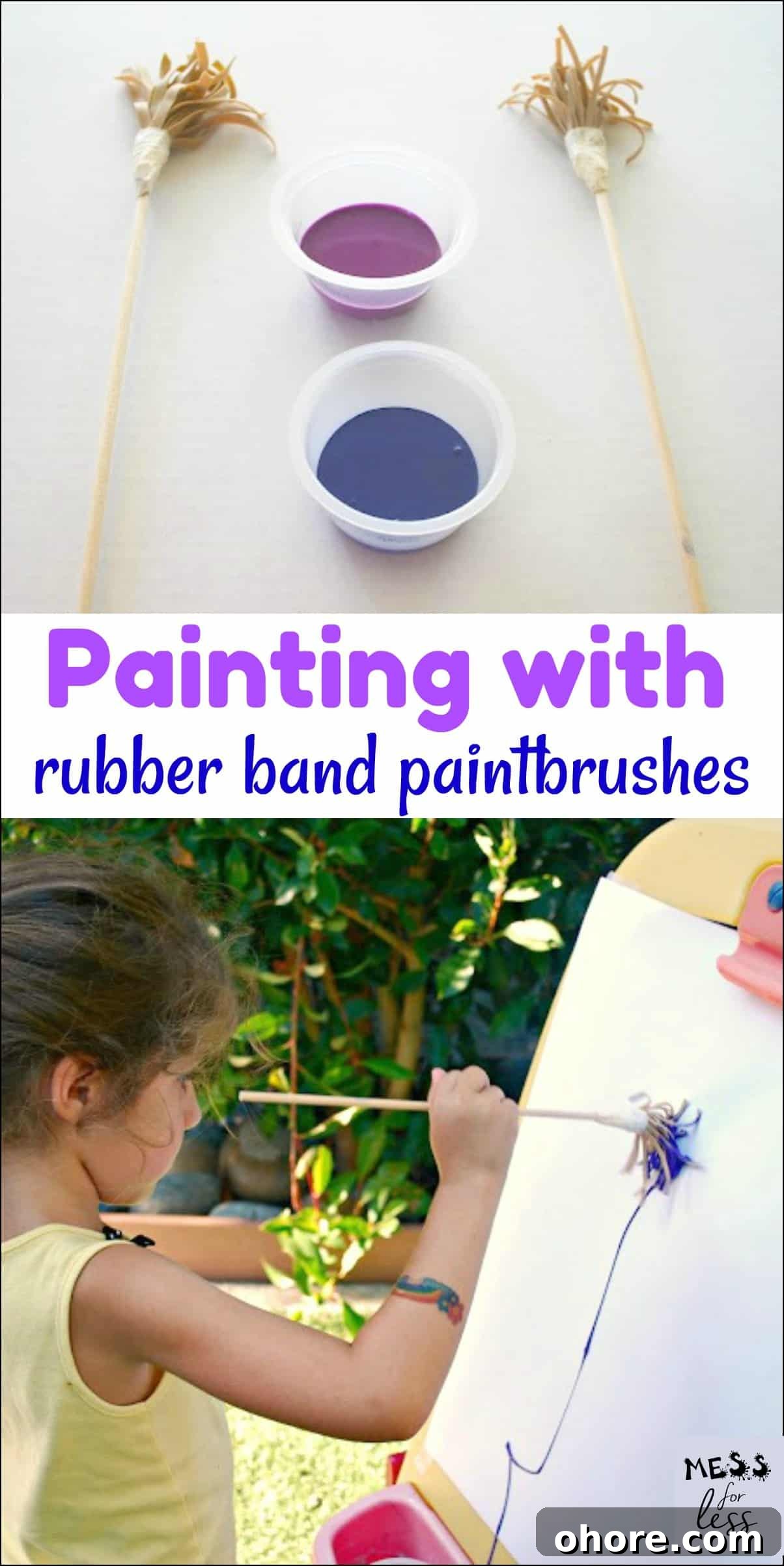
My kids love to paint, and I’m always looking for fresh, creative ways for them to explore color and texture. One of our favorite recent projects was making simple homemade paintbrushes from materials you likely already have at home. These rubber band paintbrushes are quick to assemble, durable enough for energetic little artists, and create unique marks that differ from regular brushes. If you enjoy exploring alternative painting tools, this easy craft is perfect for young children and adults who like playful experimentation.
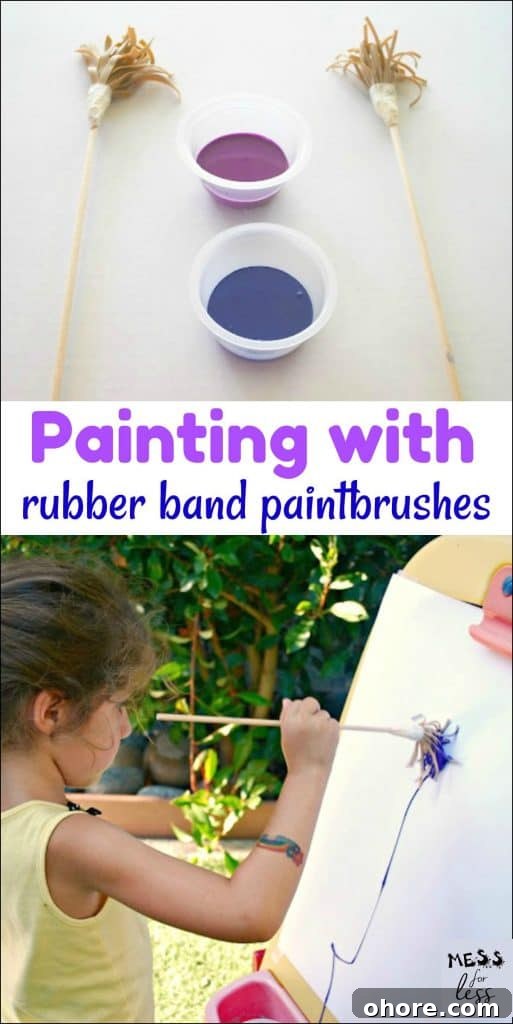
Painting with Rubber Band Paintbrushes
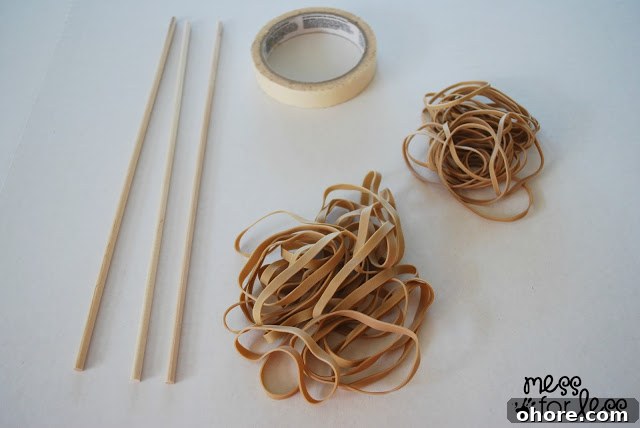
What you need:
- Rubber bands — you can mix thicknesses to get different effects (we used about 14 bands per brush).
- Wooden dowels — a narrow dowel works well (ours were 3/16″).
- Masking tape or a similar tape to secure the bands to the dowel.
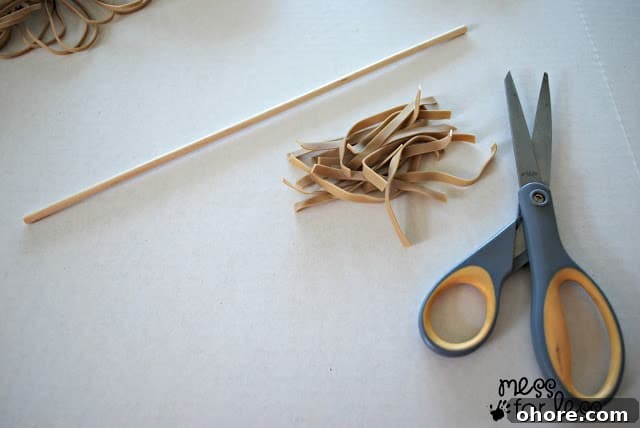
To make the brushes, try using two types of rubber bands — a thicker band for bold, chunky marks and a thinner band for finer lines. We gathered about 14 bands for each brush, then cut them in half so the strands would fan out and bend easily while painting.
Group the cut rubber band pieces together and position them at one end of the dowel. Wrap masking tape tightly around the dowel, keeping the bands as close to the end as possible so they have freedom to flex. The closer the bands are to the tip, the more movement and varied marks the brush will produce.
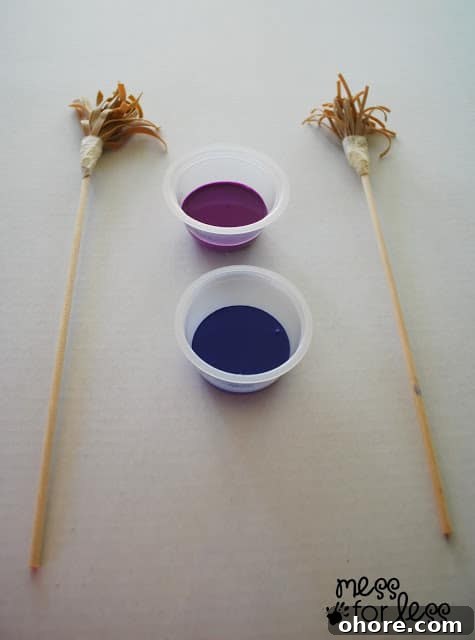
Set up a simple painting station with paper, paint containers, and your new rubber band brushes. An easel is nice but plain cardboard or a washable table surface works just as well.
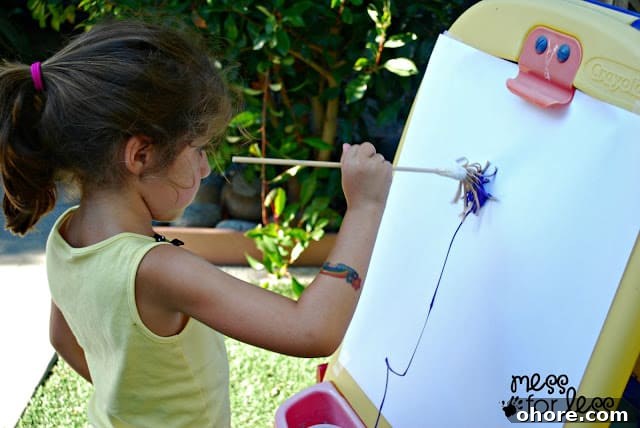
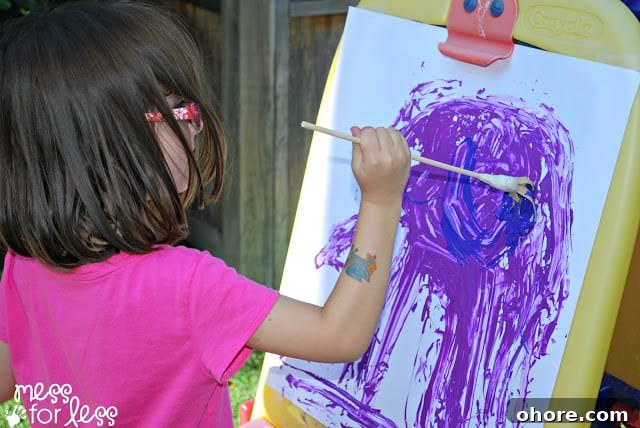
Because the “bristles” formed by the rubber bands are longer and floppier than standard brush bristles, they create flowing curves, repeated lines, and interesting splatter effects. The bands also hold a surprising amount of paint, so you can lay down bold swaths of color without reloading constantly.
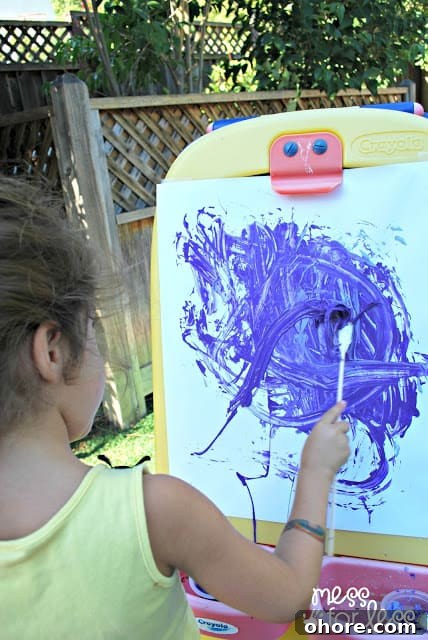
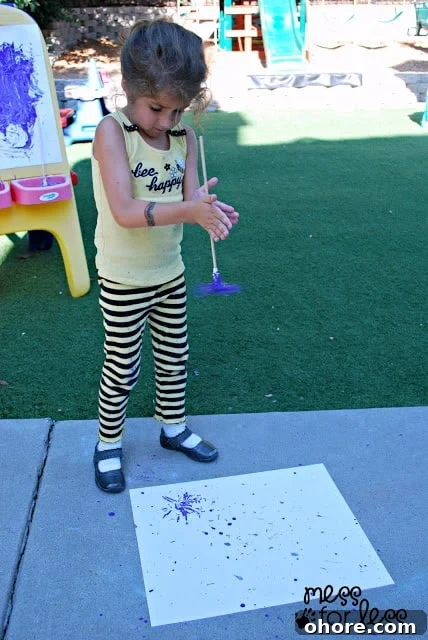
We experimented with different techniques. Simple dragging and sweeping produced layered, textured strokes. Rolling the dowel between hands while dipped in paint created energetic splatters and streaks — a delightful, messy effect that’s best done with smocks or play clothes. Spinning and dropping the brush onto paper made large blots that looked like fireworks.
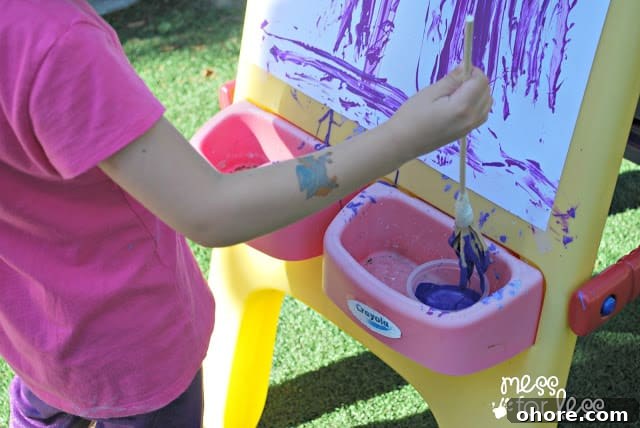
My daughter particularly liked the look she got from the thicker rubber bands; the marks were bold and graphic. I was initially worried that the bands might come loose during painting, but when taped securely the brushes held up well through multiple kids and many sheets of paper.
Tips for success:
- Secure the bands tightly with tape and keep them close to the end of the dowel for maximum movement.
- Mix band thicknesses to explore a variety of line widths and textures.
- Use washable paint and protect clothing and surfaces — these brushes can splatter.
- Encourage kids to try different motions: drag, roll, spin, and tap to see how the marks change.
This project is an easy, low-cost way to spark creativity and teach children how changing tools and techniques affects visual outcomes. It’s also a fun activity for group art time, classrooms, or rainy-day play. If you enjoyed these rubber band brushes, try combining them with other unconventional tools—sponges, cardboard edges, or blocks—to further expand your child’s painting vocabulary.
If you’re searching for more kid-friendly craft ideas, look for simple subscription kits or local resource guides that provide creative prompts and materials for regular art exploration.