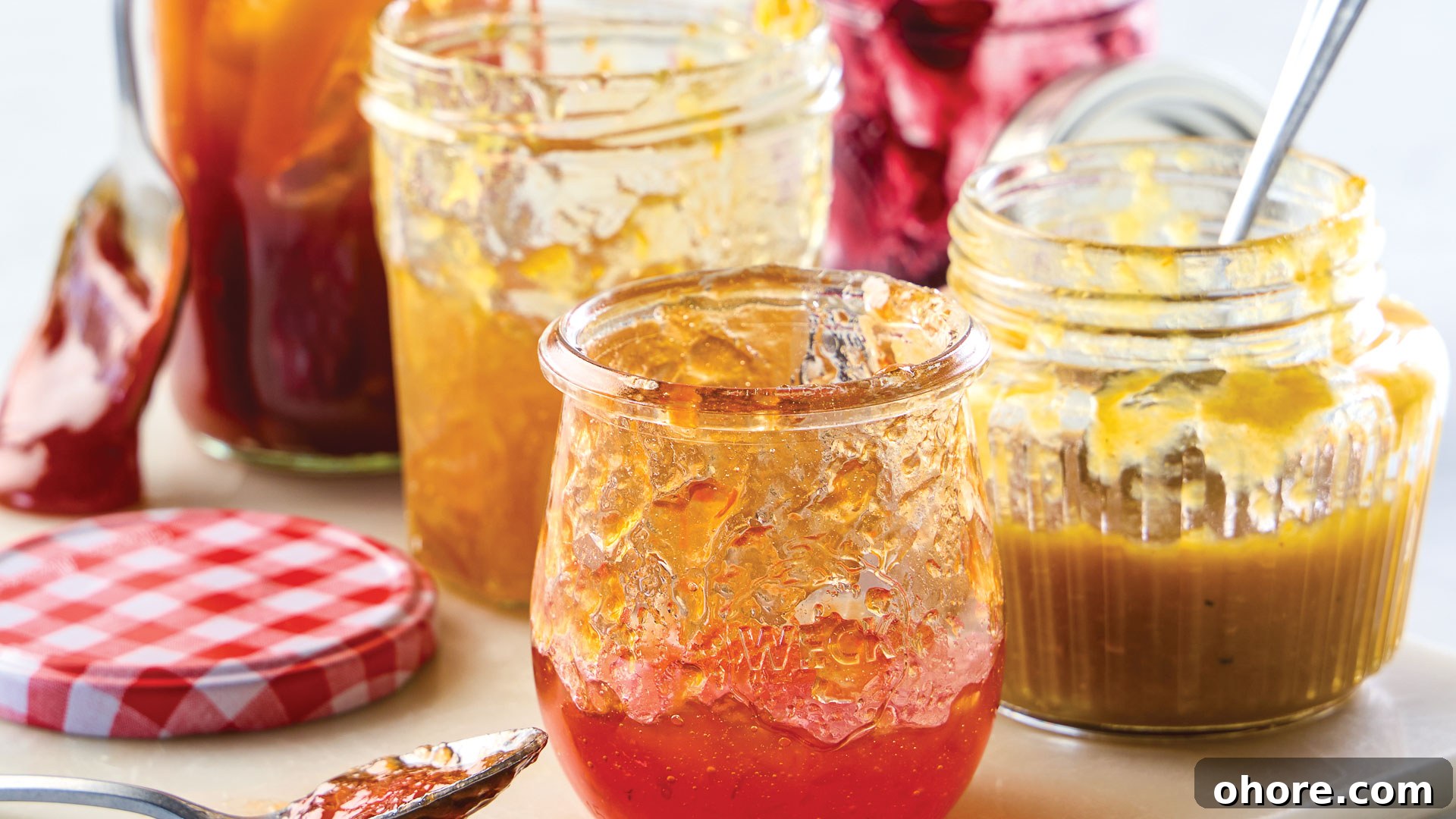
The first jam I ever made was a simple blackberry jam, sweet and plump with a touch of lemon and a hint of vanilla. I remember the exact moment when the berries and sugar reached the right consistency — a tiny, perfect miracle that tasted like summer itself. As the jar sealed, that brief, bright instant of seasonality was preserved, stored away like a small, personal ritual.
Of course, you don’t have to make preserves yourself to appreciate them. A store-bought jar can carry its own charm: a reminder that someone took care to capture flavor and time. Preserving fruit is an old craft, a practical necessity before refrigeration, handed down across generations. With sugar, acid, and spices, fresh produce was transformed into something that could be enjoyed long past the harvest. Chutneys, jams, jellies, compotes and other spreads all grew from that same tradition and evolved into the diverse forms we enjoy today.
Jam and jelly share ancient roots as well. Both began as practical methods to preserve fruit, but they differ in texture. Jam is thick and rustic, made from crushed or chopped fruit and often containing seeds or peel that give it character. Jelly is smooth and clear, made from strained fruit juice and set with sugar and pectin. It becomes a glossy, jewel-like spread that melts easily on warm pastries.
Preserves focus on retaining the fruit’s shape. Whole or large pieces of fruit are cooked with sugar until the mixture thickens, so the final product suspends tender fruit pieces in syrup. Whether made from strawberries, peaches or cherries, preserves emphasize texture and the fruit’s identity while extending its shelf life.
Conserves are a heartier variation, often combining several fruits with nuts or dried fruits. Their layered textures and complex flavors make them ideal companions for cheese boards or toasted breads. Classic combinations, like apricot with almonds or figs with walnuts, are typically simmered slowly to develop depth and balance.
Modern fruit spreads often take a lighter approach, using less added sugar and relying on natural pectin or reduction to reach the desired texture. These spreads highlight the pure flavor of the fruit rather than masking it with sugar.
Chutneys introduce a contrasting profile: sweet, tangy and often spicy, they balance fruit or vegetables with spices and vinegar. Originating in India, chutneys transform dishes by offering layers of flavor. Apple chutney, aromatic with warming spices, pairs well with roasted meats, sharp cheeses or as a flavorful sandwich addition.
Marmalade is a bright, bittersweet preserve traditionally made from citrus. Its pleasant bitterness, tempered by sugar, gives it refreshing complexity. Seville oranges are the classic choice for marmalade, but grapefruit and other citrus can produce excellent variations. Marmalade works well at breakfast on buttered toast and also complements rich cheeses and roasted vegetables.
Curd is among the most luxurious spreads. Unlike jam, curd is thickened with eggs and enriched with butter, creating a satiny custard. Lemon curd is the best-known example, offering a lively tartness softened by butter, but other fruits such as passion fruit or lime make distinctive curds as well. Making curd requires gentle, attentive cooking; the result is a velvety spread perfect for scones, yogurt, or eaten straight from a spoon.
Whether homemade or store-bought, every jar of spread is a tiny archive of a season. Beyond fruit and sugar, these jars carry memories and moments: a taste to be shared and savored, one spoonful at a time.