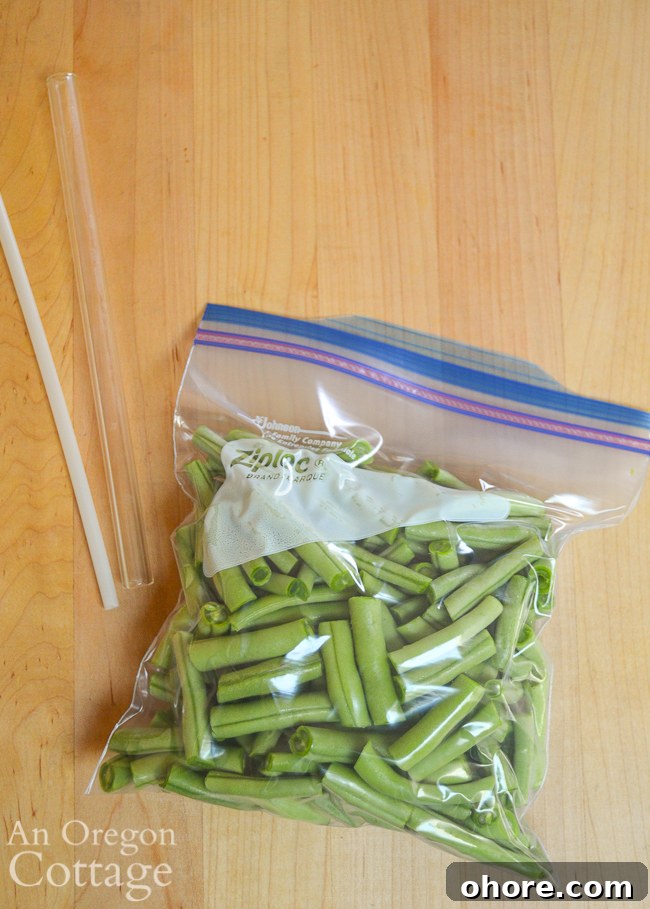
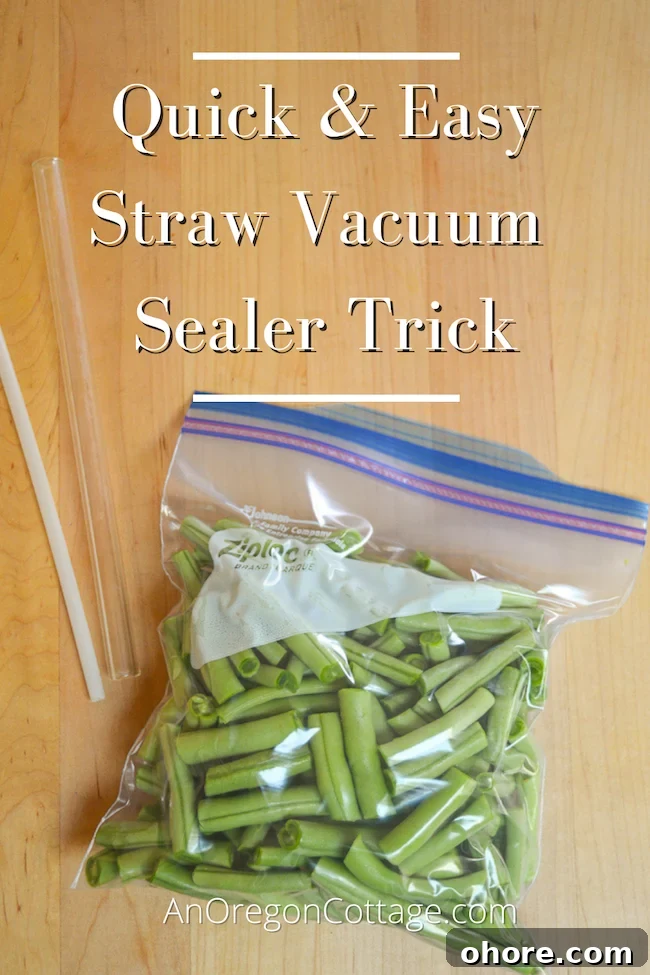
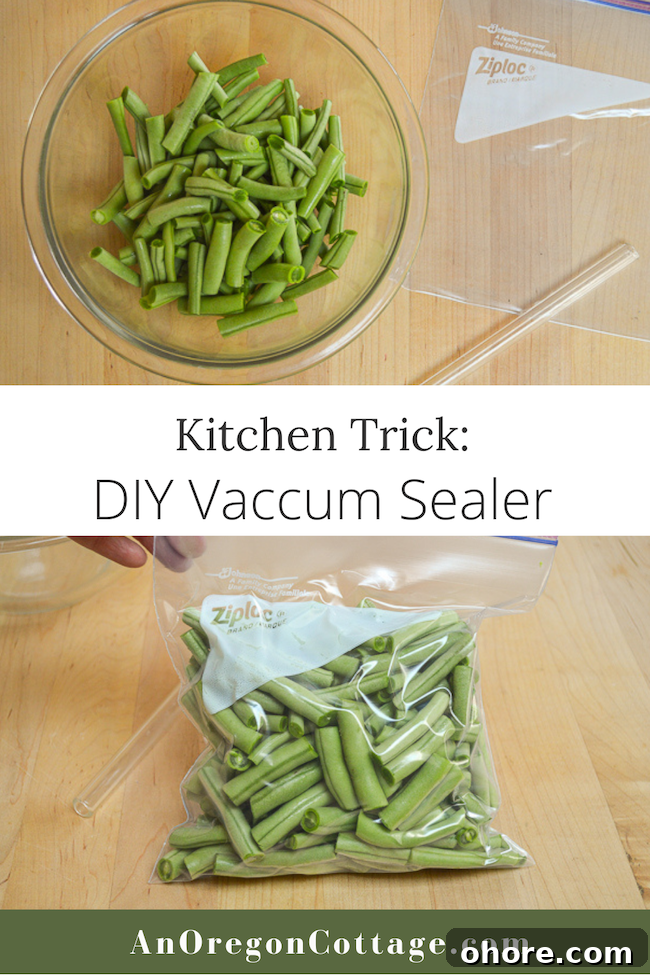
One of my favorite kitchen tricks born from frugality — how to seal produce for the freezer using a simple DIY straw vacuum sealer.
Some links in this article may be affiliate links; I may receive a small commission if you click them at no extra cost to you.
I’ve always been cautious about collecting kitchen gadgets. They cost money and take up space, and I prefer keeping only tools that genuinely improve cooking or storage. While many people swear by appliances like rice cookers, steam juicers, or bread machines, I choose what fits my kitchen, budget, and routine.
I do own and use a few essential items — a Cuisinart food processor, an immersion blender, and a microplane grater — because they make food prep easier and faster. The one thing those useful tools have in common is that their only ongoing cost was the initial purchase.
Pros & Cons of Vacuum Sealers
I’ve never been convinced a vacuum sealer is the best investment for my household.
Con: You buy the machine, but you also keep buying special vacuum sealer bags. Regular freezer bags are considerably cheaper, especially when bought on sale or from club stores.
Con: Vacuum-sealer bags are harder to reuse for other purposes. I often reuse zip-top freezer bags multiple times for storing foods and dry goods, which stretches their value.
Pro: People who use vacuum sealers swear food stays fresher and lasts longer in the freezer. That may be true — but in our home most frozen food is used within 6–8 months, so I rarely notice a meaningful difference.
We typically use frozen produce for soups and fruit for smoothies, so long-term subtle flavor or texture changes are less important. Also, our freezer isn’t frost-free, which reduces freezer burn and helps foods keep better over time.
Pro: Vacuum sealers are useful for preserving dried or smoked meat and fish for longer shelf storage. If you cure or smoke food regularly, a sealer may make sense.
Pro: If you buy large amounts of meat at once — for example, a cow share — vacuum sealing can help extend quality for long-term storage.
For my needs, a small inexpensive technique works well: a straw used as a makeshift vacuum sealer gets most of the air out of a freezer bag and takes almost no time.
A Straw “Vacuum Sealer”
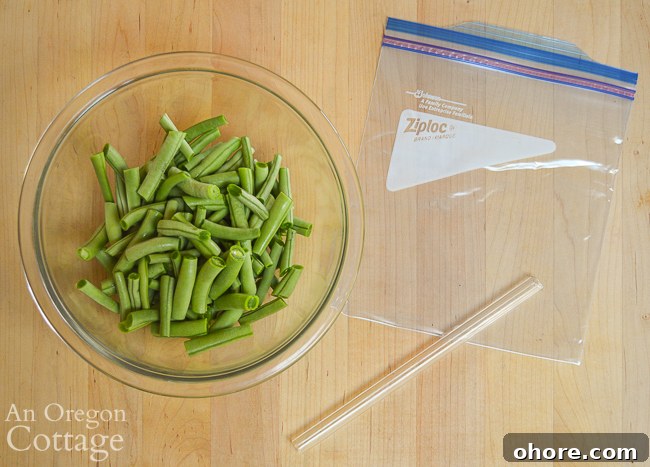
Yes — a straw. I keep a straw in the drawer with my freezer bags and reuse it many times. Lately I’ve also used glass or metal straws; they’re more durable but sometimes a little harder to remove all the air.
How to use a straw as a vacuum sealer
1. Prepare and portion your produce, baked goods, or other items for freezing.
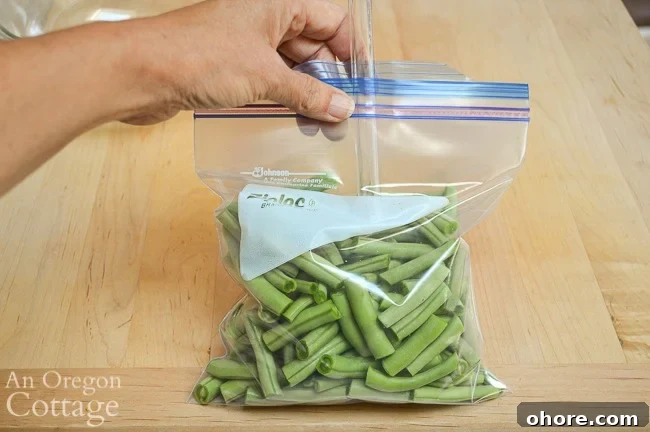
2. Zip the bag most of the way closed, leaving a small gap for the straw to fit through.
3. Insert the straw into the small opening, seal the bag with your fingers on both sides of the straw, and suck the air out through the straw.
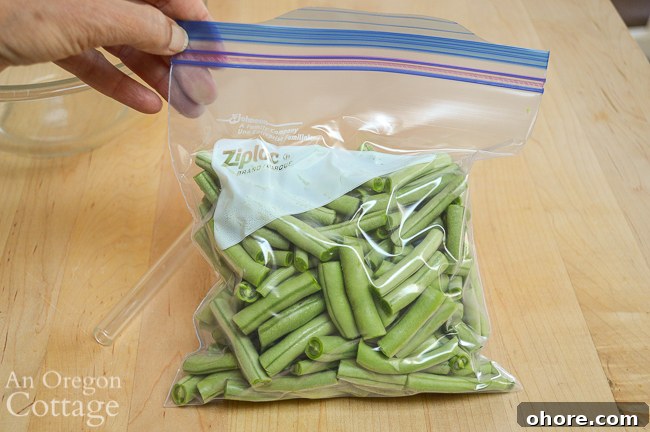
4. Quickly pull the straw out while pinching the opening closed so air doesn’t rush back in.
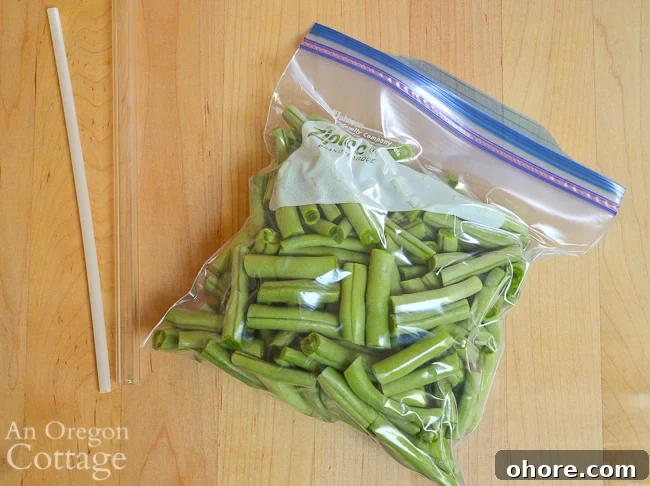
5. Flatten the bag for compact storage, label and date it, and place it in the freezer.
This simple method is fast, needs no special equipment beyond a straw and zipper bags, and removes the majority of air that can cause freezer burn or flavor loss.
About Freezer Burn
Freezer burn is generally worse in frost-free freezers because the appliance cycles and circulates air to prevent frost buildup, which increases moisture loss from food. For long-term storage, a non-frost-free chest or upright freezer is usually better, though it requires occasional defrosting.
We don’t use a frost-free freezer for that reason, and that choice likely contributes to the lack of noticeable damage to bagged foods after many months. If you plan to store food for a year or more, a regular freezer is worth considering despite the extra maintenance.
I once showed my brother-in-law this straw trick and he laughed — but it works. If you want a demonstration, there are videos showing how I freeze green beans without blanching, which include this sealing method.
More Notes and Cost Comparison
Many readers suggest buying a FoodSaver. I understand why — they work well — but a few practical points have kept me from switching.
1) The cost of vacuum-sealer bags is significantly higher than standard freezer bags. For example, quart freezer bags at a club store can cost around $0.06 per bag, while some food-saver kits work out to roughly $0.27 per comparable bag. The machine itself adds to the upfront expense.
2) Using a vacuum sealer can take more time when processing large quantities. With rolls you must cut, seal, fill, then seal again, which can be slower than filling and zipping a bag.
3) For meat, butcher paper performs well for medium-term storage. If you use meat within 6–8 months, butcher paper or wrapped packages often work fine.
Another common alternative is the water displacement method: submerge a mostly sealed bag in water to push air out, then seal it fully. That method works well, too.
For my kitchen, the straw method is quicker and simpler — one quick suck on a straw and the bag is ready. It’s a small trick that saves money, reduces gadget clutter, and gets the job done.

Article updated; original publication was September 2009.
Disclosure: affiliate links may earn a commission based on purchases, at no extra cost to you.