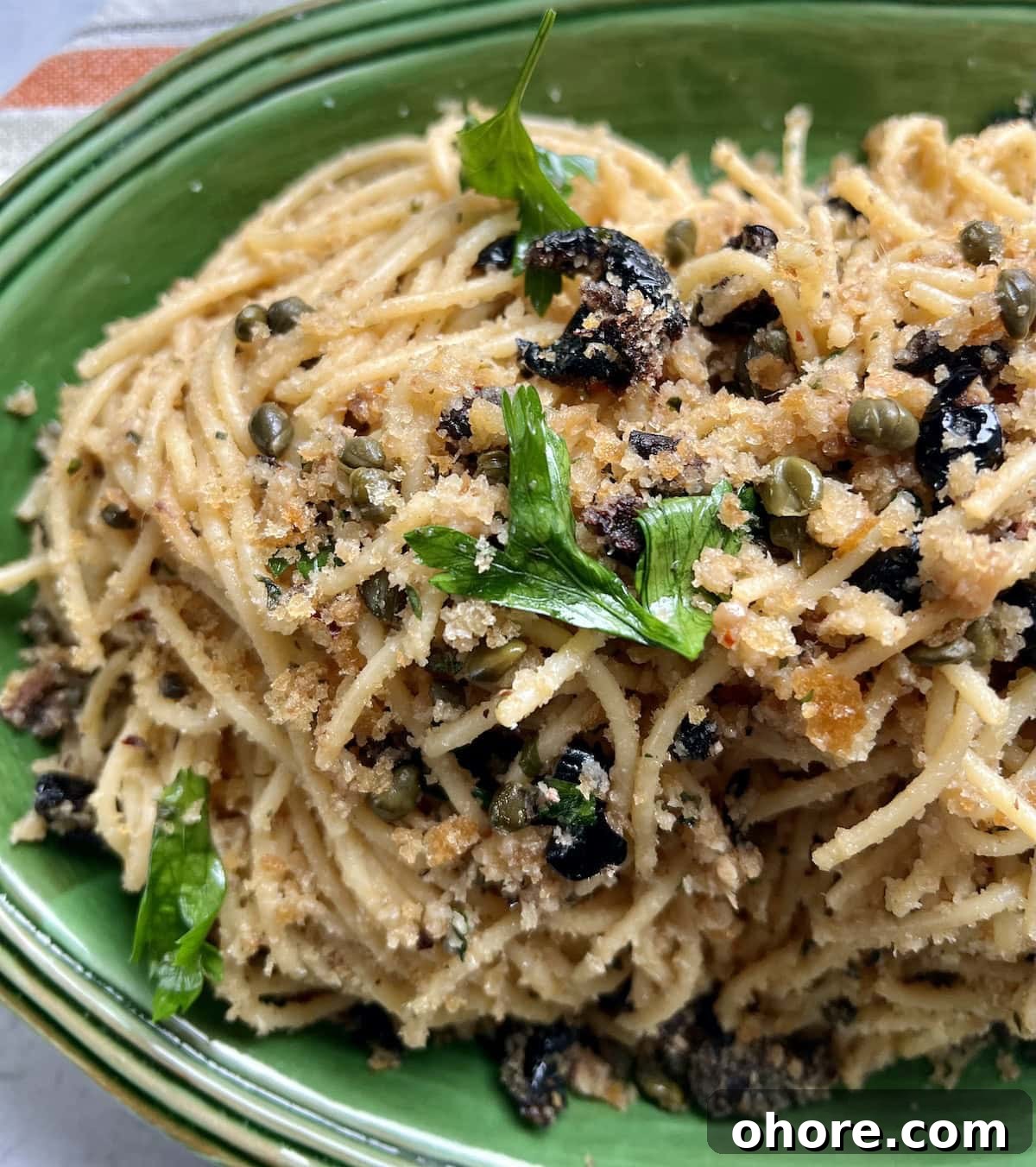
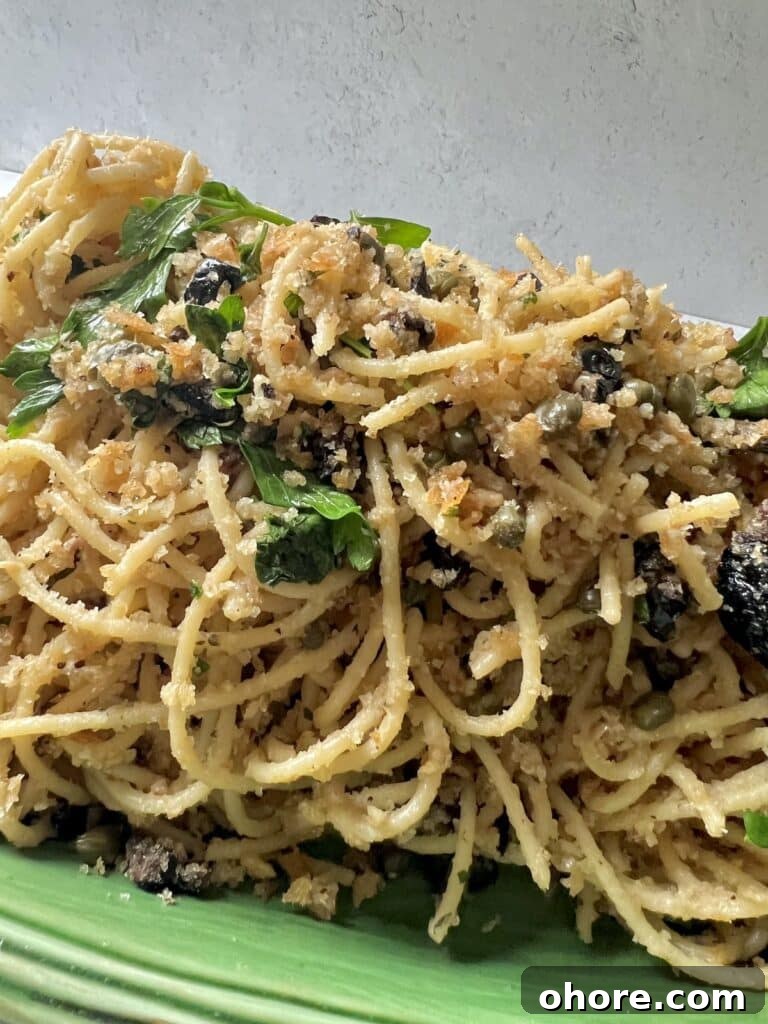
St Joseph’s Pasta is a simple, flavorful combination of spaghetti tossed with toasted breadcrumbs, anchovies, capers, olives, garlic, and parsley. Budget-friendly and quick—ready in under thirty minutes—this dish is traditionally served on March 19 to honor Saint Joseph, the patron saint of Sicily.
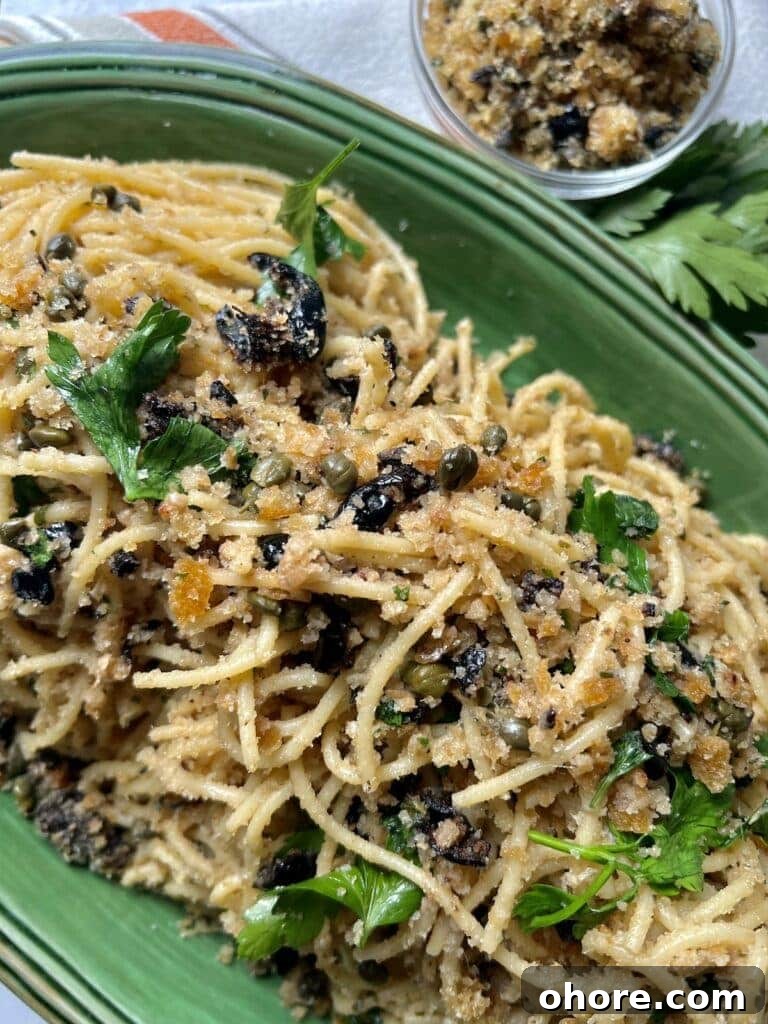
Hailing from humble Sicilian roots, this umami-packed pasta delivers briny, savory notes with minimal effort. It’s an ideal recipe when you want big flavor without a lot of fuss.
For more recipes inspired by Sicilian flavors, look for dishes such as Pasta with Cauliflower, Eggplant Meatballs, Trapanese Tomato Almond Pesto, Calamari with Potato and Peas, Pasta with Tuna Sauce, and Bucatini with Slow-Roasted Eggplant, Tomatoes and Ricotta, which echoes the classic pasta alla norma.
What is St. Joseph’s Day and What is its Significance?
St. Joseph’s Day, observed on March 19, honors Saint Joseph and is celebrated across Italy as Father’s Day. In Sicily, the feast remembers a long-ago drought when villagers prayed to St. Joseph for rain; when the rains came, they held a communal feast of thanksgiving called the Tavola di San Giuseppe (Table of Saint Joseph). Wealthier families prepared abundant tables, inviting the poor and sharing remaining food and proceeds with those in need.
The holiday remains important in Italian and Italian-American communities, especially among Sicilian families, and food sits at the heart of the celebration.
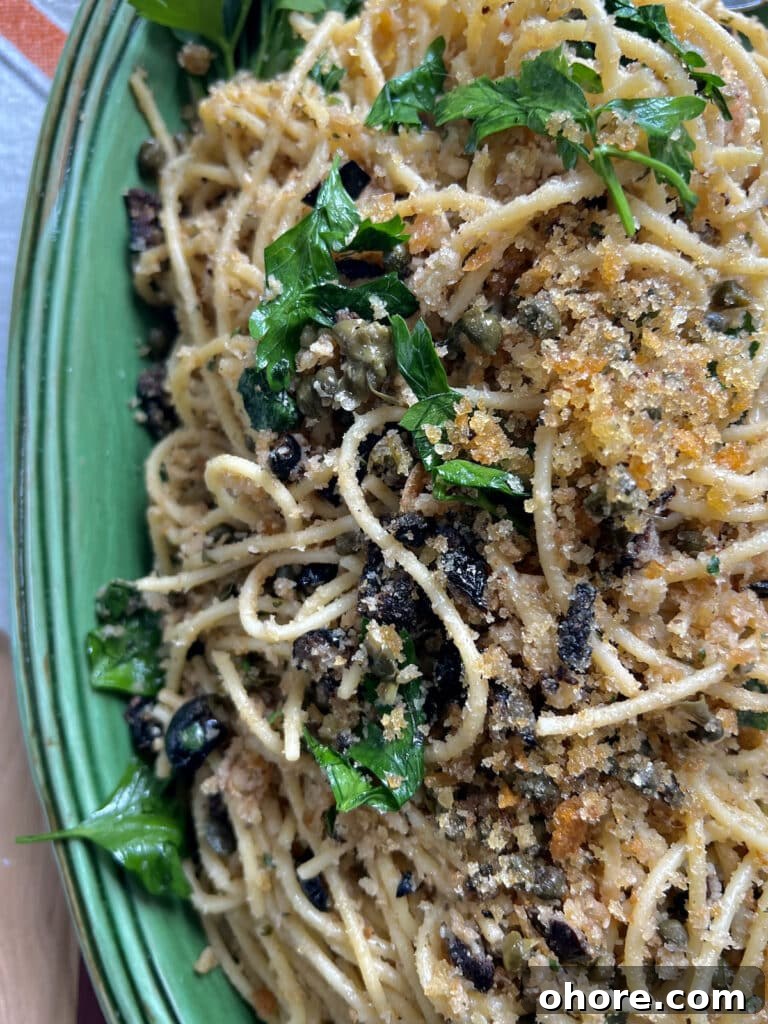
Saint Joseph’s Day Pasta
Alongside pasta con sarde (bucatini with sardines), a classic St. Joseph’s Day dish is this spaghetti with breadcrumbs and anchovies, known by many names—pasta di San Giuseppe, pasta ca’ muddicca, pasta con la millica, sawdust pasta, carpenter’s pasta, or pasta mollicata. Anchovies are traditional because the feast falls during Lent; breadcrumbs symbolize the sawdust left by a carpenter’s work, honoring St. Joseph’s trade. Historically, breadcrumbs were also the “poor man’s cheese” when grated cheese was unavailable or unaffordable.
The recipe is mainly pantry staples and very straightforward. I’ve brightened the classic version by adding capers and oil-cured black olives for extra umami, acidity, and briny balance—still true to Sicilian flavors.
The technique is simple: rather than toasting breadcrumbs separately and tossing them with pasta at the end, the breadcrumbs become the base sauce in the skillet to which the hot spaghetti is added. Aside from boiling the pasta, this is essentially a one-skillet, one-step dish. It’s perfect for St. Joseph’s Day, Christmas Eve’s Feast of the Seven Fishes, or any weeknight when time is tight.
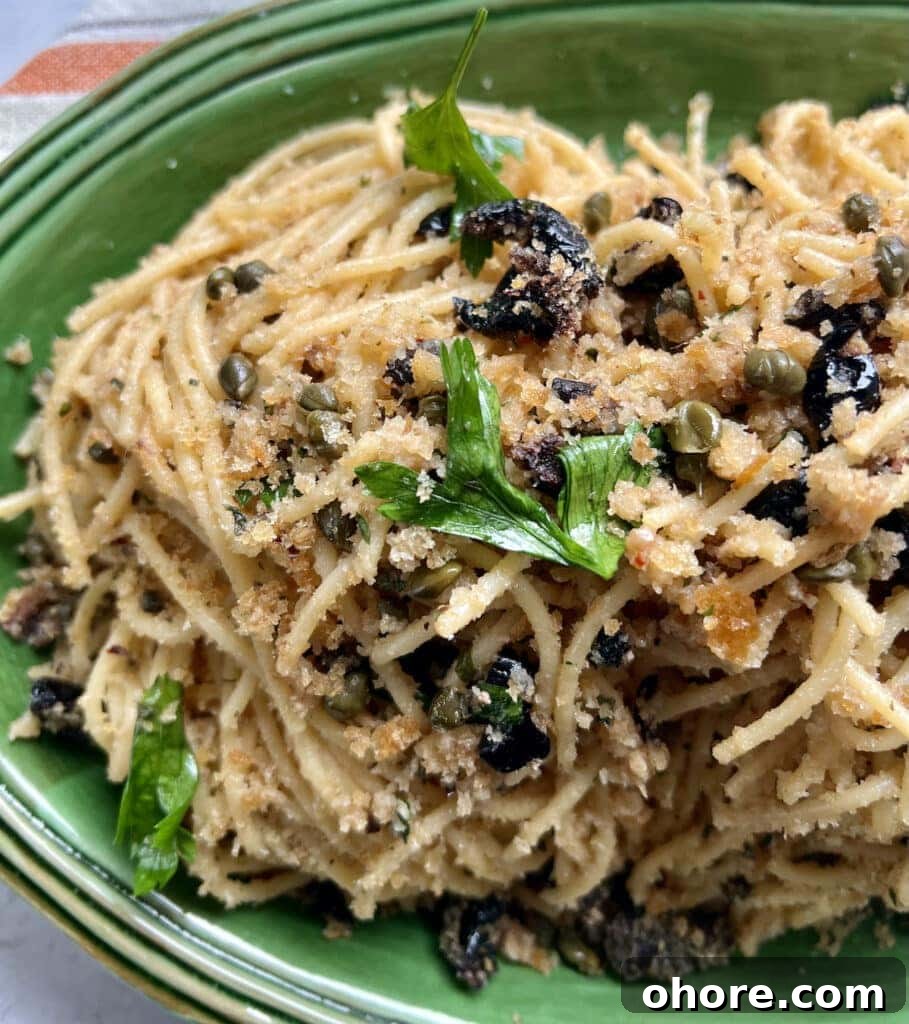
Ingredients for St Joseph’s Pasta
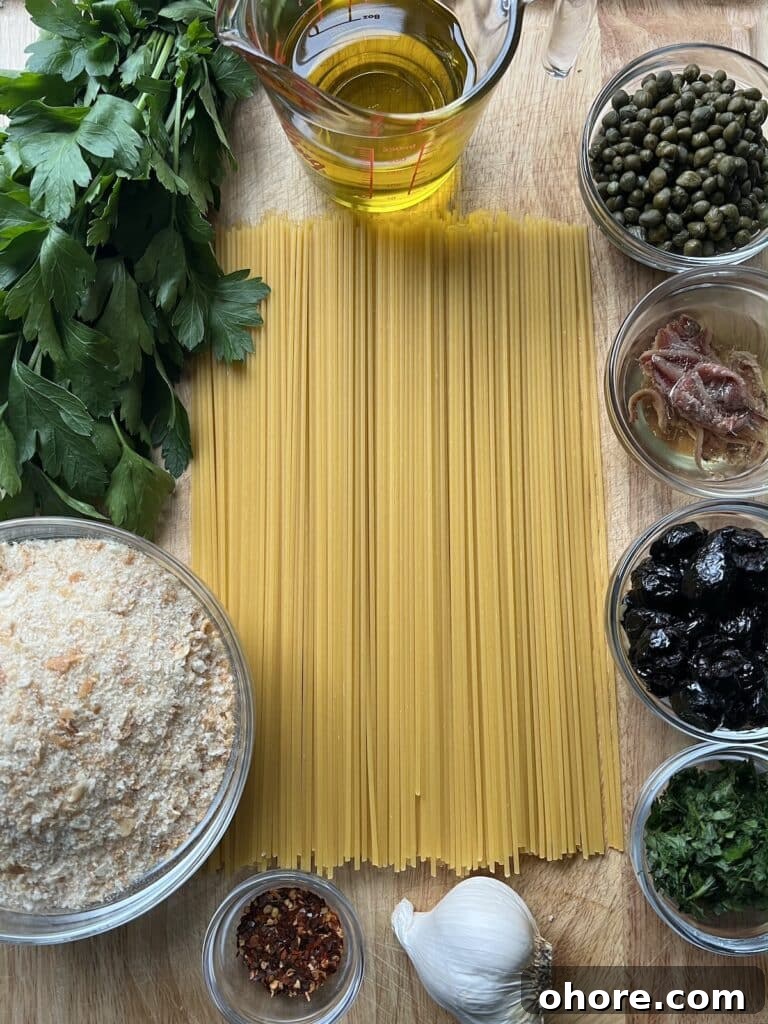
Ingredients used in this spaghetti with breadcrumbs recipe:
- Breadcrumbs: Plain, fine breadcrumbs (homemade is fine). Panko is not recommended because it won’t achieve the desired texture.
- Pasta: Spaghetti or mafalda is classic, but linguine, bucatini, or capellini all work well.
- Anchovies: Anchovy fillets in oil provide the savory foundation; increase the amount for bolder flavor if desired.
- Capers and Olives: Not in every regional version, but they add characteristic Sicilian brininess and texture—capers and oil-cured black olives are recommended.
- Garlic and Fresh Parsley: Important aromatics. Omit parsley if you don’t have fresh—don’t substitute dried parsley. Parsley adds a final bright note; basil is not recommended here.
- Extra Virgin Olive Oil: Used to sauté ingredients and moisten the breadcrumbs. The recipe calls for a generous amount of oil to achieve the proper texture; you can reduce it slightly if desired.
How to Make St Joseph’s Pasta — Steps and Pro Tips
Summary of the method:
- Prep and gather ingredients. Bring a large pot of water to a boil.
- In a large skillet over medium-low heat, combine olive oil, capers, olives, anchovies (and their oil), garlic, half the parsley, and crushed red pepper. Cook until anchovies dissolve and garlic is fragrant, about 4–5 minutes. Pro tip: break up anchovies with a spoon to help them melt into the oil.
- Add breadcrumbs and black pepper, stirring to combine. The mixture should become crumbly, like wet sand. Cook until the breadcrumbs are toasted, about 2–3 minutes. Add more olive oil if it seems dry.
- Turn off the heat and remove about half the breadcrumb mixture, reserving it to serve as a topping so guests can sprinkle it like grated cheese.
- Cook the pasta in boiling water until fully al dente (no salt in the water because the anchovies, capers, and olives add plenty of salt). This pasta should be cooked to al dente in the pot rather than finishing in the pan.
- Transfer the drained pasta to the skillet, increase heat to medium just to evaporate excess moisture, and toss to coat. Add only a splash of pasta water if needed (up to 1/4 cup) to help the breadcrumbs adhere.
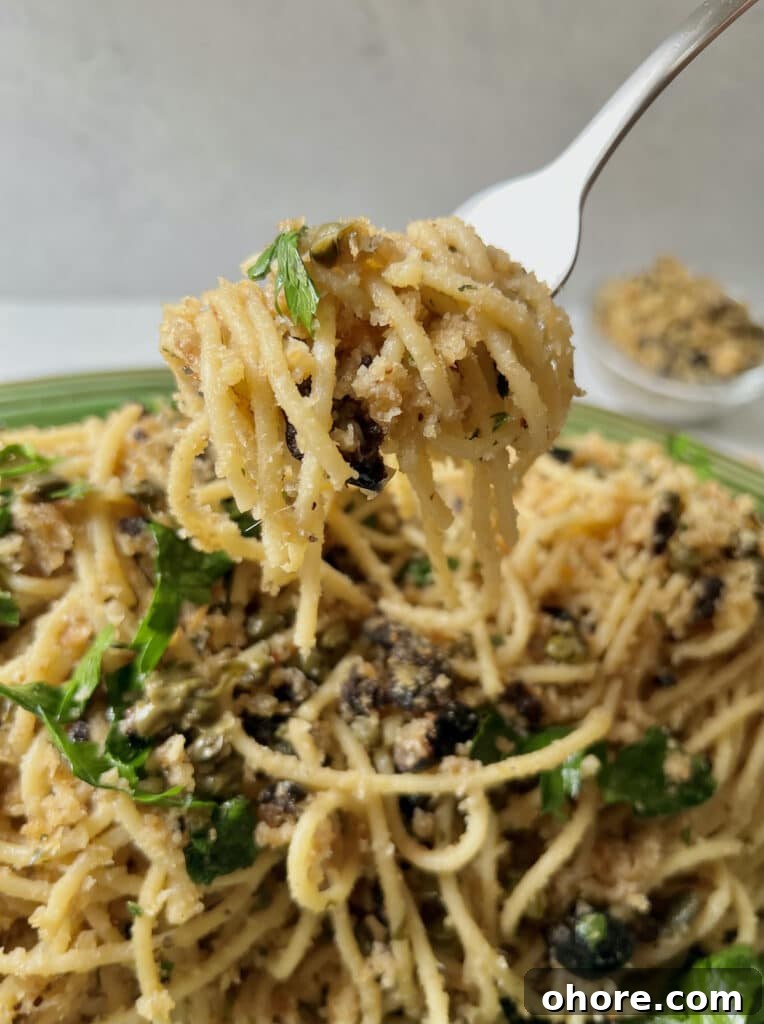
- Turn off the heat, stir in the remaining parsley, transfer to a serving platter, and top with some reserved breadcrumbs. Serve the rest on the side for individual portions and, if you like, drizzle a little extra-virgin olive oil over the finished pasta. Buon appetito!
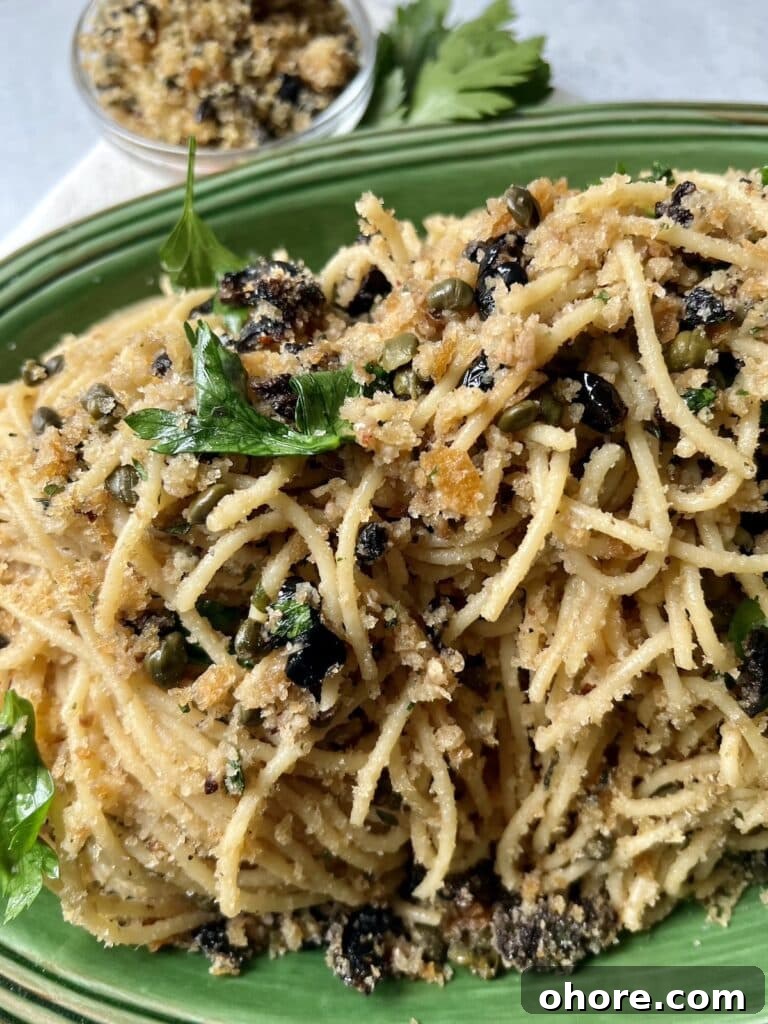
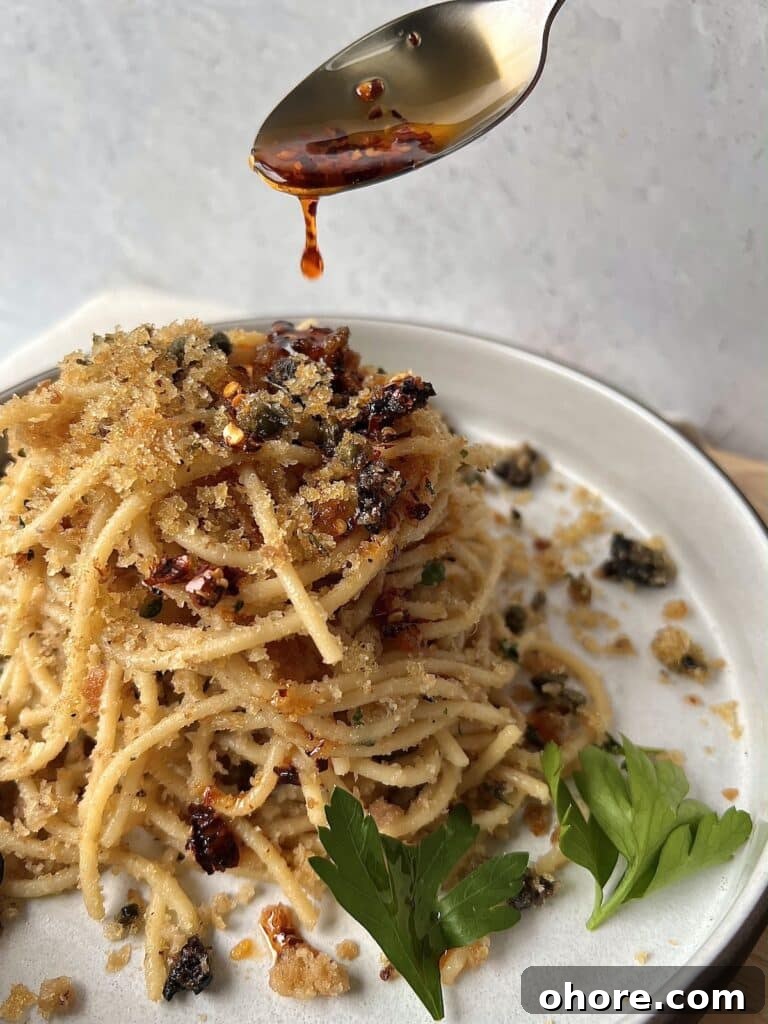
Serve this pasta alongside sautéed broccoli rabe or zucchini alla scapece for classic pairings. A drizzle of homemade Italian chili oil adds a welcome spicy finish if desired.
More Simple Pasta Recipes
Other quick pasta ideas:
- Pasta with Pesto
- Spaghetti with Garlic and Olive Oil (Aglio, Olio e Peperoncino)
- Shrimp Scampi Pasta with Arugula
- Bucatini with Tuna Sauce
- Quick Pasta with Lump Crabmeat
- Pasta Puttanesca with Pickles
Frequently Asked Questions
Traditional foods include Pasta e Muddica and Bucatini con le Sarde (sardines with toasted breadcrumbs, wild fennel, raisins, pine nuts, and saffron). Breadcrumbs symbolize sawdust and appear in many dishes on this day—vegetables and fish are often coated with breadcrumbs, and artichokes may be stuffed with them. Seasonal fava beans are common in spring. Sweet treats such as sfinge (fried dough), zeppoli (cream-filled fritters), fig cookies, and orange-scented pastries are also popular. The feast is always meatless because it falls during Lent.
St. Joseph’s Day on March 19 doubles as Father’s Day in Italy and honors Saint Joseph, the patron saint of Sicily. The festival commemorates a historical legend in which villagers prayed for rain during a drought and celebrated with a communal feast when their prayers were answered.
Panko is not recommended because its texture differs from fine breadcrumbs and won’t achieve the intended wet-sand consistency. Use plain, fine breadcrumbs.
Store leftovers in an airtight container in the refrigerator for up to 5 days. Reheat covered in a small skillet over medium-low heat with a little water until warmed through.
Recipe Variations and Substitutions
Ways to vary the recipe while keeping its spirit:
- Add a spoonful of tomato paste sautéed briefly in the oil for a touch of tomato flavor—if you do this, toast breadcrumbs separately and combine at the end.
- Blend olive oil with a bit of butter for a richer finish.
- Use ground nuts (pine nuts work well) or crispy chickpeas as a low-carb alternative to breadcrumbs.
- Optional additions: orange zest, chopped toasted nuts, currants, or raisins for classic Sicilian contrasts of sweet and savory.
- Make homemade breadcrumbs from stale bread for an authentic, cucina povera touch.
If you tried this recipe or others from the blog, share your experience in the comments. Follow the author on social channels to see more recipes and behind-the-scenes updates.