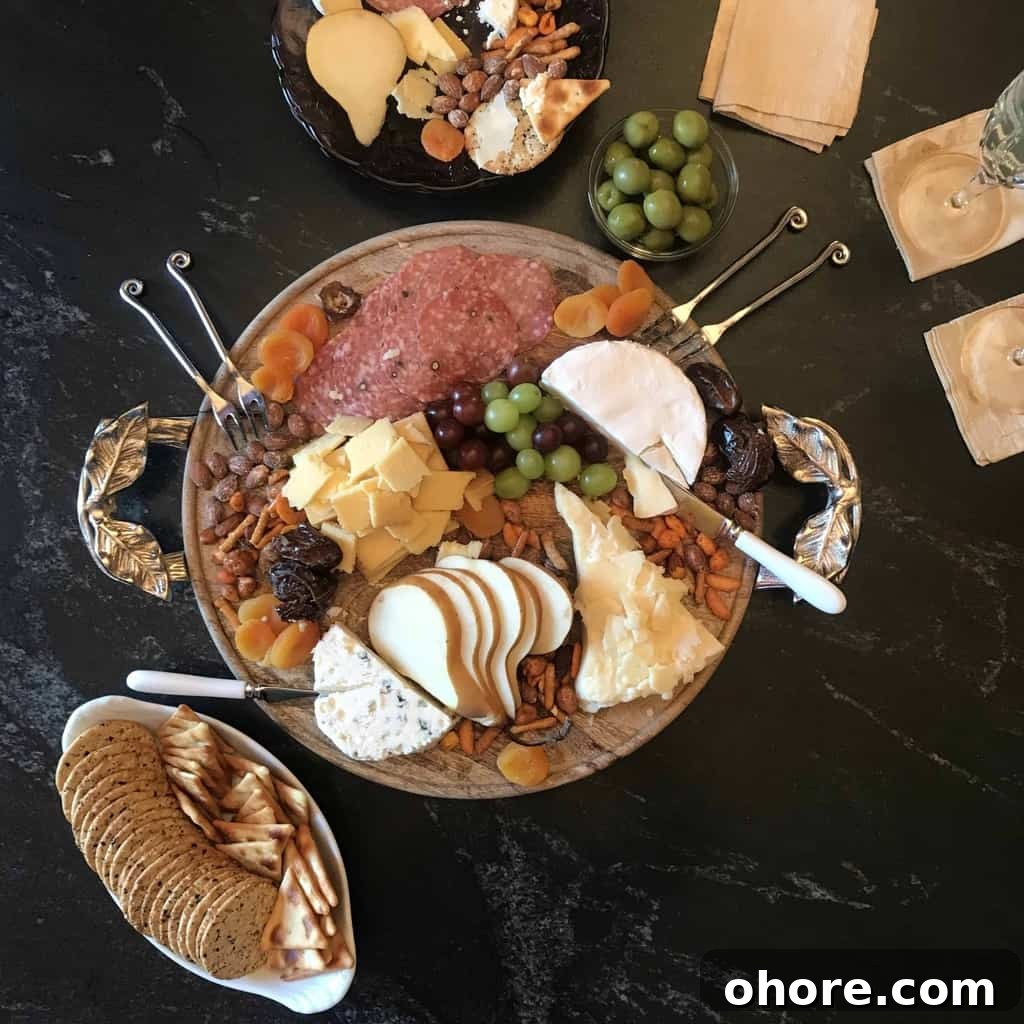
Here you’ll find practical advice for choosing ingredients, styling, and plating a beautiful charcuterie board that’s easy to assemble and sure to impress. Hosting made simple.
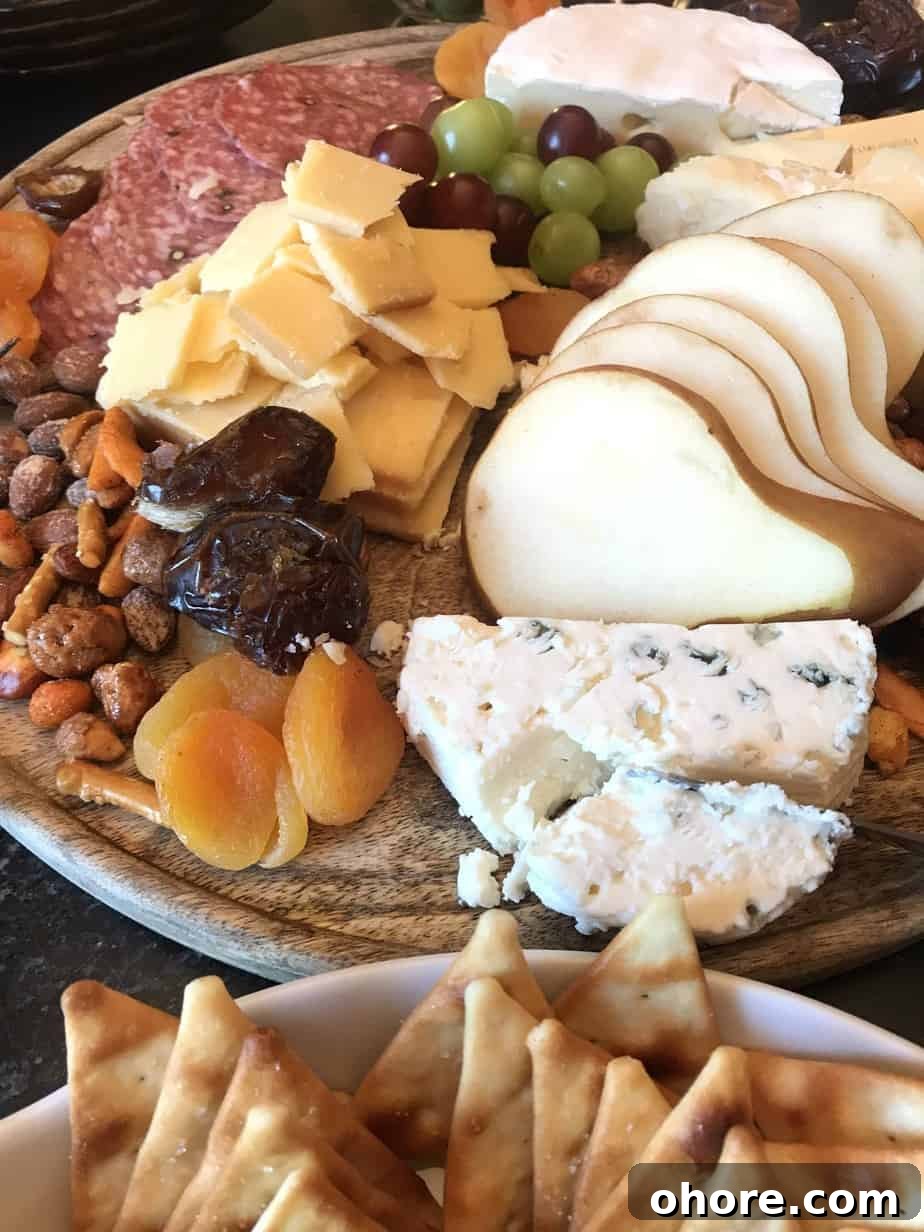
Why you’ll love this!
- Hassle-free: an effortless way to offer appetizers without a lot of fuss or extra utensils.
- Affordable: with planning, you can assemble a generous spread of cheeses, nuts, and fruit without breaking the bank.
Variety is key
An impressive charcuterie board balances flavors and textures. Aim for a range of sweet, salty, spicy, and mild items so every guest finds something they love.
Good choices include a selection of cheeses, dried and fresh fruits, candied and spicy nuts, smoked almonds, jams and mustards, olives, dark chocolate, and a cured meat such as Genoa salami. Combining these elements gives you a full palette of flavor profiles.
Considerations
Presentation matters: imagine the entire board thoughtfully filled with tasty items that invite grazing.
Consider the purpose of your board—is it a light snack during cocktails, an appetizer before a meal, or the main offering? For cocktail snacks, lighter portions work well; if the board is the main course, add more meats, grains, and hearty breads like French, sourdough, or an artisan loaf.
Select the vessel
Your charcuterie spread doesn’t have to be on a traditional wooden board. Use whatever looks good and fits the occasion: a painted plate, charger, elongated dish, serving tray, shallow bowl, or even a framed mirror can work.
Look around your home and be creative. Once you’ve chosen a vessel, plan for three to four cheeses and how they’ll sit on the surface.
A useful approach is to “travel the world with cheese”: choose cheeses from different regions for contrast — for example, a blue from France, Manchego from Spain, Parmesan from Italy, and a classic cheddar from the U.S.
Cheese 101
With so many varieties available, cheese selection can feel overwhelming. For a balanced board, focus on simple categories: soft-ripened, cheddar, bleu, and an aged Italian cheese. These provide a good range of textures and flavors.

1 Soft-ripened
Examples: Brie, Camembert, Humboldt Fog, St. André, or Coulommiers. These are creamy, spreadable, and pair well with fresh fruit and crusty bread.
2 Cheddar
Cheddar comes in many forms—mild, sharp, aged, smoked. A block of cheddar sliced or cubed makes it easy for guests to serve themselves.
3 Bleu
Bluish, tangy cheeses like Stilton, Roquefort, Bleu d’Auvergne, or Point Reyes Original Blue usually appear as crumbles but can sometimes be found in small wedges.
4 Italian
Hard aged Italian cheeses such as Parmesan, Asiago, Pecorino Romano, or Sardo add sharp, savory notes and can be served shaved or in chunks.
Accoutrements
A great charcuterie board is more about smart variety than cost. Match accompaniments to the cheeses to enhance the overall experience.
- Soft-ripened cheeses like Brie pair beautifully with fresh fruit. Add sliced pears or apples and lightly brush them with lemon juice to prevent browning.
- Smoked or aged cheddars match well with candied nuts, dark chocolate, dried apricots, or grapes for contrast.
- Bluish cheeses benefit from bold companions such as smoked almonds, spicy nuts, or sweet dates.
- Aged Italian cheeses like Parmesan pair nicely with figs, apricots, or a spoonful of apricot or blackberry jam.
Breads & grains
Charcuterie is generally finger food, but you’ll want something to carry softer cheeses. Offer crunchy breadsticks, whole grain crackers, crostini, or slices of artisan bread. Include a small cheese spreader for soft cheeses.
With the vessel, cheeses, and accoutrements chosen, plan your layout. For four cheeses, arrange them in a square or rectangle; for three cheeses, a triangle works well. This gives you natural pockets to fill with accompaniments.
Tips
- Serve cheeses at room temperature to maximize flavor—set the board out about an hour before guests arrive.
- Slice or cube firm cheeses like cheddar and shave aged Italian cheeses so guests can easily help themselves.
- Cut rounds in half so guests can reach the center without struggling with the rind.
- Place jams, jellies, and other spreadable items in small ramekins and tuck them within or around the cheese layout.
- Only place edible items on the board—keep decorations food-safe.
- Position the board where at least three people can access it comfortably at the same time.
- Slice fresh fruit just before serving and lightly brush with lemon juice to prevent browning.
Once you’ve mastered the basics, consider serving complementary small dishes on the side to round out your spread.
Related recipes
- Cheese Fondue
- Pan Fried Ravioli Appetizer
- Sausage Stuffed Mushrooms
- Hickory Almond Stuffed Dates
- Smoked Oyster Paté
- Hot Cajun Crab Dip