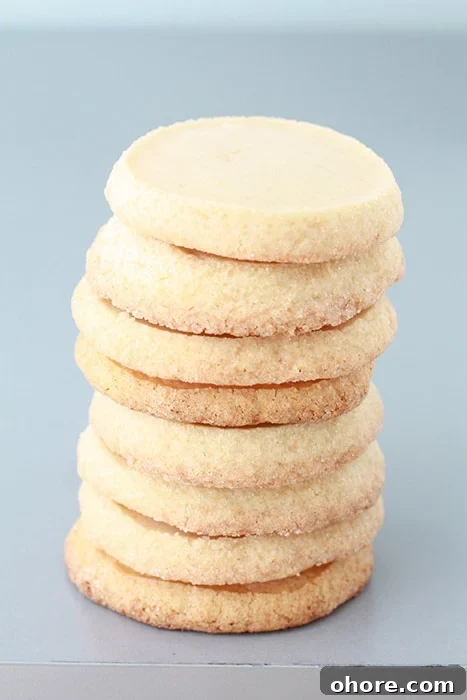
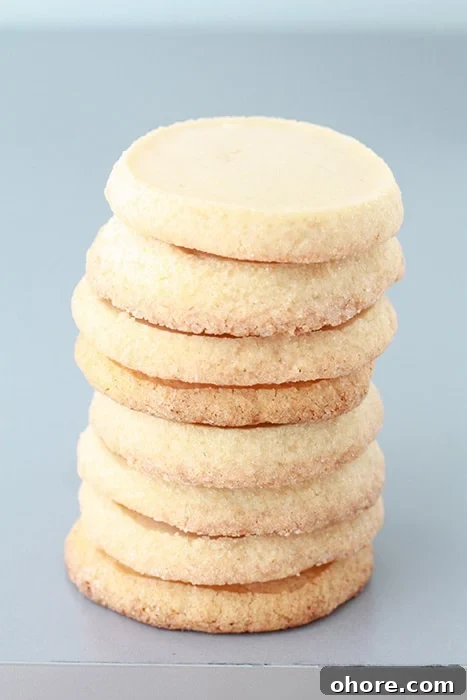
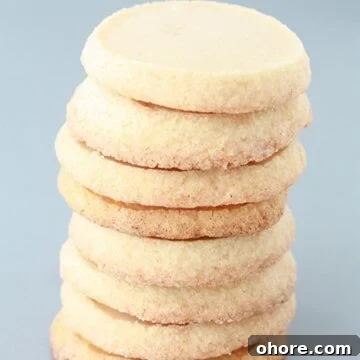
Learn how to make vanilla sablés, a classic French cookie also known as sablés diamants for the sparkling sugar-coated edges that give each bite a delicate crunch.
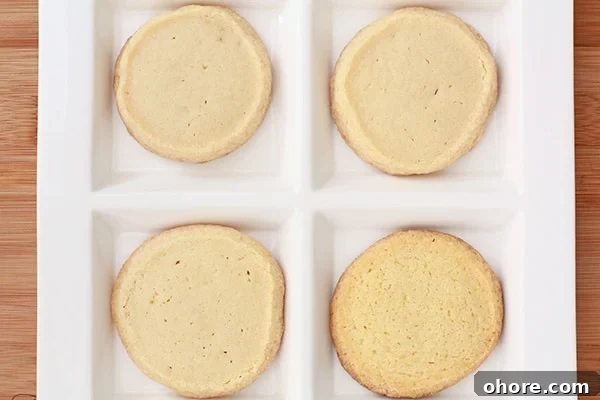
Last week I focused on recipe testing—trying variations in ingredient ratios and techniques to find the ideal texture and flavor for vanilla sablés. Comparing small changes is surprisingly revealing: an extra egg yolk will deepen the richness and color, while replacing powdered sugar with granulated sugar affects tenderness and spread. Testing is fun, and also explains why my kitchen has seen an impressive cookie output lately.
One consequence of those tests: a steady stream of taste tests shared with friends and family. I confess I’ve cornered a few gym buddies into sampling sessions right after their workouts—apologies to anyone whose bootcamp efforts were undone by one taste too many!
What is a French sablé cookie?
Sablé means “sanded” in French, a reference to the cookie’s tender, crumbly texture similar to shortbread. The basic components—flour, sugar, and butter—are shared with shortbread, but French sablés often include an egg or yolk and a splash of milk or vanilla for extra flavor and a slightly different texture. Variations include plain vanilla, chocolate, almond or even herb-flavored sablés. The dough is closely related to pâte sucrée and can be adapted for tart shells as well.
To identify my favorite vanilla sablé, I tested four recipes:
- Dorie Greenspan recipe #1, using both granulated and powdered sugar
- Dorie Greenspan recipe #2 from her Beurre et Sel bakery, with a different sugar ratio and an extra yolk
- My own adaptation of Dorie’s second recipe, replacing powdered sugar with granulated sugar
- Patrice Demers’ version, using only granulated sugar, more yolks, baking powder, and an alternate mixing method
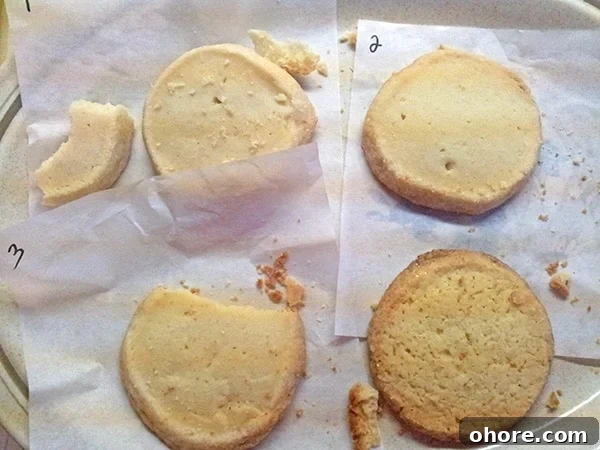
The taste-test results varied by audience. My friends at the gym chose recipe #4 as their favorite, praising its appearance and sandy texture, though one noted it tasted a bit eggy—unsurprising given the higher yolk content. Their ranking was 4 > 3 > 2 > 1.
My family’s preference leaned the other way. They could tell the difference between cookies made with powdered sugar and those made with only granulated sugar, describing the powdered-sugar versions as more tender and shortbread-like. For them the order was 2 ~ 3 > 4 > 1, with #1 consistently the least liked.
My own verdict: I preferred my adaptation (recipe #3). I found #4 too eggy in flavor and color; the extra yolks caused more spread and darker edges, likely helped by the baking powder. While #4 achieved a very sandy texture, I preferred the balance of flavor, texture, and appearance in recipe #3. The other tested recipes are available through the original sources I referenced.
This recipe uses pure vanilla extract to deliver clean, pronounced vanilla flavor in the dough. If you prefer visible vanilla flecks, substitute the same amount of vanilla bean paste. If you’re out of vanilla extract, a splash of rum or bourbon can also add a pleasant aromatic note.
To simplify preparation I replaced the egg yolk commonly used in sablés with a small amount of whole milk. The milk keeps the dough moist and creates a light, buttery cookie with a lovely, sandy crumb—perfect for a slice-and-bake approach. Below is the updated slice-and-bake vanilla sablé recipe I now use and recommend.
📖 Recipe
Vanilla Sablé Cookies (slice-and-bake)
Ingredients
- 173 grams unsalted butter softened
- 100 grams granulated sugar
- 1.25 mL Diamond Crystal fine kosher salt
- 5 mL pure vanilla extract
- 280 grams bleached all-purpose flour
- 30 mL whole milk (3.25 % fat)
- Turbinado sugar roughly ¼-1/2 cup or 50-100 grams
Instructions
-
Cream the softened butter with the granulated sugar and salt until light. Beat in the vanilla extract.
-
Add the flour and mix until the mixture resembles a dry crumble. Stir in the milk; it will come together into a soft dough.
-
Form the dough into a 14-inch log. Slice the log in half for easier chilling, roll each half in turbinado sugar (about ¼ cup each), wrap tightly in plastic, and refrigerate overnight.
-
When chilled, slice the logs fairly thin and arrange the cookies on a baking sheet. Bake at 350ºF (175ºC) for about 16 minutes, until the edges are golden. Cool on a rack.
Notes
- If you only have table salt, reduce the amount by half to avoid over-salting; the recipe is calibrated for Diamond Crystal fine kosher salt.
- Cookies baked on light-colored, uncoated aluminum pans will brown more slowly. If you use darker bakeware, consider reducing the oven temperature slightly (to about 325ºF / 165ºC) to prevent excess browning.
Nutrition
Nutrition information is automatically calculated and should only be used as an approximation.