Canning milk at home has become popular in some “rebel canning” circles, but is it safe? Below I explain the pros and cons of home canning milk and review commonly circulated recipes so you can make an informed choice.
There are currently no USDA- or National Center for Food Preservation–approved recipes for canning milk at home. I’ll outline why that is, why milk is typically canned only commercially, and why many people have canned milk at home without apparent problems for years.
Read on to learn the practical and safety considerations so you can decide what’s right for you.
How do you can milk at home?
That’s a frequent question from readers. Recently one reader asked:
“Our question is about home pressure canning milk. It is debated on whether it is safe to can dairy in most blogs I read. Some say they’ve been doing it for years, and others say no way. It’s hard to believe that large companies can process milk safely, but it’s not safe at home. Please tell us your experience/thoughts on home canning dairy?”
I don’t can milk at home. We make a lot of cheese and preserve milk in other ways. For fresh milk preservation, freeze-drying is my preferred method because rehydrated milk tastes essentially like fresh milk without the cooked or grainy flavors that some dehydrated products have. But not everyone has access to a freeze-dryer, and cheesemaking requires skill and time, so some people look to pressure canning as an alternative.
There are several reasons to be cautious about home canning milk beyond the basic fact that no scientifically validated home recipe exists. I’ll cover commercial processes, how home methods differ, and why those differences matter for safety and flavor.
How is Milk Canned Commercially?
To understand whether you can replicate commercial canned milk at home, it helps to know how evaporated and UHT (ultra-high temperature) milk are produced.
Commercial evaporated milk is made by removing about 60% of the water from homogenized milk, then chilling, stabilizing, sterilizing, and packaging it. Industrial sterilization temperatures for evaporated milk range roughly from 230 to 248°F (110–120°C) for 15–20 minutes. That high heat concentrates flavors and creates a slightly caramelized note from Maillard reactions.
UHT milk, which is shelf-stable in aseptic packaging, is processed at much higher temperatures for a short time—typically 266–284°F (130–140°C) for a few seconds—and then filled under sterile conditions. UHT requires specialized continuous processing equipment and rapid cooling, which cannot be replicated in home canning jars or standard home canners.
Commercial canneries also standardize milk fat and solids so pasteurization and sterilization parameters apply consistently to each production run. In the U.S., evaporated milk standards require minimum milk fat and solids levels (for example, at least 6.5% milk fat and 23% total milk solids), while other countries have slightly different requirements.
Because home-harvested milk varies by breed, season, and feeding, it is not the standardized product a factory processes. That variability affects how heat penetrates, how the product reacts to sterilization, and how palatable the result will be.
Commercial evaporated milk sterilization falls in a range that a home pressure canner can technically reach. For example, under sea-level conditions, comparable home pressure canner settings might look like:
- Lower: 10 pounds pressure for about 15 minutes
- Higher: 15 pounds pressure for about 20 minutes
However, many home canners cannot reach the ultrahigh temperatures and exacting conditions of commercial processes, and even if they could, heating and flash-cooling sealed glass jars to those temperatures is unsafe or impractical at home.
What’s Wrong with Canning Milk at Home?
There are a few important differences between home and commercial canning that affect safety:
- Home milk is not standardized, so fat and solids vary, which affects how heat treats the product.
- Many online home-canning instructions do not reach the time-temperature combinations required to destroy hardy spores—specifically Clostridium botulinum spores.
- High-temperature processing that would reliably sterilize milk changes its flavor drastically, often producing an unpalatable result unless the factory applies additional treatments or stabilizers.
Some popular home recipes effectively just heat milk enough to create a vacuum seal in jars. That seal can appear successful and the jars can remain stable for years, but the temperatures reached inside the jar are often not sufficient to inactivate botulism spores. In an anaerobic jar environment, a single spore can produce toxin and pose a deadly risk.
Botulism spores are relatively uncommon in milk compared with soil-contaminated foods like root vegetables, but they can occur and the risk—while low—has severe consequences. That explains why many people may have canned milk at home for years without incident: the contaminant never happened to be present. But the absence of past illness does not guarantee safety for future batches.
Part of the reason people use lower temperatures at home is flavor: high heat produces caramelized, “cooked” notes in milk that many find unpleasant for drinking. Commercial evaporated milk is tailored to tolerate those changes and is usually used in cooking rather than consumed straight. When home-canned milk is processed at the rigorous conditions needed for safety, the sensory result is often disliked and even affects baked goods.
Because of the flavor outcome and the cost-benefit of research, the National Center for Food Preservation has not developed home canning guidelines for milk: large-scale testing would be expensive to validate a product that many find unpalatable.
Rebel Canner Instructions for Canning Milk
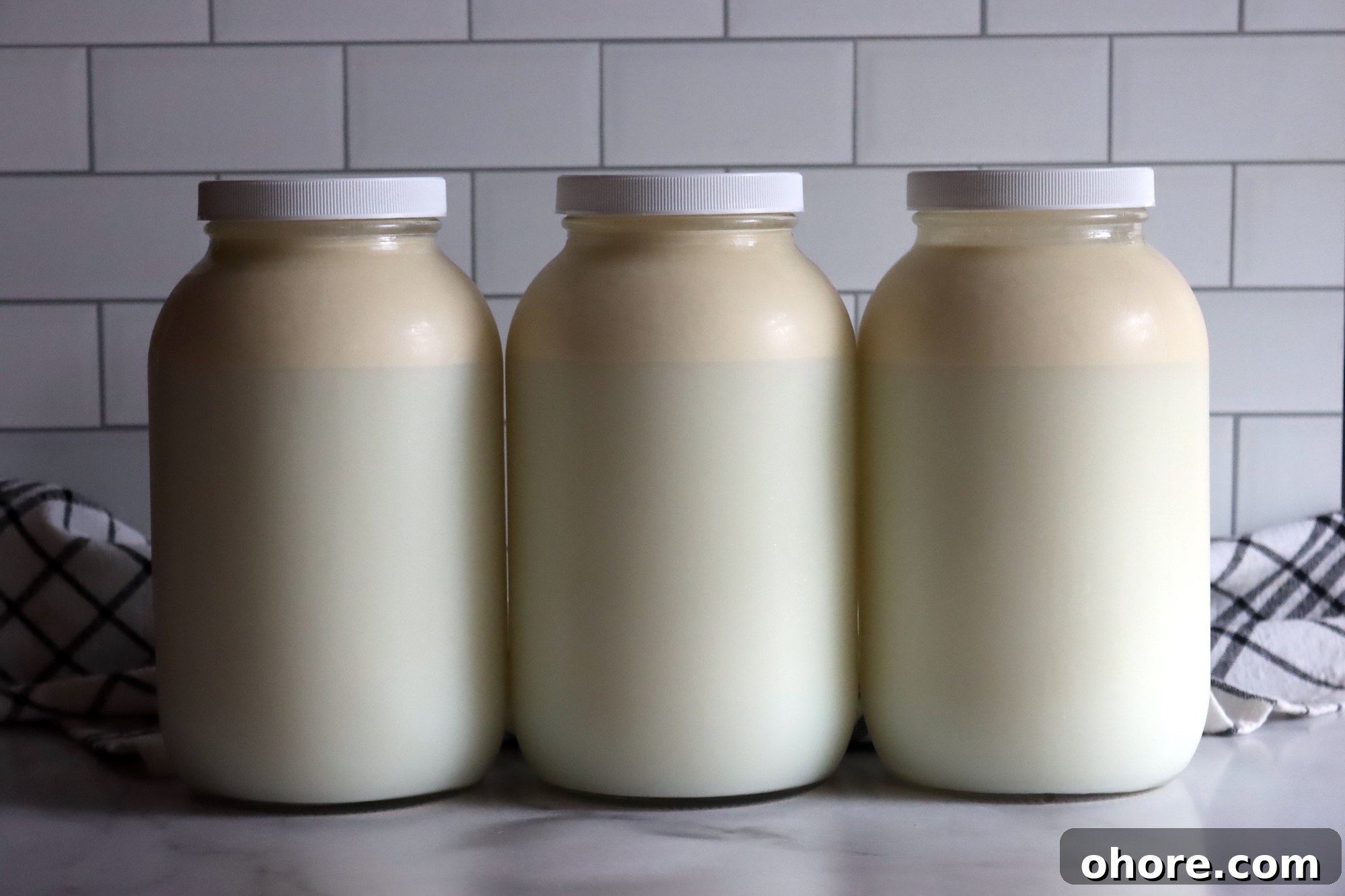
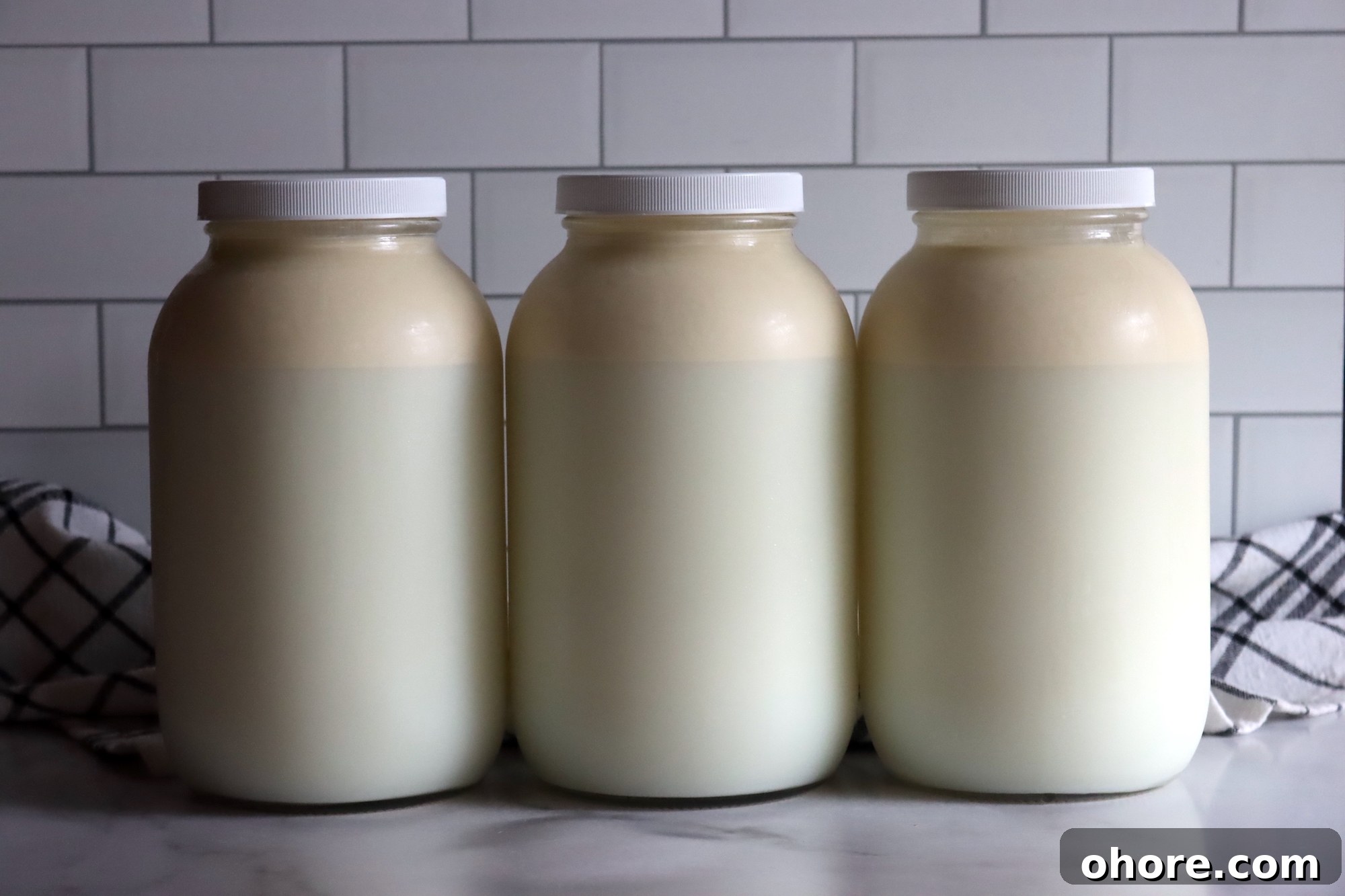
One of the most widely shared home-canning milk methods comes from the Rebel Canners community and Tammy McNeill’s Rebel Canners Cookbook. Her commonly quoted method describes filling pint jars with milk, bringing the canner to a low pressure (often cited as 5 pounds at her altitude), then turning the heat off and allowing the canner to cool, with no set processing time.
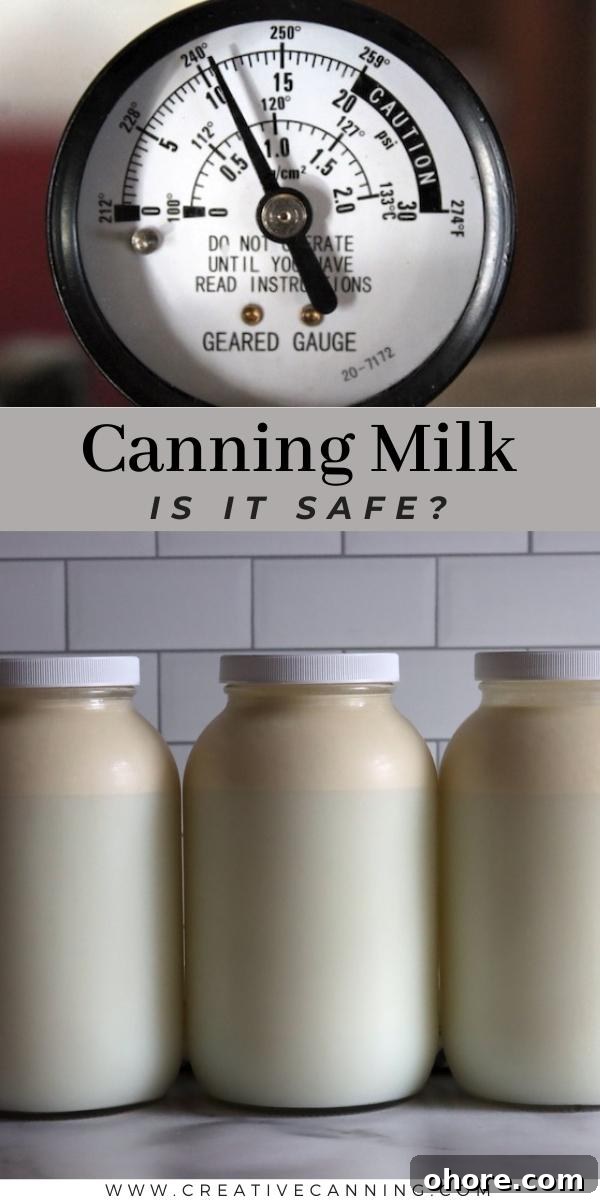
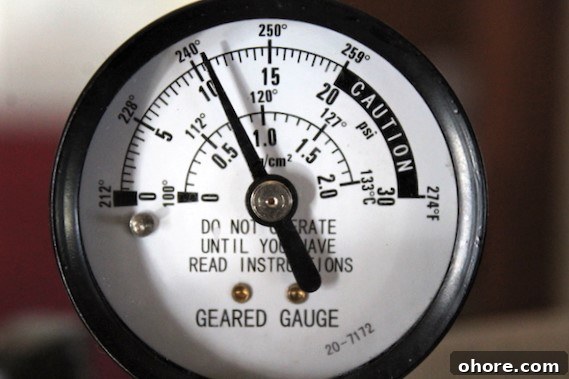
At sea level, 5 pounds of pressure corresponds to around 228°F, but that’s the pressure gauge reading in the canner; it takes time for that heat to penetrate jars, and the internal jar temperature will be lower and may not reach conditions required to kill C. botulinum spores. These low-pressure, short-time methods can reliably vacuum-seal jars and kill many common spoilage organisms, but they do not provide the margin of safety that validated sterilization schedules do.
Because the low-heat method alters flavor anyway, many people report using home-canned milk primarily in cooked preparations—baking, hot cocoa, or recipes where the milk is reheated. Fortunately, botulism toxin is destroyed by thorough boiling: public-health guidance recommends boiling suspect low-acid canned foods for 10 minutes at low elevations before consuming. The World Health Organization notes the toxin can be destroyed by heating above about 185°F (85°C) for five minutes or longer.
That means that if you reheat or cook home-canned milk before consuming, you have an additional safety step that reduces risk. Nevertheless, relying on reheating as a corrective measure is exactly why such recipes are not considered officially “safe canning recipes”—skipping that extra heating step could be dangerous.
Is Canning Milk Safe?
Officially, home canning milk is not recommended by USDA or the National Center for Food Preservation. Proper home processing that would reliably inactivate C. botulinum spores typically results in a product most people find unpalatable, and commercial producers use specialized treatments and formulation to make canned milk acceptable.
Common low-pressure home methods circulating online do not reach validated sterilization parameters and therefore are not considered safe for eating directly from the jar. They rely on the low likelihood of a contamination event and on users reheating milk before use—which is why many long-standing anecdotal reports of safe home-canned milk exist. Those reports reflect luck and careful reuse practices more than reproducible safety.
If a home-canned milk recipe includes a mandatory re-cooking step prior to consumption and the user always follows that step, the immediate risk is reduced. However, recipes that require re-cooking are not classified as safe home-canning methods because a missed step could have severe consequences.
Because there are better-established, tested methods to preserve milk—freeze-drying, making cheese, freezing, or using commercially produced shelf-stable products—I do not recommend routinely canning milk at home. Early canning practices evolved with incomplete food-safety knowledge; modern guidance aims to avoid preventable risks.
My intent here is to provide balanced information so you can weigh the risks and benefits and make an informed decision for your household. If you choose to experiment with home canning milk, understand the limitations, use caution, and always reheat thoroughly before consuming jars that were processed with non-validated methods.