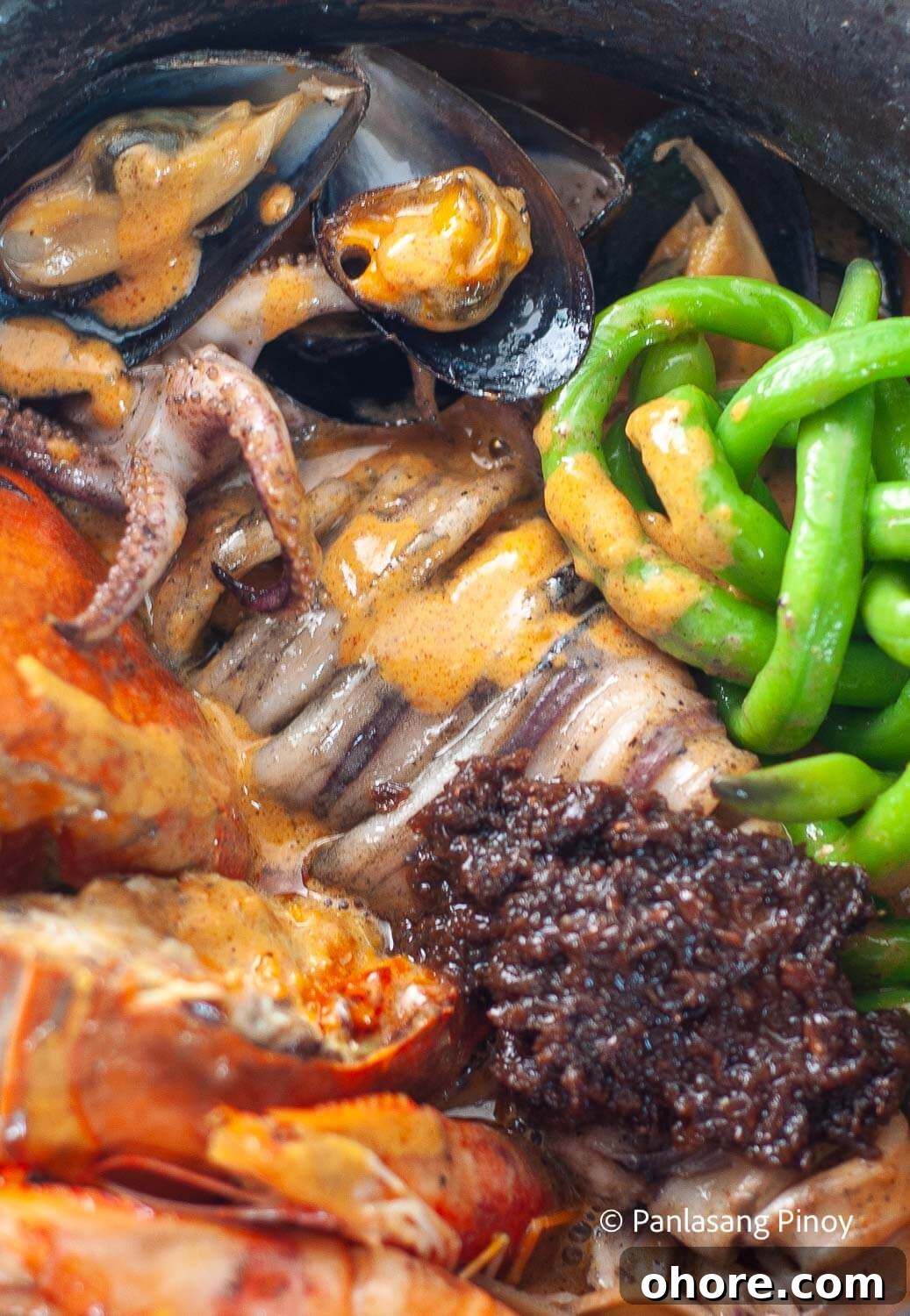
Seafood kare-kare follows the familiar flavors of traditional kare-kare but swaps pork for a medley of fresh seafood readily available at most markets. If you don’t have seafood allergies, this creamy, savory dish is worth trying. I recently returned from the Philippines with a clay pot, or palayok, which I used to prepare this version. Let’s get started!
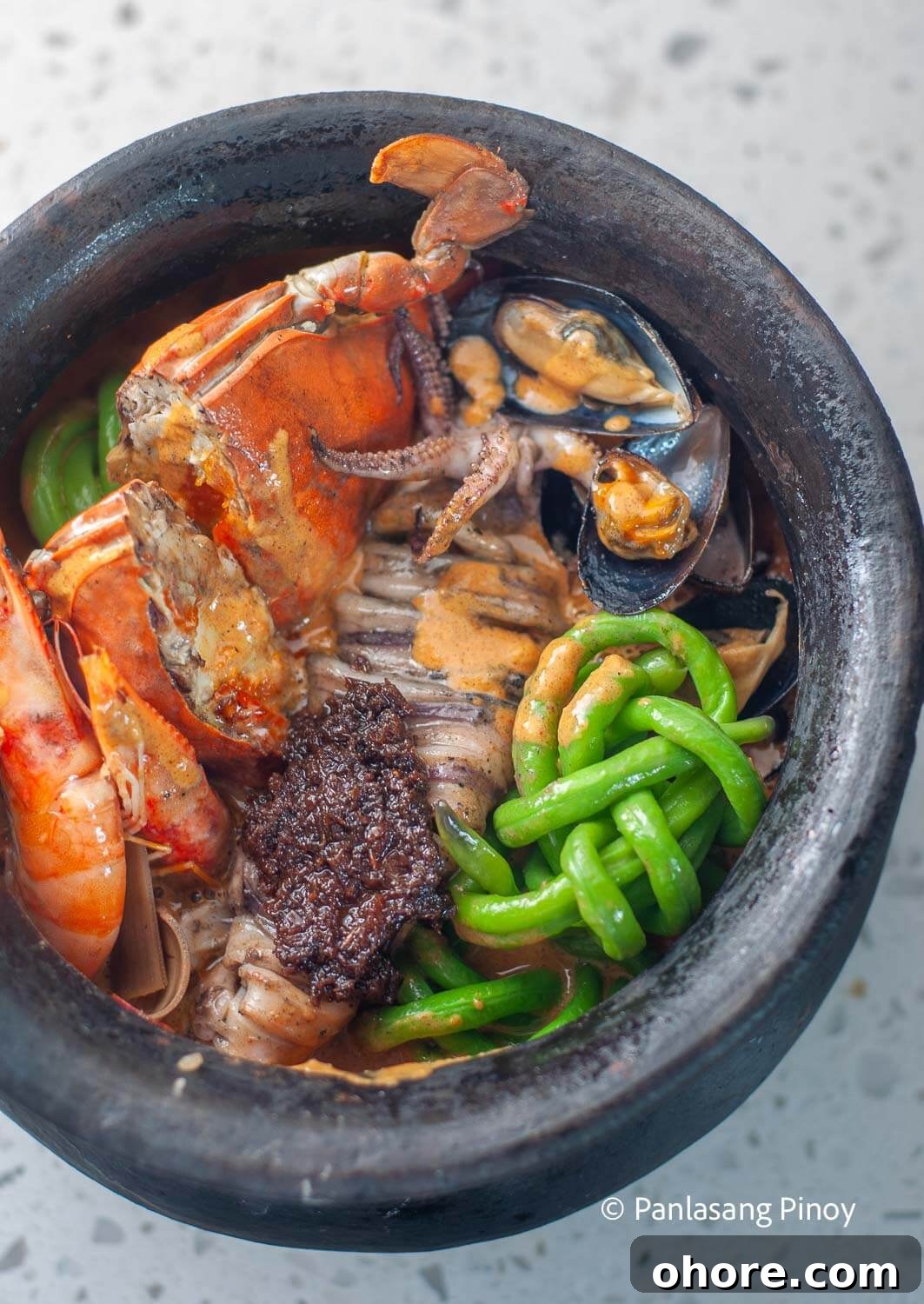
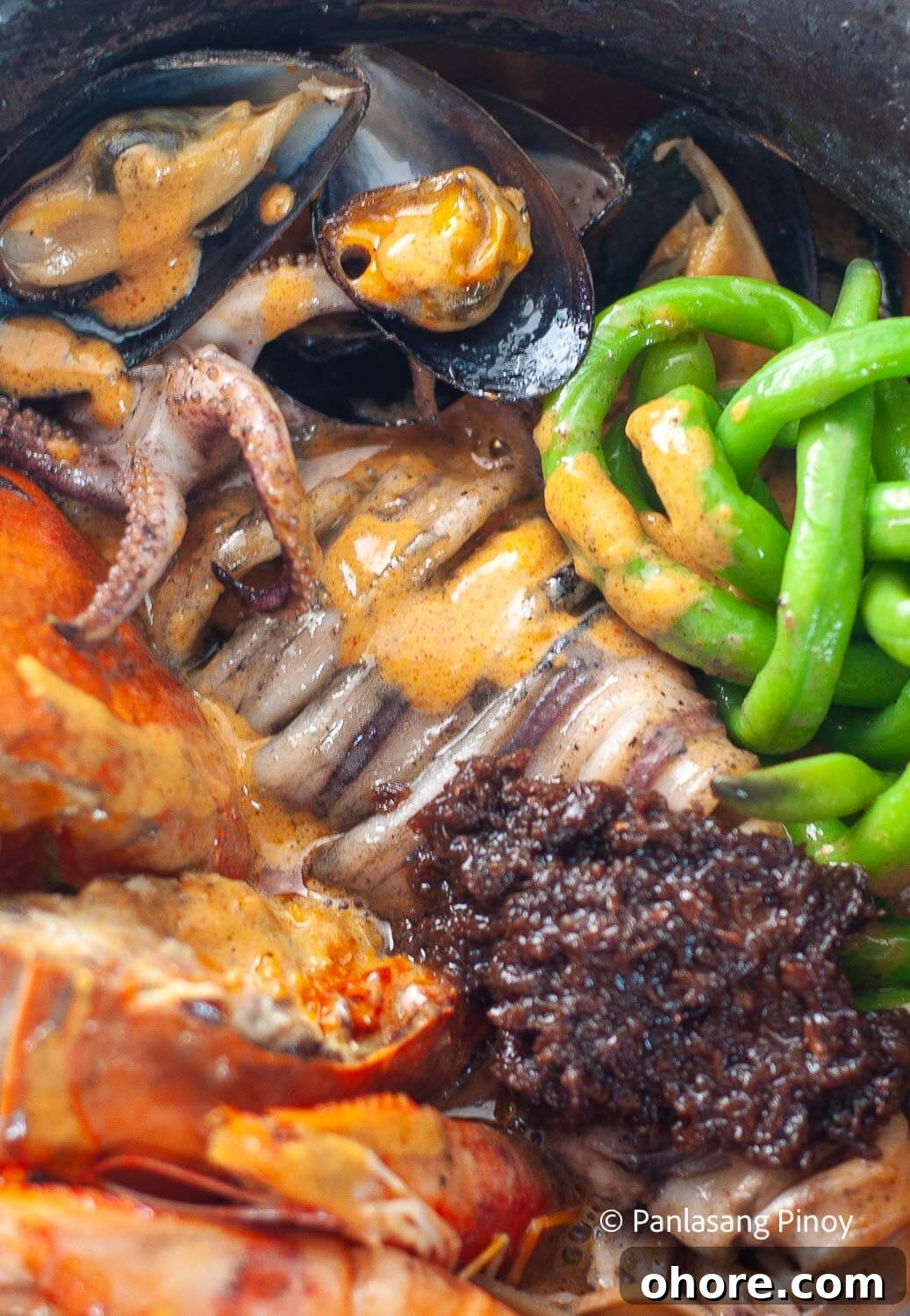
Though the sauce resembles the classic ox stew, seafood kare-kare is made differently: it relies on coconut cream or “kakang gata,” which gives the dish a richer, silkier texture that complements seafood beautifully. Peanut butter adds the familiar nutty depth of kare-kare, creating a unique fusion that tastes like a cross between ginataan and kare-kare. It may sound unexpected, but the combination works wonderfully.
Cooking this dish in a clay pot brings out a warm, rustic character, but a regular pot works fine too. I chose seafood kare-kare for a special lunch after my trip, and I’m glad I did—this is a dish we haven’t featured here before, and it’s one worth sharing. Below you’ll find tips for choosing the best seafood, the ingredient list, and step-by-step instructions to recreate this comforting Filipino favorite.
Tips In Choosing The Best Seafood Ingredients!
- Shop early in the morning to find the freshest shrimp, crabs, mussels, and squid.
- For shrimp: choose firm-bodied specimens with shiny, translucent shells and a clean, slightly salty aroma. Avoid shrimp with black spots or a strong fishy smell.
- For crabs: pick ones that feel heavy for their size, appear lively, and have intact hard shells without cracks.
- Choose mussels that are tightly closed. If a mussel is open, tap it—if it doesn’t close, discard it. Fresh mussels should smell like the ocean, not fishy.
- For squid: look for a glossy, slightly translucent body and a mild, oceanic scent. Avoid discoloration or off smells.
- You can use blue crab (alimasag) or mud crab (alimango). Steam crabs if you won’t cook them the same day.
- Either shrimp or prawns work; those with heads and shells on add flavor during cooking.
- Any size squid is fine as long as it fits your pot. Small baby octopus can also be used—tenderize it first to avoid toughness.
- Coconut milk is an acceptable substitute for coconut cream if needed.
- Feel free to vary the seafood mix to suit preferences or availability—this recipe is flexible.
Ready to make your seafood kare-kare shine? Below is the full ingredient list and clear instructions to guide you through each step.
Ingredients In Seafood Kare-Kare
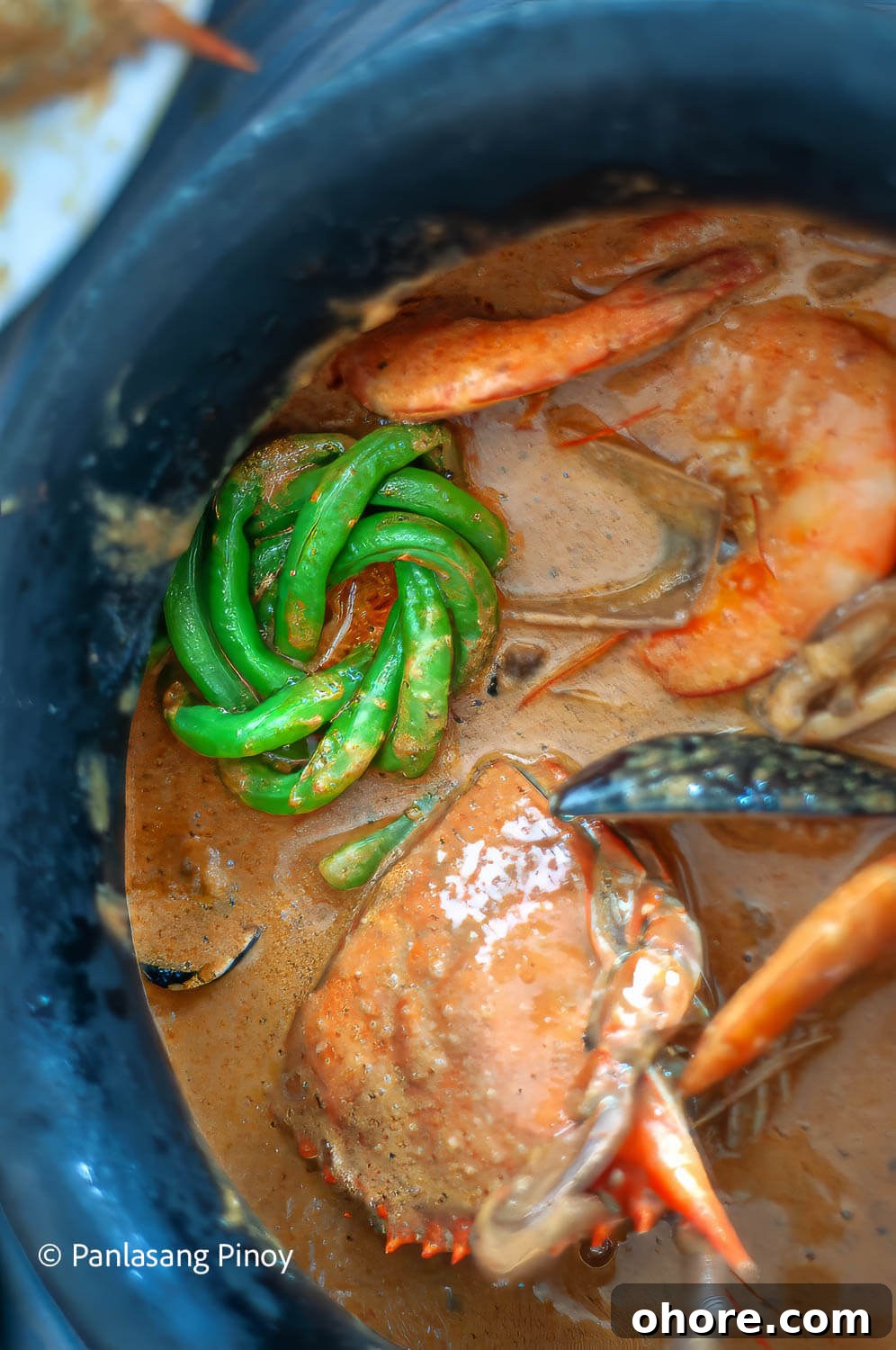
- 1/2 lb. shrimp — head and shell cleaned
- 2 crabs — steamed (blue crab or mud crab)
- 1/2 lb. mussels — cleaned and cooked
- 1 medium squid — cleaned
- 8 to 10 string beans — tied in knots
- 1 small banana heart — chopped
- 2 cups coconut cream (kakang gata)
- 5 tablespoons peanut butter
- 1 1/2 tablespoons annatto powder (atsuete) — diluted in 3 tablespoons water
- 2 tablespoons fish sauce (patis)
- 1 medium onion — minced
- 4 cloves garlic — minced
- 3 tablespoons shrimp paste (bagoong alamang) — to serve
- 6 tablespoons cooking oil
- Water as needed
How To Cook Seafood Kare-Kare?
Blanch the veggies
- Pour 5 cups of water into a pot and bring to a boil.
- Blanch the string beans and banana heart for 3 to 4 minutes.
- Transfer the vegetables to a bowl of ice-cold water for 3 minutes, then drain and set aside.
Cook the seafood
- Heat 3 tablespoons of oil in a pan. Pan-fry the shrimp over medium heat for about 2 minutes per side. Remove and set aside.
- In the same pan, sear the squid for 2 minutes per side. Remove and set aside. Avoid overcooking to keep the squid tender.
- Pan-fry the steamed crabs for about 2½ minutes per side, adding oil if needed. Set aside.
- Add the mussels and stir-fry for about 4 minutes total. Pour in the water used to cook the mussels (or the package liquid if pre-cooked).
- Deglaze the pan, scraping up browned bits so their flavor goes into the liquid. Remove the mussels and reserve the pan liquid in a separate bowl.
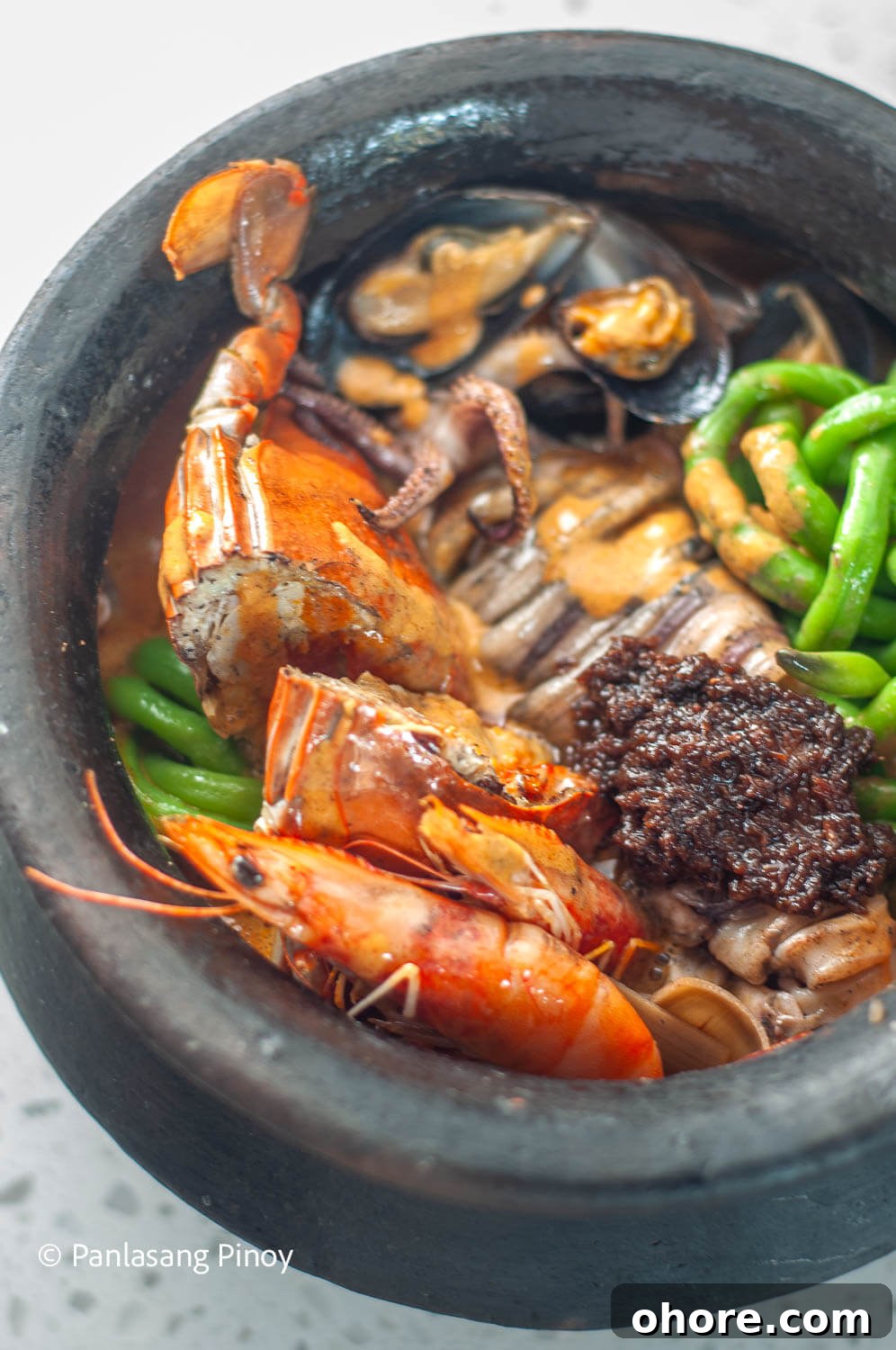
Don’t Overcook!
Take care not to overcook seafood. Squid becomes tough if overcooked; mussels can turn rubbery; crabs may dry out; and shrimp will get chewy. Cook each component just until done.
Make the kare-kare sauce
- In a clay pot or regular pot, heat the remaining 3 tablespoons of oil and sauté garlic and onion until the onion is soft.
- Pour in the coconut cream and bring it to a gentle boil.
- Add the reserved pan liquid from the seafood and stir to combine.
- Mix in the peanut butter and stir until fully incorporated into the sauce.
Season, color, and serve!
- Add fish sauce to taste and stir well.
- Pour in the diluted annatto powder to achieve your preferred color—adjust the amount as desired.
- Simmer the sauce 2 to 5 minutes over medium heat, stirring occasionally.
- Pour the sauce onto a serving plate and arrange the seafood and vegetables on top.
- Serve with shrimp paste (bagoong alamang) on the side and enjoy with steamed white rice.
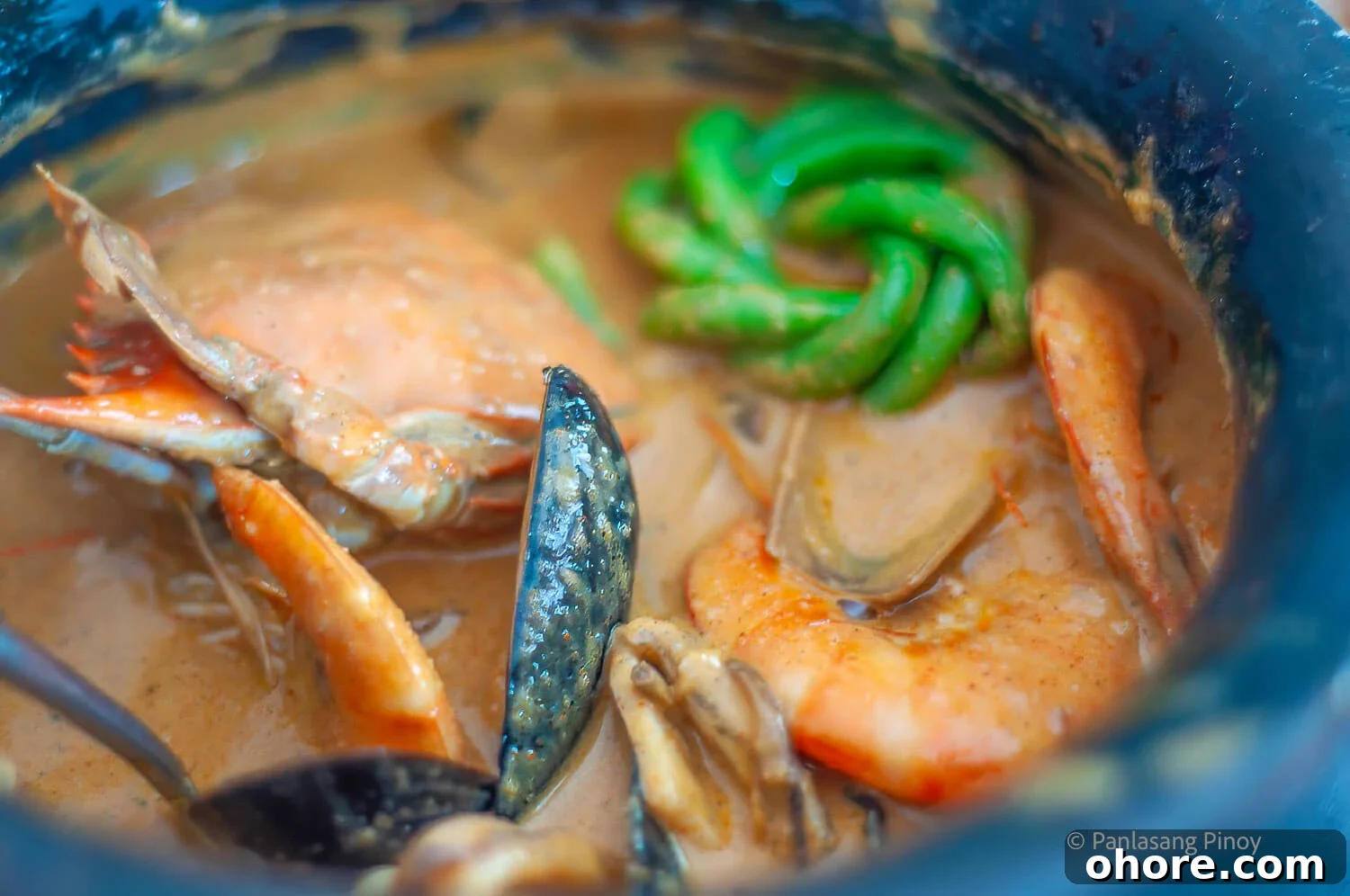
How To Serve Seafood Kare-Kare?
Garnish with chopped peanuts and a sprinkle of sliced shallots for texture and extra flavor. Serve with steamed white rice—one cup won’t be enough—and offer a fresh tangy salad or pickled vegetables to cut through the richness of the sauce.
Other Kare-Kare Recipes
If you enjoy kare-kare, consider trying other versions like oxtail, tripas, chicken, or bulalo kare-kare for variety.
Kare Kare Buntot ng Baka
Kare Kare Tripas
Chicken Kare Kare Recipe
Bulalo Kare-kare
Watch the cooking video:
Watch How to Make It
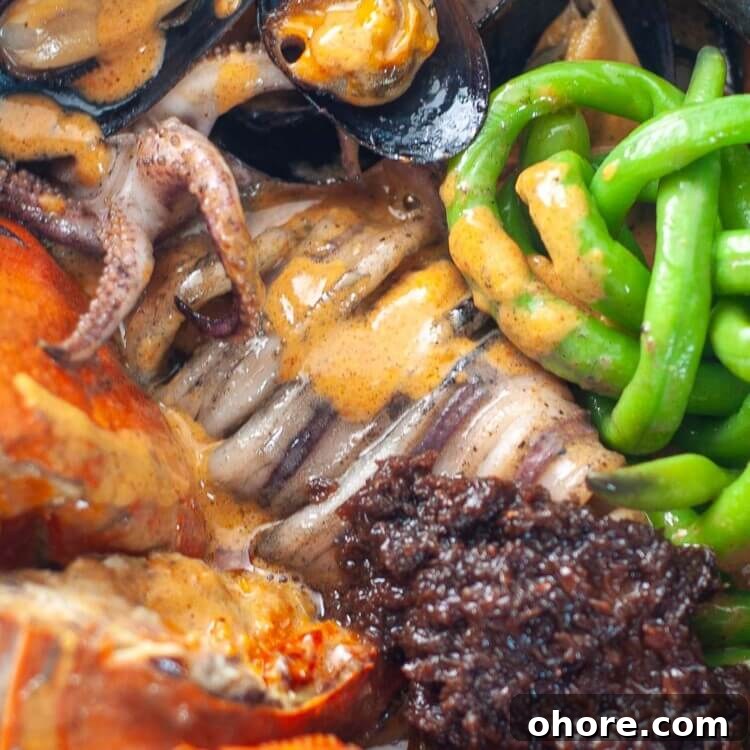
Seafood Kare Kare Recipe
Rate Recipe
Ingredients
- 1/2 lb. shrimp — cleaned
- 2 crabs — steamed
- 1/2 lb. mussels — boiled in 3/4 cup water
- 1 squid
- 8 string beans — tied in knots
- 1 banana heart — sliced
- 2 cups coconut cream
- 5 tablespoons peanut butter
- 1 1/2 tablespoons annatto powder — diluted in 3 tablespoons water
- 2 tablespoons fish sauce
- 3 tablespoons shrimp paste
- 4 cloves garlic — crushed and chopped
- 1 onion — chopped
- 6 tablespoons cooking oil
- Water as needed
Instructions
- Pour 5 cups of water into a pot and bring to a boil. Blanch the string beans and banana heart for 3 to 4 minutes. Transfer to iced water for 3 minutes, then drain and set aside.
- Heat 3 tablespoons oil in a pan. Pan-fry the shrimp over medium heat for 2 minutes per side. Remove and set aside.
- Using the same pan, sear the squid 2 minutes per side. Do not overcook. Remove and set aside.
- Pan-fry the steamed crabs for 2½ minutes per side, adding oil if necessary. Set aside.
- Cook the mussels in the same pan for about 4 minutes, adding the water used to boil them. Deglaze the pan and reserve the liquid in a bowl. Remove mussels and set aside.
- In a clay pot or regular pot, heat the remaining 3 tablespoons of oil and sauté garlic and onion until softened.
- Pour in the coconut cream and bring to a gentle boil. Add the reserved seafood liquid and stir.
- Stir in the peanut butter until fully blended into the sauce.
- Add fish sauce to taste and stir. Pour in the diluted annatto powder to reach the desired color.
- Simmer for 2 to 5 minutes over medium heat, stirring occasionally. Arrange the sauce on a serving plate and top with the cooked seafood and vegetables. Serve with shrimp paste on the side.
Notes
Nutritional Benefits of Seafood
Seafood provides high-quality protein and is rich in omega-3 fatty acids, which support heart health. It also supplies vitamins and minerals such as vitamin D, iodine, and zinc. Compared to many other animal proteins, seafood tends to be lower in saturated fat, making it a nutritious choice for a balanced diet.
Nutrition Information
Calories: 926 kcal
Carbohydrates: 20 g
Protein: 51 g
Fat: 76 g
Saturated Fat: 41 g
Cholesterol: 284 mg
Sodium: 1666 mg