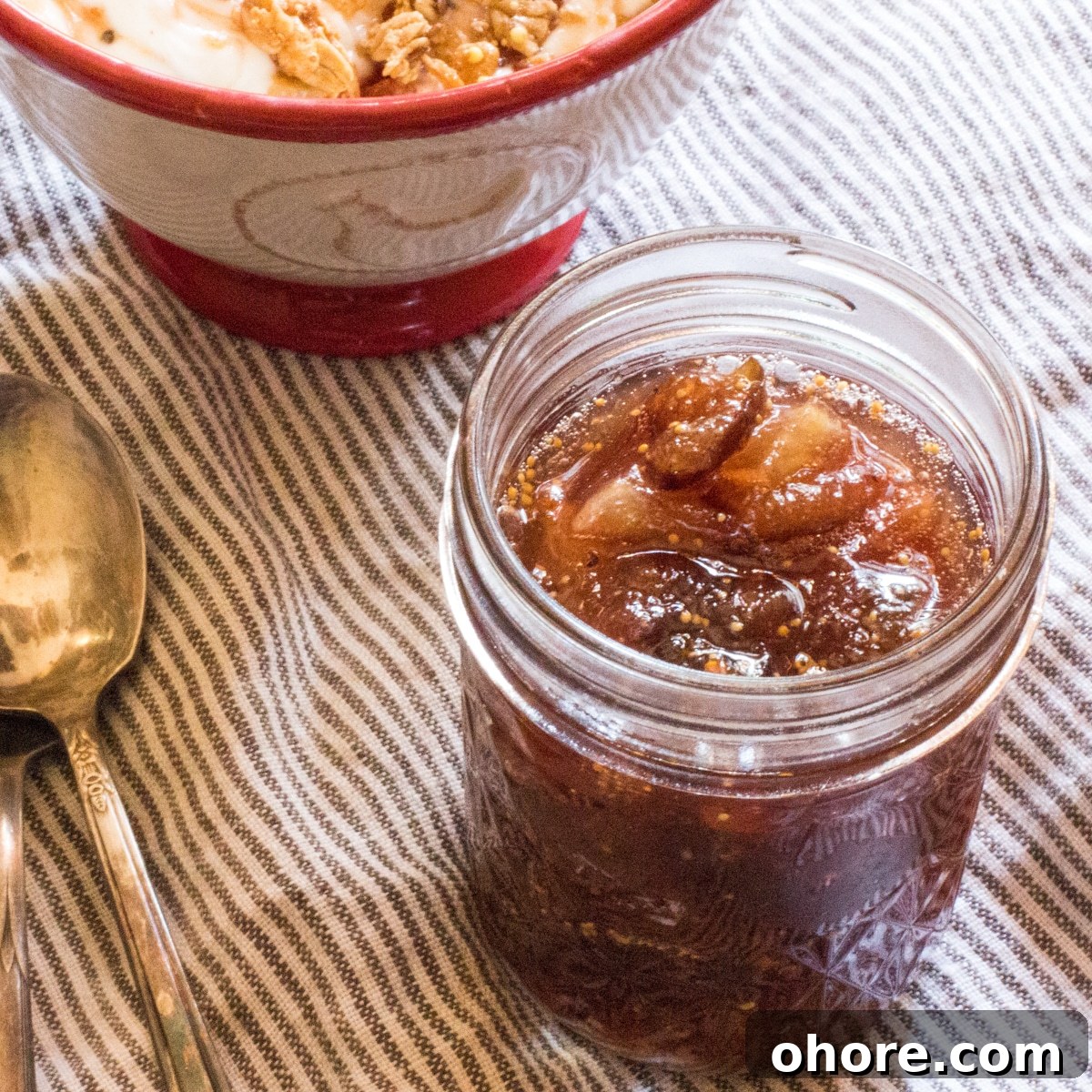
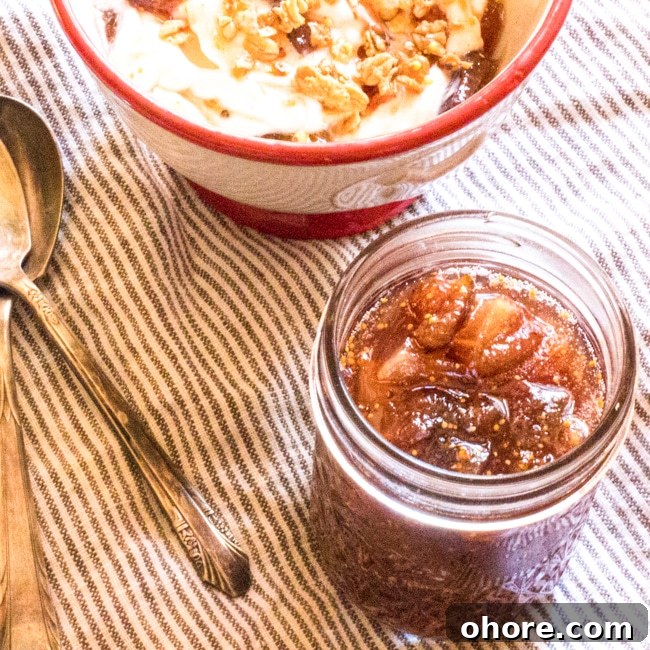
This fig jam is made from fresh ripe figs and warmed with cardamom, cinnamon, ginger, and nutmeg for a cozy autumn spread. A tart apple provides natural pectin for a reliable set.
The directions include water-bath canning steps so you can preserve these fig preserves to enjoy through the season, and they make lovely hostess gifts.
Jump to Recipe
Want to make this recipe perfectly the first time? Use the Table of Contents in the original post to find the sections that will help most.
With fall in the mountain air, this spiced fig jam is one of my favorite preserves to make. It captures the season in a jar and stretches fresh figs into weeks of breakfasts, snacks, and special occasion uses.
While canning can seem intimidating at first, the process is straightforward if you follow safe canning guidelines. I’ve included practical tips I learned in culinary school to help you succeed the first time.
🤷♀️ What is the difference between jam and preserves?
Jam is usually made by mashing fruit into a spreadable texture. Preserves often contain larger pieces or whole fruit. This recipe sits between the two: the figs are macerated and partially mashed, so some people call it jam while others call it preserves.
❤️ Why you’ll love this recipe
- Warm, autumnal spice from cardamom, cinnamon, ginger, and nutmeg.
- Preserves the fresh fig flavor so you can enjoy it all season.
- The apple supplies natural pectin—no powdered pectin required.
- Highly versatile: spread on biscuits, stir into yogurt or oatmeal, or serve with cheese and roasted squash.
🧅 Main Ingredients + Notes
Key ingredients and small prep choices make a big difference in results. Below are the highlights; full amounts and step-by-step directions are in the recipe card at the bottom.
- Fresh ripe figs – Black Mission figs work well for a deep, rich flavor, though Brown Turkey or a mix of varieties are fine.
- Granulated cane sugar – balances fruity acidity and helps the jam set.
- Cardamom seeds – use the seeds from green cardamom pods rather than pre-ground pod mix for the best aroma.
- Ground ginger, cinnamon, and nutmeg – these warm spices give the jam its fall character.
- Apple – an underripe or tart apple such as Granny Smith supplies natural pectin; peel, core, and dice before cooking.
- Lemon juice – use bottled/jarred lemon juice for consistent acidity when canning; it helps both flavor and gelling.
👩🍳 How to shell cardamom pods
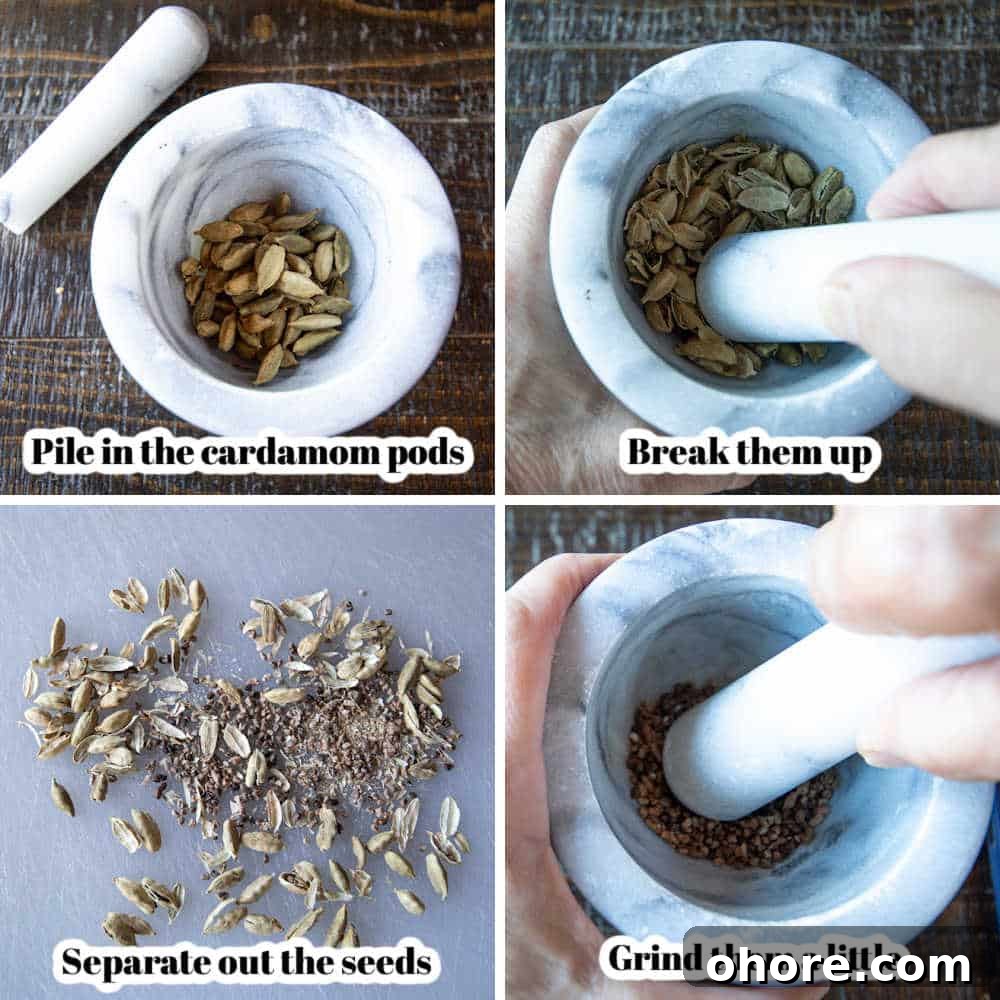
If you can’t find cardamom seeds, buy green cardamom pods and crack them open to extract the seeds. You can use a mortar and pestle, press with the flat of a chef’s knife, or weight the pods under a heavy jar to break them. Remove the tiny black seeds from the pod husks and use them whole or lightly crushed for maximum flavor.
🔪 Recommended Equipment
Having the right tools makes preserving easier and safer. Essentials include:
- Large non-metallic bowl for macerating figs with sugar and spices.
- Jars and lids suitable for canning (this recipe yields several 6-ounce jars).
- Large, wide-mouthed, heavy-bottomed pot for cooking the jam; unlined copper or enameled cast iron work best for even heat.
- Candy thermometer (or any thermometer reaching about 220°F) to confirm the jam’s set temperature.
- Potato masher or stick blender to adjust texture.
- Wide-mouth funnel, ladle, canning rack, and tongs to fill jars and process them safely.
👩🍳 Equipment Notes
Macerating the fruit
- Always macerate fruit in a non-metallic bowl to avoid metallic reactions with acids that can affect flavor.
- If using dried figs, rehydrate them in warm water first, then transfer to a non-metallic bowl for the sugar soak.
What kind of pot is best for making jam?
- An unlined copper jam pan provides even heat and prevents burning, but a wide, heavy-bottomed pot (such as enameled cast iron or good stainless steel) will work well.
- Use a wide pot rather than a tall narrow saucepan so more surface area is exposed for rapid, even boiling and evaporation.
What tools do you need to start canning?
Aside from a reliable pot and thermometer, core tools that simplify canning include a wide-mouth funnel to keep jar rims clean, a canning rack to keep jars off the pot bottom, and jar tongs for safe lifting.
📝 Instructions Overview
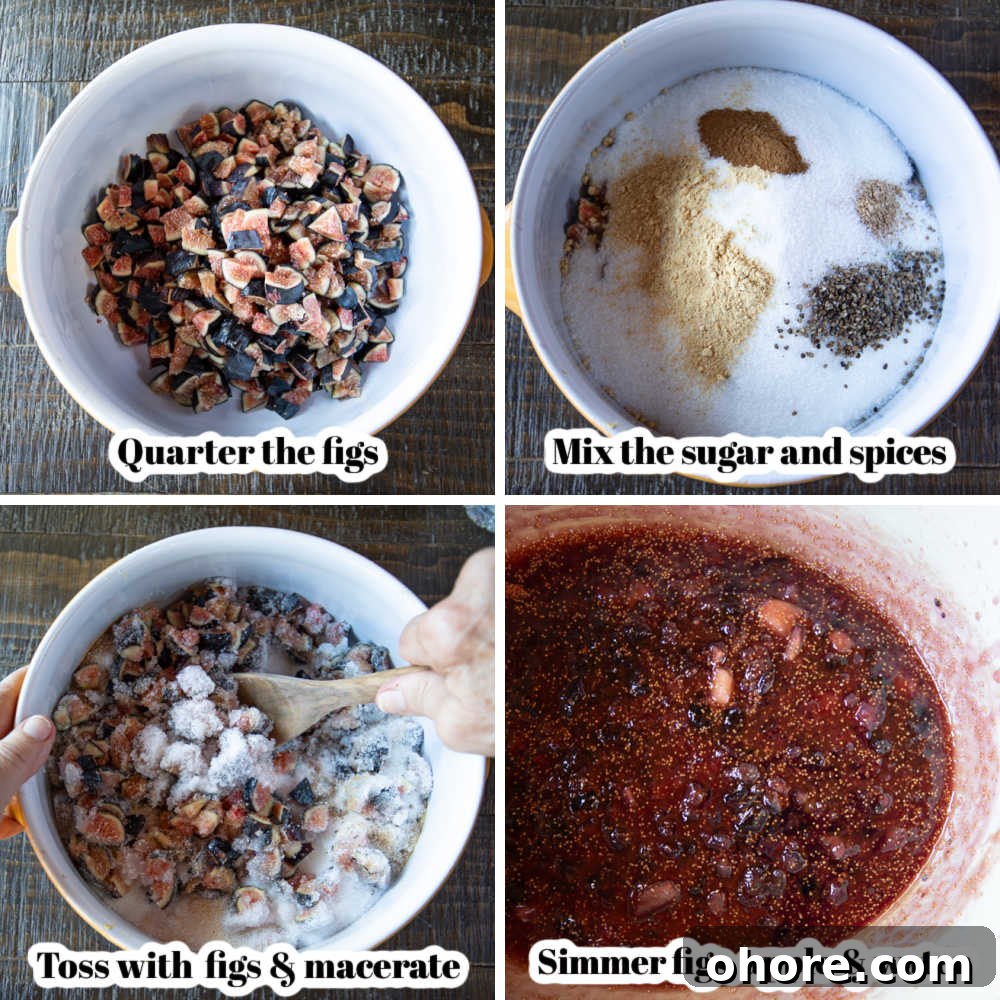
The recipe card below contains full measurements and step-by-step directions; here’s a concise overview of the process:
Step 1
Prep the figs. Wash, dry, and quarter ripe figs.
Step 2
Macerate the figs. Toss quartered figs with sugar and spices in a large non-metal bowl. Cover and let sit 6–8 hours or overnight to draw out juices and infuse flavor.
Step 3
Sterilize jars. Submerge jars, lids, and bands in boiling water for 10 minutes, then remove and let dry on a clean towel.
Step 4
Cook the jam. Combine macerated figs, diced apple, lemon juice, and water in a wide heavy-bottomed pot. Stir over medium heat until sugar dissolves, then boil vigorously until the mixture reaches the set temperature (see notes on set point below). Mash to the desired texture; leave some chunks for body.
Step 5
Fill and seal jars. Ladle hot jam into sterilized jars leaving headspace, wipe rims, secure lids, and process in a boiling water bath for the recommended time for your altitude. Allow jars to cool undisturbed; lids are sealed when they do not flex when pressed.
👩🍳 How to know if your jam has set
The jam set point is usually about 8°F above the boiling point of water. At sea level that’s around 220°F, but boiling point decreases with altitude, so adjust as needed. Two reliable tests:
- Sheet/Spoon test: Dip a metal spoon into the jam, lift it out and let the jam run back into the pot. If it forms a slow, sheet-like stream or two drops join together, it’s likely set.
- Freezer plate test: Chill a small plate, spoon a little jam on it, chill briefly, then tilt. If the jam runs quickly it needs more cooking; if it moves slowly it’s ready.
🏔️ Making Jam at High Altitude
Adjustments for making jam
Boiling point drops roughly 1°F per 500 feet of elevation. For example, at about 7,100 feet water boils around 198°F and the jam set point is about 206°F, so use your thermometer and the spoon or freezer test to confirm the set.
Adjustments for water-bath canning
When processing jars in a boiling water bath, add extra time above the sea-level recommendation based on altitude:
- +5 minutes for 1,000–3,000 feet
- +10 minutes for 3,000–6,000 feet
- +15 minutes for 6,000–8,000 feet
- +20 minutes for 8,000–10,000 feet
💡 Ways to use this spiced fig jam
- Stir into morning yogurt or granola
- Mix into oatmeal for a fruity spin
- Spread on warm biscuits, especially cheddar biscuits
- Serve with sharp or soft cheeses and crackers as an appetizer
- Baste roasted butternut or acorn squash with the jam
- Add a spoonful to pumpkin or squash soup for sweetness and depth
📇 More recipes with figs
- Spiced Persimmon Cookies with Dried Figs
- Figgy Snickerdoodle Cookies
- Roasted Butternut Squash with Quinoa, Apple and Fig Stuffing
- Fig and Anise Bread
- Fig Crostata
Spiced Fig Jam
Equipment
-
Large non-metallic bowl for macerating the figs with the sugar and spices
-
5 6-ounce jars
-
Unlined copper pan or large wide-mouthed, heavy-bottomed pot for making the jam
-
Candy thermometer or thermometer that reaches 220˚F
-
Potato masher for mashing the cooked fruit
-
Wide-mouthed funnel for canning
-
Ladle
-
Canning pot and rack
Ingredients
- 32 ounces fresh ripe figs, washed and quartered (Black Mission or similar)
- 32 ounces white cane sugar
- ½ tablespoon cardamom seeds
- 2 teaspoons ground ginger
- 1 teaspoon ground cinnamon
- ½ teaspoon ground nutmeg
- 1 Granny Smith apple cored, peeled, and diced
- 1 tablespoon jarred lemon juice
- 10 ounces water
Instructions
-
Macerate the figs. Combine figs, sugar, and spices in a large non-metallic bowl. Stir to coat, cover, and let sit on the counter 6–8 hours or overnight to draw out juices and develop flavor. If short on time, proceed to cooking.
-
Sterilize jars. Bring a large pot of water to a rolling boil and submerge jars, lids, and bands for 10 minutes. Remove with tongs and set on a clean towel.
-
Make the jam. Place the macerated figs with their juices into a wide heavy-bottomed pot. Add diced apple, lemon juice, and water. Stir over medium heat until the sugar dissolves.
-
Bring to set point. Increase heat and boil vigorously, stirring to prevent sticking. Cook 15–20 minutes or until fruit is soft and the jam reaches the set temperature for your elevation (about 220°F at sea level). Use the spoon or freezer plate test to confirm readiness.
-
Mash to texture. Use a potato masher a few times, or pulse briefly with a stick blender, until the jam is as chunky or smooth as you prefer.
-
Fill jars. Use a funnel to ladle hot jam into sterilized jars, leaving headspace. Wipe rims clean, apply lids and bands, and tighten.
-
Water-bath canning. Submerge filled jars in boiling water for the recommended processing time for your altitude (typically 5–10 minutes at sea level). Remove jars and cool undisturbed; lids should be firm and not flex when pressed once sealed.
Nutrition
|
Calories: 134.3kcal